Note: these films all feature graphic sexual assaults.
Death Wish
Michael Winner has never been a particularly good filmmaker. Winner, an on-set sadist by most accounts, specialized in blunt force trauma as action exploitation. Up until Death Wish, the director was primarily known for his Marlon Brando thriller The Night Comers. Death Wish was the first film that was a true-blue smash hit. The film struck a nerve with a certain sect of people who lived in fear of violence in all its forms in metropolitan areas. It was nightmare fuel and exploitative, violent payback wish fulfillment.
After successful architect Paul Kersey’s (Charles Bronson) wife and daughter are assaulted, the once peaceful man spirals out of control in a city out of control. Kersey begins to see retribution at every alley and corner of New York City. Kersey begins to enact his rage against every would-be mugger in New York. Even as the police close in on him, they see political maneuvers, not justice.
Death Wish makes Dirty Harry look like a Bergman film. The film begins in happiness just long enough as Winner can handle, which is about three minutes, before he begins his real expertise as a director … hellish nightmarescapes of urban violence against innocents. The assault on Kersey’s wife and daughter is as horrifying as it needs to be for Winner to feel justified in taking Kersey down the long-winded track of blinded vengeance.
Unintentionally, Winner’s film, by robbing Kersey of actual vengeance on those who perpetrated the murder of his wife and the sexual assault on his daughter (something that the later films would adjust), gives us a look at the futility of violence. Kersey is lashing out unchecked at criminals because of the tragedy that has befallen him. There is a reality to the unsolved nature of the crimes and violence that fractures Kersey.
Though it feels less articulated because Winner has no concern with the affairs of the family or Kersey’s pathology beyond his bloodlust. Death Wish is still a striking bit of cinema, but less articulate than one would hope for. Brian Garfield’s novel of the same name is the type of piercing arrow to the soul that denounces violence in all its forms, no matter who’s behind it. Winner’s film is okay with violence as long as it’s justified by some heinous act.
Death Wish II
Eight years later, in 1982, Cannon Films took over the Death Wish franchise and unleashed Michael Winner to make whatever he wanted as long as he could get Charles Bronson to star. What Winner made was one of the most unhinged action thrillers ever in Death Wish II.
After the events of Death Wish, Paul Kersey (Bronson) has moved himself and his daughter to LA to get away from the trouble of New York City. But trouble follows Kersey in Death Wish II. Not just Kersey but his daughter (Robin Sherwood) and his housekeeper (Silvana Gallardo) are the victims of a street gang that Kersey slights. The violence activates Kersey into not just a vigilante without purpose but a straight-up killing machine bent on erasing everyone in his path who twitches the wrong way. As his acts of vengeance captivate the citizens of Los Angeles, it incurs the wrath of the LAPD, even the NYPD, who let him go in the first film.
This is Winner’s GTA before GTA. There is a moral black hole at the center of this film that feels like the crassest bankrupt enterprise of the series. Especially in its Unrated Director’s Cut form, which has extended scenes of sexual assault, violence towards women, cops torturing suspects, and Charles Bronson’s Paul Kersey exacting his revenge on those who killed his daughter and his housekeeper. As in all of Bronson’s 80s work, he remains a stone-faced machine of death, dealing out his favorite drug of choice.
There is a propulsiveness to everything that happens, powered by the Jimmy Page score (yes, Led Zeppelin’s Jimmy Page). The script by David Engelbach is just a series of complications faced by Kersey in order to ensure not just that his vengeance is successful, but that he isn’t implicated in any way, shape, or form. It feels like more of a Winner fevered dream of Valhalla than an actual story. One where Kersey has gone from a man fractured by tragic violence to a CIA-level assassin who is able to pull off various complex operations of infiltration.
The film doesn’t really end other than to show Kersey’s girlfriend knows he’s the street vigilante and has given him back his engagement ring. Allowing Kersey to carry on with his real work of dealing death to those the justice system is unwilling to go after. Amoral Batman for the Reagan 80s.
Death Wish 3
There are so many questions one has when watching Death Wish 3. The biggest one is how someone convinced Jimmy Page (yes, that Jimmy Page from Led Zeppelin) to come back as the composer after the cinematic war crime that was Death Wish 2? Yes, let me repeat that… how did someone convince Jimmy Page (yes, that Jimmy Page from Led Zeppelin) to come back as the composer after Death Wish 2? That isn’t to say Death Wish 3 and Death Wish 2 aren’t entertaining as hell pieces of nonsense, but both are cinematic flaming garbage, it must be stated, with so many unbelievable turns that it could have only been produced by the Cannon Film Group.
Death Wish 3 proves without a doubt that Paul Kersey (Charles Bronson) has nothing but bad luck. Reeling from the events of Death Wish 2 (and probably Death Wish as well), Kersey is now your average Vigilante going from town to town cleaning up the local “street trash” like some sort of psychotic Kane from Kung-Fu. Our “hero” heads back to NYC to see a friend, and (un)luck would have it that he runs in just as his friend has been murdered. Worse still is the fact that the cops ran in right at that moment as well and accused him of it. After being roughed up by fascist super cop played by character actor supreme Ed Lauter, he’s set free.
Kersey is set free, alright. Free to start a land war in New York City and eventually levels four city blocks as he murder death kills every gang member in sight. With names like The Giggler (because you know he giggles), these “gangstas” are straight out of Cannon’s other franchise Breakin’ (specifically Breakin’ 2: Electric Boogaloo). Every person that isn’t named Bronson is merely cannon fodder for the eventual all-out war that Bronson lays down on the gang members.
Michael Winner is not a subtle filmmaker. His appetite for cruelty and sadism is a mile wide and has no depth. One just needs to watch Death Wish 2 and its multiple protracted sexual assault scenes to understand. Winner here is in comic book form, at least his version of a comic book (think Frank Miller). Death Wish 3, for all its violence, is an unserious cartoon with has an elderly couple laughing at the carnage outside their window (it’s gang members, so it’s okay). It’s all some sort of lunatic fever dream that one can laugh off because it’s so ridiculous, and if anyone actually thought it was truthful would need some serious help.
In the center of the chaos is the Robert DeNiro to Michael Winner’s Martin Scorsese … Charles Bronson. The stone face superstar is as you expect in this third outing… stone faced. Bronson, in his Cannon/Winner years, seems to be bored even with the action scenes here. As I had said in my Death Wish 4: The Crackdown review: “Bronson is Bronson here. Stoic or Stone-faced, depending on your love of one of the Chucks that made Cannon Films. Kersey here has gotten to the point where he’s Jason Vorhees for the 1980s action set. All they need to do is activate him to ensure a maximum amount of carnage. If Death Wish 3 is the Jason Takes Manhattan of the DW series, then The Crackdown is certainly Jason Goes to Hell. How does one critique the performance of Jason? You can’t, and so I won’t, other than to say Bronson knew exactly what he was doing and what his audience wanted. He delivered time and time again, no matter the shenanigans that Golan and Globus pulled.”
Though Death Wish 3 in Winner’s hands does make one feel like they’re watching some deranged proto-Terminator style film where Bronson has been sent back in time to kill these gang members, as eventually they will lead the resistance against the android overlord. In fact, that would be a greater storyline than Death Wish 3’s kill everyone real good plot. Though when taken on its own terms, it’s a hell of a ride… one that any fan of 1980s action films should take.
Death Wish 4: The Crackdown
Bronson be piping mad at crack, and cracking down on the crack epidemic.
That’s really all you need to know about J. Lee Thompson’s entry into the Death Wish series. Taking over for Bronson’s other choice director Michael Winner, Thompson loses the extra-extra Sadism and Rape obsession (almost) for a film that’s a play on Yojimbo (or as most of cineastes want to claim; A Few Dollars More). What’s not missing is the cartoonish almost satirical violence, panache for villainy, and criminality that feels like it was the inspiration for the GTA series.
Bronson’s Paul Kersey is alternately the unluckiest man in the world and the luckiest cis white male of all time. How Kersey after three murder filled streaks of vengeance (one in New York that literally decimated four city blocks, all to the soundtrack of Jimmy “Led Zepplin” Page’s roaring guitar and compositional weirdness) is still roaming around can only be attributed to his white male previlige and killing of what people of the 80s thought were the dredges of society.
Any who, he’s back in L.A. living the good life as an Architech again. He’s even got a new lady friend, who of course has a daughter. It’s like Karma is trying to teach Kersey a lesson in turn the other cheek because in two shakes of a lamb’s tail (end of the first act) the daughter is a goner. Why? Crack baby, crack. Kersey goes into action. But this time he has help from a wealthy New Paper Owner, remember those, Nathan White (John P Ryan) with a grudge against those drug dealers too.
Together they form a strike force. White gives Kersey the details. Kersey executes them, literally! Though the plan is to get two rival gangs, one Italian and one Latino, to start a war against one another. Though in a mid-film twist there’s a third entity that was there pulling the string all along. It’s one of the clever bits of screenwriting from Gail Morgan Hickman screenplay that’s three steps away from being a Rambo and the Forces of Freedom episode. Though the story is aided by Thompson’s astute economical direction.
Bronson is Bronson here. Stoic or Stone-faced depending on your love of one of the Chucks that made Cannon Films. Kersey here has gotten to the point where he’s Jason Vorhees for the 1980s action set. All they need to do is activate him to ensue maximum amount of carnage. If Death Wish 3 is the Jason Takes Manhattan of the DW series, then The Crackdown is certainly Jason Goes to Hell. How does one critique the performance of Jason? You can’t and so I won’t other than to say Bronson knew exactly what he was doing and what his audience wanted. He delivered time and time again, no matter the shenanigans that Golan and Globus pulled.
Death Wish 4: The Crackdown ends as one would think it would in a roller-skating rink with Bronson vs the Final Boss. Though like others in the series it end in the most unexpectedly dour ways.
Death Wish 5: Faces of Death
Confession time, 2023 is the year that I finally saw all the Death Wish films. I had seen the first two early in my life. I thought that I had seen the rest of the Death Wish films. Turns out I realized very quickly that I mistook all of the Death Wish films after Death Wish 2 for Kinjite: Forbidden Subjects. Who can blame me though? Kinjite is literally a Death Wish film with a different title (hell, I willing to be good money in Italy they called it Death Wish 6: Watch Eatin’ Time).
In my review for Death Wish 4: The Crackdown, I compared Kersey to Jason Vorhees. Which is a good comp I think because it’s equally applicable to Death Wish 5: The Face of Death. Though if The Crackdown is Jason Goes to Hellthen The Face of Death is Freddy vs. Jason. Bronson/Kersey have met their match in Tommy O’Shea/Michael Parks. O’Shea is the ex-husband of Kersey’s new love interest fashion designer Olivia Regent (Leslie-Anne Down). DW5 wastes zero seconds showing us the kind of villainy that Kersey will eventually face with O’Shea cutting fat from a man and throwing racial slurs like its, well, the 1980s.
Parks a truly great actor is having the time of his life here acting with an accent that rivals anything that Burt Reynolds did in the 1970s (if you know, you definitely know). O’Shea is a villain so villainy that he out villained villains every day of the week and twice on Sunday. Like any good crime lord in a Death Wish film he’s got a bunch of equally villainy henchmen. Bronson vs Parks is something to behold and it plays out as some sort of demented divorce custody battle by way of horror action film – each vying for the affection of Olivia’s daughter.
The lunacy here is ratcheted up even beyond the Yojimbo-on-crack that is Death Wish 4: The Crackdown. There’s no subtlety here. Just everything blasted to the Spinal Tap 11. Which makes things even funnier than it could possibly be intended. The way that Bronson stoically goes through everything, only showing the slightest bit of glee once he is able to exact his revenge on the goons that have killed, SPOILERS, his girlfriend.
Though the first two act of kills are all a preview to the main event that’s sent in a mannequin-filled garment factory. Kersey goes full on slasher as he disposes of goon after goon until the only the Final Boy aka O’Shea is left. Trust me when I say how he dispenses with O’Shea is like Vanessa Williams sung so beautifully, the best for last…
One does feel a bit of regret after the full evolution of Paul Kersey into the first Baba Yagga of Action Cinema (he crawled so John Wick could run) had at least a few more entries. We will just have to do with Death Wish 5: The Face of Death as delivery on the promise of its title.
The Transfers
Death Wish
The original film itself is not a visual stunner to begin with. The film was shot to invoke gritty realism by Arthur J. Orritz. That being said, the image is flawless without a single spec of dirt or scratch present throughout the run time. This Blu-ray is sourced from the same 2022 4K Scan of the 35mm Original Camera Negative that Kino Lorber’s 4K UHD release is from.
Death Wish II
This transfer (both the theatrical and director’s cut) is sourced from the Vinegar Syndrome release of the film from a few years back. The transfer is flawless with no scratches or dirt present. Just an excellent representation of the 35mm film shot by Thomas Del Ruth and Richard H. Kline.
Death Wish 3
The film itself is not a visual stunner to begin with. That being said, the image is flawless without a single spec of dirt or scratch present throughout the run time. The Dolby Vision encoding gives all the blacks and contrast levels deeper details. Bravo to Kino Lorber for taken the time and care for another sold 4K UHD upgrade.
Death Wish 4: The Crackdown
The transfer, unknown if knew or from an existing older one, is beautifully rendered cinematically looking image. The film looks like a pristine 35mm archival prints – with minor defects giving the image more character than a spotless DNR’ed to death image. Fans of the film will delight in the image’s uptick in quality from the prior – 20th Century Fox Discs and having the disc did a sampling of both images – Blu-ray release.
Death Wish V: The Face of Death
The transfer, unknown if new or from an existing older one, is beautifully rendered cinematically looking image. The film looks like a pristine 35mm archival prints – with minor defects giving the image more character than a spotless DNR’ed to death image. Fans of the film will delight in the image’s uptick in quality from the prior – 20th Century Fox Discs and having the disc did a sampling of both images – Blu-ray release.
The Extras
They include the following;
DISC 1 (DEATH WISH):
Audio Commentary by Film Historian Paul Talbot
Interview with Actor John Herzfeld
Radio Spots
TV Spots
Theatrical Trailer
DISC 2 (DEATH WISH II):
Theatrical Cut and Unrated Director’s Cut
Audio Commentary by Film Historian Paul Talbot | Audio Commentary by Film Historians Steve Mitchell and Nathaniel Thompson
Theatrical Trailer
DISC 3 (DEATH WISH 3):
Audio Commentary by Film Historian Paul Talbot
Audio Commentary by Film Historians Steve Mitchell and Nathaniel Thompson
Alternate Ending
Interview with Actor Kirk Taylor
Theatrical Trailer
DISC 4 (DEATH WISH 4: THE CRACKDOWN):
Audio Commentary by Film Historian Paul Talbot
Theatrical Trailer
DISC 5 (DEATH WISH V: THE FACE OF DEATH):
Audio Commentary by Film Historian Paul Talbot
Theatrical Trailer
DISC 1 (DEATH WISH):
The Audio Commentary by Film Historian Paul Talbot, the Author of the Bronson’s Loose! Books. Talbot opens with his credentials and where Bronson was in his career as he made Death Wish, including the on-location shoot in Hawaii. Some of the details include the development of the property, including Sydney Lumet being initially hired to direct; the casting what-if’s that eventually led to Charles Bronson being hired along with Michael Winner as director; the production schedule and budget; a history and style of Michael Winner; a discussion of the assault in the film, which Winner added to the script, and his justifications; how Bronson and Winner began their multiple film collaboration; the true crime facts of New York City in the 1970s and how this bore the story of Death Wish; a discussion of the film’s deleted scenes and unfilmed scenes from the script/adaptation throughout; a discussion of the novel and the differences between it and the film throughout; a discussion of the locations and studio sets that the production used; a discussion of the various actors that appear in the film; and much more.
John Herzfeld on Death Wish (18:24) – the all-new interview with the actor who played one of the subway thugs that attempts to rip off Bronson begins with how Death Wish was the first job he ever got and how closely the film resembled the city at the time. The actor goes on to discuss almost being mugged around the time of the film; how he was cast by Michael Winner; why he wasn’t credited; the film that made him want to be a filmmaker and actor; working on the day with Bronson and Winner; his look and dissection of why the film works; some great stories about his best friend and college buddy Sylvester Stallone; and much more.
Radio Spots (1:31) – two radio spots, one 60-second spot and another 30-second spot.
The first Audio Commentary by Film Historian Paul Talbot, the Author of the Bronson’s Loose! Books. Talbot opens with his credentials and why the production chose Los Angeles over San Francisco, where the script was initially located. Some of the details include how Cannon Group Menahem Golan wanted to direct, but Bronson would only do the film with the original director, Michael Winner; Winner’s uncredited rewrite of the script, editing of the film, and producing of the picture; the original sequel written by novelist Brian Garfield – a larger discussion of the differences between the book and the novel which they were not able to secure; the sexual assaults that were specifically written by Michael Winner – details of the production of the scene, the casting, what was cut, cinematographer Thomas Del Ruth quitting over Winner’s filming this scene; the production schedule and budget of the film; a discussion of what distinguishes the unrated cut and the theatrical cut; a larger discussion of the various action scenes and how Bronson was a part of the choreography and stunt work on each; a discussion of the locations and studio sets that the production used; a discussion of the various actors that appear in the film; and much more.
The second Audio Commentary by Film Historians Steve Mitchell and Nathaniel Thompson. The duo opens their track with their credentials before diving into Cannon Films, which produced the film, and a brief history of Golan and Globus. Some of the details include how this sequel came to be, with Dino Delaurentiis wanting to make another film with Michael Winner and how the rights and other projects contributed to Death Wish II eventually being made; the literary sequels and how the second book was eventually made as Death Sentence directed by James Wan starring Kevin Bacon; the reasons why they chose Los Angeles when the original had Kersey going to Chicago; the various versions of the film both TV cuts, theatrical cuts, and unrated version that this film is; the career of Jill Ireland and her work with her husband Charles Bronson – and the films they did together; a larger discussion of Los Angeles now versus Los Angeles back whenDeath Wish II was filmed; the work of cinematographers Richard H. Kline and Thomas Del Ruth – and the collaboration with director Michael Winner; anecdotes from the production; interviews from the cast and crew about the film and the production; a larger discussion of the reasons why the new transfers look so much better than even release prints of these films; a larger discussion of the life and directorial career of Michael Winner; a larger discussion of the various locations the production used around Los Angeles; a larger discussion of the various actors that appear in the film; and much more.
Rounding out the special features are trailers for Death Wish (2:20); Death Wish II (1:55); Death Wish 3 (1:40); Death Wish 4: The Crackdown (1:34); Death Wish V: The Face of Death (1:00);
DISC 3 (DEATH WISH 3):
The first of two Audio Commentaries is an archival track by Film Historian Paul Talbot, the Author of the Bronson’s Loose! Books. Talbot opens with his credentials and where Bronson was in his career as he made Death Wish 3. Some of the other details include the original source material written by Brian Garfield; a brief production history of both the original and the Cannon-produced sequel; the building and construction of the New York City set that was erected in South London; a discussion of the career and personal history of actor Ed Lauter, including his work with Bronson; a discussion of the career and personal history of actor Gavan O’Herlihy; a discussion of the career and personal history of actor Martin Balsam; a history of the Michael Winner and Charles Bronson collaboration; the production schedule of the film both in London and New York City; some of the violent crime figures in 1985 when the film was made; the post production process – including the fact that Winner edited the film himself and the editing pseudonym; a larger discussion of what was shot on location in New York and what was shot in London; a larger discussion of the various bits of violence that were cut to obtain an R-rating; the various scenes that were deleted (some included in the TV version) or not shot; a discussion of the various actors that appear in the film; and much more.
The second of the Audio Commentaries is an all-new track by Film Historians Steve Mitchell and Nathaniel Thompson. The duo opens their track with their credentials before a discussion of the iconic 59th Street Bridge, which shots of opens the film, before discussing how the film was filmed in both New York and London. Some of the other details include how their first viewings as New Yorkers, they could tell that the film was not filmed entirely in New York; a discussion of the reasons why Michael Winner returned to the series, and the reasons why it was made as an action film rather than a grim revenge thriller; a discussion of the series up until this point; a discussion of the career of director Michael Winner both pre and post-Death Wish 3; a discussion of the history of the Cannon Film Group which produced the Death Wish series (2 – 4 at least) and many of the conversative action films of the 1980s that rose to popularity; the cartoonish nature of the entire film and catering to the specific audience they made the film for; a larger discussion of the history of Bronson’s collaboration with Winner – a detailed discussion of a lot of their films together; a larger discussion of the style of director Michael Winner; a larger discussion of the various actors that appear in the film; a larger discussion of the various New York City locations they use and their historical and social relevance; and much more. The track is another winner by the duo, with plenty of quotes by Bronson and company from the time.
Alternate Ending (Newly Restored in HDR and SDR) with Audio Commentary by Steve Mitchell and Nathaniel Thompson (11:04) – the alternate ending itself is included on the Blu-ray version but not the 4K UHD disc. The alternate ending is a tag / post-credit sequence about the fate of Paul Kersey, which did not appear in the original version. The commentary by Mitchell and Nathaniel Thompson discusses the ending tag and some additional production details they did not get into their commentary proper of the finale.
Interview with Actor Kirk Taylor (8:26) – in this all-new interview with Taylor opens with being cast by director Michael Winner. The actor goes on to discuss his relationship with Winner; how the director helped him get an audition for Full Metal Jacket; working with Bronson – including a few anecdotes; working on London, and their recreation of New York; shooting his death scene; working with Alex Winter and Gavan O’Herlihy; and much more.
Rounding out the special features are trailers for Death Wish (2:20); Death Wish II (1:55); Death Wish 3 (1:40); Death Wish 4: The Crackdown (1:34); Death Wish V: The Face of Death (1:00);
DISC 4 (DEATH WISH 4: THE CRACKDOWN):
The Audio Commentary by Film Historian Paul Talbot, the Author of the BRONSON’S LOOSE! Books opens with Talbot’s bonafides and heads into this well researched and informative track. Some of the details include the score written by Bronson’s stepsons; the first film to not be directed by Michael Winner; details about the underground parking garage nightmare that opens the film; the development of the script and the various different treatments that were rejected and why they were rejected; how Golan and Globus got to Charles Bronson to return for a fourth time to play Kersey; the reasons why Michael Winner did not return for the fourth entry; the development of the script by screenwriter Hickman – including him being on set for the production; the production schedule and budget – the lack of a budget and how that affected the movie in its design and visual look; Bronson’s salary and contract stipulations; the issues the film had with the ratings board to secure an R-Rating; a larger discussion of the various deleted scenes and moments from the first cute; a larger discussion of the various guns that are used within the film; Talbot throughout discusses the various actors, stunt people, and behind the scenes crew that worked on the production; and more. If there’s anyone you want to comment on a Bronson starring vehicle its Talbot.
Rounding out the special features are trailers for Death Wish 4: The Crackdown (1:34), Death Wish (2:20), Death Wish 5: The Face of Death (1:00), The White Buffalo (1:52), Murphy’s Law (1:30), Assassination (1:58)
DISC 5 (DEATH WISH V: THE FACE OF DEATH):
The Audio Commentary by Film Historian Paul Talbot, the Author of the BRONSON’S LOOSE! Books opens with Talbot’s bonafides and heads into this well researched and informative track, which feels like a continuation of his equally enlightening track on Death Wish 4: The Crackdown. Some of the details include the various alternate title dropping of the 5; the fact that this film was not produced by Cannon Films rather 21st Century Films – Golan, minus Globus, producing; how the film is the single film without any sexual assault/rape; how the film was shot entirely in Toronto Canada subbing for New York City; the development of the script – even Crackdown’s screenwriter Gail Hickman own version of the 5th film that Golan rejected for budget concerns; the strange choice that writer/director Allan A. Goldstein; the production schedule and budget – the lack of a budget and how that affected the movie in its design and visual look which is more of a TV movie because of the speed at which they had to film; Bronson’s salary and contract stipulations; a larger discussion of the various deleted scenes and moments from the first cute; a larger discussion of the various guns that are used within the film; Talbot throughout discusses the various actors, stunt people, and behind the scenes crew that worked on the production; and more. If there’s anyone you want to comment on a Bronson starring vehicle, its Talbot.
Rounding out the special features are trailers for Death Wish 5: The Face of Death (1:00), Death Wish (2:20), Death Wish 4: The Crackdown (1:34), Cold Sweat (2:36), Mr. Majestyk (1:33), Breakout (1:34)
The Final Thought
Kino Lorber has done right by Bronson fans by creating The Death Wish Collection Box Set. A special feature-filled box set of Bronson’s most iconic films. Recommended!!

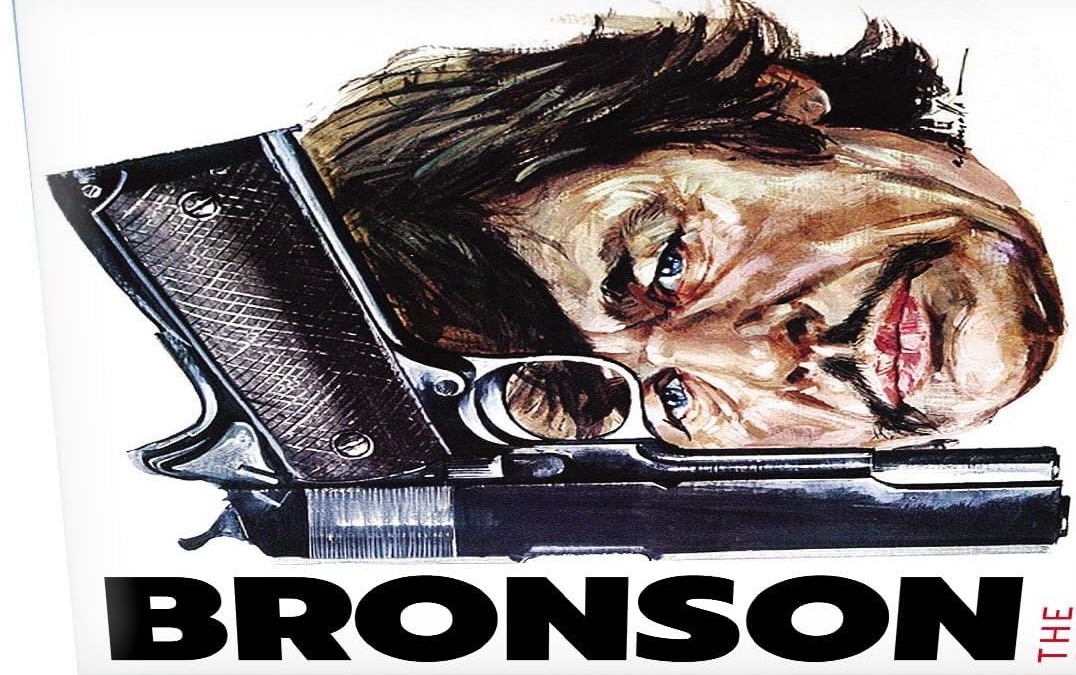
Kino Lorber has put the Charles Bronson Death Wish series into one Blu-ray box set filled with special features.
The Films
Note: these films all feature graphic sexual assaults.
Death Wish
Michael Winner has never been a particularly good filmmaker. Winner, an on-set sadist by most accounts, specialized in blunt force trauma as action exploitation. Up until Death Wish, the director was primarily known for his Marlon Brando thriller The Night Comers. Death Wish was the first film that was a true-blue smash hit. The film struck a nerve with a certain sect of people who lived in fear of violence in all its forms in metropolitan areas. It was nightmare fuel and exploitative, violent payback wish fulfillment.
After successful architect Paul Kersey’s (Charles Bronson) wife and daughter are assaulted, the once peaceful man spirals out of control in a city out of control. Kersey begins to see retribution at every alley and corner of New York City. Kersey begins to enact his rage against every would-be mugger in New York. Even as the police close in on him, they see political maneuvers, not justice.
Death Wish makes Dirty Harry look like a Bergman film. The film begins in happiness just long enough as Winner can handle, which is about three minutes, before he begins his real expertise as a director … hellish nightmarescapes of urban violence against innocents. The assault on Kersey’s wife and daughter is as horrifying as it needs to be for Winner to feel justified in taking Kersey down the long-winded track of blinded vengeance.
Unintentionally, Winner’s film, by robbing Kersey of actual vengeance on those who perpetrated the murder of his wife and the sexual assault on his daughter (something that the later films would adjust), gives us a look at the futility of violence. Kersey is lashing out unchecked at criminals because of the tragedy that has befallen him. There is a reality to the unsolved nature of the crimes and violence that fractures Kersey.
Though it feels less articulated because Winner has no concern with the affairs of the family or Kersey’s pathology beyond his bloodlust. Death Wish is still a striking bit of cinema, but less articulate than one would hope for. Brian Garfield’s novel of the same name is the type of piercing arrow to the soul that denounces violence in all its forms, no matter who’s behind it. Winner’s film is okay with violence as long as it’s justified by some heinous act.
Death Wish II
Eight years later, in 1982, Cannon Films took over the Death Wish franchise and unleashed Michael Winner to make whatever he wanted as long as he could get Charles Bronson to star. What Winner made was one of the most unhinged action thrillers ever in Death Wish II.
After the events of Death Wish, Paul Kersey (Bronson) has moved himself and his daughter to LA to get away from the trouble of New York City. But trouble follows Kersey in Death Wish II. Not just Kersey but his daughter (Robin Sherwood) and his housekeeper (Silvana Gallardo) are the victims of a street gang that Kersey slights. The violence activates Kersey into not just a vigilante without purpose but a straight-up killing machine bent on erasing everyone in his path who twitches the wrong way. As his acts of vengeance captivate the citizens of Los Angeles, it incurs the wrath of the LAPD, even the NYPD, who let him go in the first film.
This is Winner’s GTA before GTA. There is a moral black hole at the center of this film that feels like the crassest bankrupt enterprise of the series. Especially in its Unrated Director’s Cut form, which has extended scenes of sexual assault, violence towards women, cops torturing suspects, and Charles Bronson’s Paul Kersey exacting his revenge on those who killed his daughter and his housekeeper. As in all of Bronson’s 80s work, he remains a stone-faced machine of death, dealing out his favorite drug of choice.
There is a propulsiveness to everything that happens, powered by the Jimmy Page score (yes, Led Zeppelin’s Jimmy Page). The script by David Engelbach is just a series of complications faced by Kersey in order to ensure not just that his vengeance is successful, but that he isn’t implicated in any way, shape, or form. It feels like more of a Winner fevered dream of Valhalla than an actual story. One where Kersey has gone from a man fractured by tragic violence to a CIA-level assassin who is able to pull off various complex operations of infiltration.
The film doesn’t really end other than to show Kersey’s girlfriend knows he’s the street vigilante and has given him back his engagement ring. Allowing Kersey to carry on with his real work of dealing death to those the justice system is unwilling to go after. Amoral Batman for the Reagan 80s.
Death Wish 3
There are so many questions one has when watching Death Wish 3. The biggest one is how someone convinced Jimmy Page (yes, that Jimmy Page from Led Zeppelin) to come back as the composer after the cinematic war crime that was Death Wish 2? Yes, let me repeat that… how did someone convince Jimmy Page (yes, that Jimmy Page from Led Zeppelin) to come back as the composer after Death Wish 2? That isn’t to say Death Wish 3 and Death Wish 2 aren’t entertaining as hell pieces of nonsense, but both are cinematic flaming garbage, it must be stated, with so many unbelievable turns that it could have only been produced by the Cannon Film Group.
Death Wish 3 proves without a doubt that Paul Kersey (Charles Bronson) has nothing but bad luck. Reeling from the events of Death Wish 2 (and probably Death Wish as well), Kersey is now your average Vigilante going from town to town cleaning up the local “street trash” like some sort of psychotic Kane from Kung-Fu. Our “hero” heads back to NYC to see a friend, and (un)luck would have it that he runs in just as his friend has been murdered. Worse still is the fact that the cops ran in right at that moment as well and accused him of it. After being roughed up by fascist super cop played by character actor supreme Ed Lauter, he’s set free.
Kersey is set free, alright. Free to start a land war in New York City and eventually levels four city blocks as he murder death kills every gang member in sight. With names like The Giggler (because you know he giggles), these “gangstas” are straight out of Cannon’s other franchise Breakin’ (specifically Breakin’ 2: Electric Boogaloo). Every person that isn’t named Bronson is merely cannon fodder for the eventual all-out war that Bronson lays down on the gang members.
Michael Winner is not a subtle filmmaker. His appetite for cruelty and sadism is a mile wide and has no depth. One just needs to watch Death Wish 2 and its multiple protracted sexual assault scenes to understand. Winner here is in comic book form, at least his version of a comic book (think Frank Miller). Death Wish 3, for all its violence, is an unserious cartoon with has an elderly couple laughing at the carnage outside their window (it’s gang members, so it’s okay). It’s all some sort of lunatic fever dream that one can laugh off because it’s so ridiculous, and if anyone actually thought it was truthful would need some serious help.
In the center of the chaos is the Robert DeNiro to Michael Winner’s Martin Scorsese … Charles Bronson. The stone face superstar is as you expect in this third outing… stone faced. Bronson, in his Cannon/Winner years, seems to be bored even with the action scenes here. As I had said in my Death Wish 4: The Crackdown review: “Bronson is Bronson here. Stoic or Stone-faced, depending on your love of one of the Chucks that made Cannon Films. Kersey here has gotten to the point where he’s Jason Vorhees for the 1980s action set. All they need to do is activate him to ensure a maximum amount of carnage. If Death Wish 3 is the Jason Takes Manhattan of the DW series, then The Crackdown is certainly Jason Goes to Hell. How does one critique the performance of Jason? You can’t, and so I won’t, other than to say Bronson knew exactly what he was doing and what his audience wanted. He delivered time and time again, no matter the shenanigans that Golan and Globus pulled.”
Though Death Wish 3 in Winner’s hands does make one feel like they’re watching some deranged proto-Terminator style film where Bronson has been sent back in time to kill these gang members, as eventually they will lead the resistance against the android overlord. In fact, that would be a greater storyline than Death Wish 3’s kill everyone real good plot. Though when taken on its own terms, it’s a hell of a ride… one that any fan of 1980s action films should take.
Death Wish 4: The Crackdown
Bronson be piping mad at crack, and cracking down on the crack epidemic.
That’s really all you need to know about J. Lee Thompson’s entry into the Death Wish series. Taking over for Bronson’s other choice director Michael Winner, Thompson loses the extra-extra Sadism and Rape obsession (almost) for a film that’s a play on Yojimbo (or as most of cineastes want to claim; A Few Dollars More). What’s not missing is the cartoonish almost satirical violence, panache for villainy, and criminality that feels like it was the inspiration for the GTA series.
Bronson’s Paul Kersey is alternately the unluckiest man in the world and the luckiest cis white male of all time. How Kersey after three murder filled streaks of vengeance (one in New York that literally decimated four city blocks, all to the soundtrack of Jimmy “Led Zepplin” Page’s roaring guitar and compositional weirdness) is still roaming around can only be attributed to his white male previlige and killing of what people of the 80s thought were the dredges of society.
Any who, he’s back in L.A. living the good life as an Architech again. He’s even got a new lady friend, who of course has a daughter. It’s like Karma is trying to teach Kersey a lesson in turn the other cheek because in two shakes of a lamb’s tail (end of the first act) the daughter is a goner. Why? Crack baby, crack. Kersey goes into action. But this time he has help from a wealthy New Paper Owner, remember those, Nathan White (John P Ryan) with a grudge against those drug dealers too.
Together they form a strike force. White gives Kersey the details. Kersey executes them, literally! Though the plan is to get two rival gangs, one Italian and one Latino, to start a war against one another. Though in a mid-film twist there’s a third entity that was there pulling the string all along. It’s one of the clever bits of screenwriting from Gail Morgan Hickman screenplay that’s three steps away from being a Rambo and the Forces of Freedom episode. Though the story is aided by Thompson’s astute economical direction.
Bronson is Bronson here. Stoic or Stone-faced depending on your love of one of the Chucks that made Cannon Films. Kersey here has gotten to the point where he’s Jason Vorhees for the 1980s action set. All they need to do is activate him to ensue maximum amount of carnage. If Death Wish 3 is the Jason Takes Manhattan of the DW series, then The Crackdown is certainly Jason Goes to Hell. How does one critique the performance of Jason? You can’t and so I won’t other than to say Bronson knew exactly what he was doing and what his audience wanted. He delivered time and time again, no matter the shenanigans that Golan and Globus pulled.
Death Wish 4: The Crackdown ends as one would think it would in a roller-skating rink with Bronson vs the Final Boss. Though like others in the series it end in the most unexpectedly dour ways.
Death Wish 5: Faces of Death
Confession time, 2023 is the year that I finally saw all the Death Wish films. I had seen the first two early in my life. I thought that I had seen the rest of the Death Wish films. Turns out I realized very quickly that I mistook all of the Death Wish films after Death Wish 2 for Kinjite: Forbidden Subjects. Who can blame me though? Kinjite is literally a Death Wish film with a different title (hell, I willing to be good money in Italy they called it Death Wish 6: Watch Eatin’ Time).
In my review for Death Wish 4: The Crackdown, I compared Kersey to Jason Vorhees. Which is a good comp I think because it’s equally applicable to Death Wish 5: The Face of Death. Though if The Crackdown is Jason Goes to Hellthen The Face of Death is Freddy vs. Jason. Bronson/Kersey have met their match in Tommy O’Shea/Michael Parks. O’Shea is the ex-husband of Kersey’s new love interest fashion designer Olivia Regent (Leslie-Anne Down). DW5 wastes zero seconds showing us the kind of villainy that Kersey will eventually face with O’Shea cutting fat from a man and throwing racial slurs like its, well, the 1980s.
Parks a truly great actor is having the time of his life here acting with an accent that rivals anything that Burt Reynolds did in the 1970s (if you know, you definitely know). O’Shea is a villain so villainy that he out villained villains every day of the week and twice on Sunday. Like any good crime lord in a Death Wish film he’s got a bunch of equally villainy henchmen. Bronson vs Parks is something to behold and it plays out as some sort of demented divorce custody battle by way of horror action film – each vying for the affection of Olivia’s daughter.
The lunacy here is ratcheted up even beyond the Yojimbo-on-crack that is Death Wish 4: The Crackdown. There’s no subtlety here. Just everything blasted to the Spinal Tap 11. Which makes things even funnier than it could possibly be intended. The way that Bronson stoically goes through everything, only showing the slightest bit of glee once he is able to exact his revenge on the goons that have killed, SPOILERS, his girlfriend.
Though the first two act of kills are all a preview to the main event that’s sent in a mannequin-filled garment factory. Kersey goes full on slasher as he disposes of goon after goon until the only the Final Boy aka O’Shea is left. Trust me when I say how he dispenses with O’Shea is like Vanessa Williams sung so beautifully, the best for last…
One does feel a bit of regret after the full evolution of Paul Kersey into the first Baba Yagga of Action Cinema (he crawled so John Wick could run) had at least a few more entries. We will just have to do with Death Wish 5: The Face of Death as delivery on the promise of its title.
The Transfers
Death Wish
The original film itself is not a visual stunner to begin with. The film was shot to invoke gritty realism by Arthur J. Orritz. That being said, the image is flawless without a single spec of dirt or scratch present throughout the run time. This Blu-ray is sourced from the same 2022 4K Scan of the 35mm Original Camera Negative that Kino Lorber’s 4K UHD release is from.
Death Wish II
This transfer (both the theatrical and director’s cut) is sourced from the Vinegar Syndrome release of the film from a few years back. The transfer is flawless with no scratches or dirt present. Just an excellent representation of the 35mm film shot by Thomas Del Ruth and Richard H. Kline.
Death Wish 3
The film itself is not a visual stunner to begin with. That being said, the image is flawless without a single spec of dirt or scratch present throughout the run time. The Dolby Vision encoding gives all the blacks and contrast levels deeper details. Bravo to Kino Lorber for taken the time and care for another sold 4K UHD upgrade.
Death Wish 4: The Crackdown
The transfer, unknown if knew or from an existing older one, is beautifully rendered cinematically looking image. The film looks like a pristine 35mm archival prints – with minor defects giving the image more character than a spotless DNR’ed to death image. Fans of the film will delight in the image’s uptick in quality from the prior – 20th Century Fox Discs and having the disc did a sampling of both images – Blu-ray release.
Death Wish V: The Face of Death
The transfer, unknown if new or from an existing older one, is beautifully rendered cinematically looking image. The film looks like a pristine 35mm archival prints – with minor defects giving the image more character than a spotless DNR’ed to death image. Fans of the film will delight in the image’s uptick in quality from the prior – 20th Century Fox Discs and having the disc did a sampling of both images – Blu-ray release.
The Extras
They include the following;
DISC 1 (DEATH WISH):
DISC 2 (DEATH WISH II):
DISC 3 (DEATH WISH 3):
DISC 4 (DEATH WISH 4: THE CRACKDOWN):
DISC 5 (DEATH WISH V: THE FACE OF DEATH):
DISC 1 (DEATH WISH):
The Audio Commentary by Film Historian Paul Talbot, the Author of the Bronson’s Loose! Books. Talbot opens with his credentials and where Bronson was in his career as he made Death Wish, including the on-location shoot in Hawaii. Some of the details include the development of the property, including Sydney Lumet being initially hired to direct; the casting what-if’s that eventually led to Charles Bronson being hired along with Michael Winner as director; the production schedule and budget; a history and style of Michael Winner; a discussion of the assault in the film, which Winner added to the script, and his justifications; how Bronson and Winner began their multiple film collaboration; the true crime facts of New York City in the 1970s and how this bore the story of Death Wish; a discussion of the film’s deleted scenes and unfilmed scenes from the script/adaptation throughout; a discussion of the novel and the differences between it and the film throughout; a discussion of the locations and studio sets that the production used; a discussion of the various actors that appear in the film; and much more.
John Herzfeld on Death Wish (18:24) – the all-new interview with the actor who played one of the subway thugs that attempts to rip off Bronson begins with how Death Wish was the first job he ever got and how closely the film resembled the city at the time. The actor goes on to discuss almost being mugged around the time of the film; how he was cast by Michael Winner; why he wasn’t credited; the film that made him want to be a filmmaker and actor; working on the day with Bronson and Winner; his look and dissection of why the film works; some great stories about his best friend and college buddy Sylvester Stallone; and much more.
Radio Spots (1:31) – two radio spots, one 60-second spot and another 30-second spot.
TV Spots (1:03) – two 30-second TV spots.
Rounding out the special features are trailers for Death Wish (2:20); Violent City (3:54); Cold Sweat (2:36); Chato’s Land (2:10); The Valachi Papers (3:23); Mr. Majestyk (1:33); Breakout (1:34); Breakheart Pass (3:07); The White Buffalo (1:52); Cabo Blanco (2:49); Murphy’s Law (1:30);
DISC 2 (DEATH WISH II):
The first Audio Commentary by Film Historian Paul Talbot, the Author of the Bronson’s Loose! Books. Talbot opens with his credentials and why the production chose Los Angeles over San Francisco, where the script was initially located. Some of the details include how Cannon Group Menahem Golan wanted to direct, but Bronson would only do the film with the original director, Michael Winner; Winner’s uncredited rewrite of the script, editing of the film, and producing of the picture; the original sequel written by novelist Brian Garfield – a larger discussion of the differences between the book and the novel which they were not able to secure; the sexual assaults that were specifically written by Michael Winner – details of the production of the scene, the casting, what was cut, cinematographer Thomas Del Ruth quitting over Winner’s filming this scene; the production schedule and budget of the film; a discussion of what distinguishes the unrated cut and the theatrical cut; a larger discussion of the various action scenes and how Bronson was a part of the choreography and stunt work on each; a discussion of the locations and studio sets that the production used; a discussion of the various actors that appear in the film; and much more.
The second Audio Commentary by Film Historians Steve Mitchell and Nathaniel Thompson. The duo opens their track with their credentials before diving into Cannon Films, which produced the film, and a brief history of Golan and Globus. Some of the details include how this sequel came to be, with Dino Delaurentiis wanting to make another film with Michael Winner and how the rights and other projects contributed to Death Wish II eventually being made; the literary sequels and how the second book was eventually made as Death Sentence directed by James Wan starring Kevin Bacon; the reasons why they chose Los Angeles when the original had Kersey going to Chicago; the various versions of the film both TV cuts, theatrical cuts, and unrated version that this film is; the career of Jill Ireland and her work with her husband Charles Bronson – and the films they did together; a larger discussion of Los Angeles now versus Los Angeles back whenDeath Wish II was filmed; the work of cinematographers Richard H. Kline and Thomas Del Ruth – and the collaboration with director Michael Winner; anecdotes from the production; interviews from the cast and crew about the film and the production; a larger discussion of the reasons why the new transfers look so much better than even release prints of these films; a larger discussion of the life and directorial career of Michael Winner; a larger discussion of the various locations the production used around Los Angeles; a larger discussion of the various actors that appear in the film; and much more.
Rounding out the special features are trailers for Death Wish (2:20); Death Wish II (1:55); Death Wish 3 (1:40); Death Wish 4: The Crackdown (1:34); Death Wish V: The Face of Death (1:00);
DISC 3 (DEATH WISH 3):
The first of two Audio Commentaries is an archival track by Film Historian Paul Talbot, the Author of the Bronson’s Loose! Books. Talbot opens with his credentials and where Bronson was in his career as he made Death Wish 3. Some of the other details include the original source material written by Brian Garfield; a brief production history of both the original and the Cannon-produced sequel; the building and construction of the New York City set that was erected in South London; a discussion of the career and personal history of actor Ed Lauter, including his work with Bronson; a discussion of the career and personal history of actor Gavan O’Herlihy; a discussion of the career and personal history of actor Martin Balsam; a history of the Michael Winner and Charles Bronson collaboration; the production schedule of the film both in London and New York City; some of the violent crime figures in 1985 when the film was made; the post production process – including the fact that Winner edited the film himself and the editing pseudonym; a larger discussion of what was shot on location in New York and what was shot in London; a larger discussion of the various bits of violence that were cut to obtain an R-rating; the various scenes that were deleted (some included in the TV version) or not shot; a discussion of the various actors that appear in the film; and much more.
The second of the Audio Commentaries is an all-new track by Film Historians Steve Mitchell and Nathaniel Thompson. The duo opens their track with their credentials before a discussion of the iconic 59th Street Bridge, which shots of opens the film, before discussing how the film was filmed in both New York and London. Some of the other details include how their first viewings as New Yorkers, they could tell that the film was not filmed entirely in New York; a discussion of the reasons why Michael Winner returned to the series, and the reasons why it was made as an action film rather than a grim revenge thriller; a discussion of the series up until this point; a discussion of the career of director Michael Winner both pre and post-Death Wish 3; a discussion of the history of the Cannon Film Group which produced the Death Wish series (2 – 4 at least) and many of the conversative action films of the 1980s that rose to popularity; the cartoonish nature of the entire film and catering to the specific audience they made the film for; a larger discussion of the history of Bronson’s collaboration with Winner – a detailed discussion of a lot of their films together; a larger discussion of the style of director Michael Winner; a larger discussion of the various actors that appear in the film; a larger discussion of the various New York City locations they use and their historical and social relevance; and much more. The track is another winner by the duo, with plenty of quotes by Bronson and company from the time.
Alternate Ending (Newly Restored in HDR and SDR) with Audio Commentary by Steve Mitchell and Nathaniel Thompson (11:04) – the alternate ending itself is included on the Blu-ray version but not the 4K UHD disc. The alternate ending is a tag / post-credit sequence about the fate of Paul Kersey, which did not appear in the original version. The commentary by Mitchell and Nathaniel Thompson discusses the ending tag and some additional production details they did not get into their commentary proper of the finale.
Interview with Actor Kirk Taylor (8:26) – in this all-new interview with Taylor opens with being cast by director Michael Winner. The actor goes on to discuss his relationship with Winner; how the director helped him get an audition for Full Metal Jacket; working with Bronson – including a few anecdotes; working on London, and their recreation of New York; shooting his death scene; working with Alex Winter and Gavan O’Herlihy; and much more.
Rounding out the special features are trailers for Death Wish (2:20); Death Wish II (1:55); Death Wish 3 (1:40); Death Wish 4: The Crackdown (1:34); Death Wish V: The Face of Death (1:00);
DISC 4 (DEATH WISH 4: THE CRACKDOWN):
The Audio Commentary by Film Historian Paul Talbot, the Author of the BRONSON’S LOOSE! Books opens with Talbot’s bonafides and heads into this well researched and informative track. Some of the details include the score written by Bronson’s stepsons; the first film to not be directed by Michael Winner; details about the underground parking garage nightmare that opens the film; the development of the script and the various different treatments that were rejected and why they were rejected; how Golan and Globus got to Charles Bronson to return for a fourth time to play Kersey; the reasons why Michael Winner did not return for the fourth entry; the development of the script by screenwriter Hickman – including him being on set for the production; the production schedule and budget – the lack of a budget and how that affected the movie in its design and visual look; Bronson’s salary and contract stipulations; the issues the film had with the ratings board to secure an R-Rating; a larger discussion of the various deleted scenes and moments from the first cute; a larger discussion of the various guns that are used within the film; Talbot throughout discusses the various actors, stunt people, and behind the scenes crew that worked on the production; and more. If there’s anyone you want to comment on a Bronson starring vehicle its Talbot.
Rounding out the special features are trailers for Death Wish 4: The Crackdown (1:34), Death Wish (2:20), Death Wish 5: The Face of Death (1:00), The White Buffalo (1:52), Murphy’s Law (1:30), Assassination (1:58)
DISC 5 (DEATH WISH V: THE FACE OF DEATH):
The Audio Commentary by Film Historian Paul Talbot, the Author of the BRONSON’S LOOSE! Books opens with Talbot’s bonafides and heads into this well researched and informative track, which feels like a continuation of his equally enlightening track on Death Wish 4: The Crackdown. Some of the details include the various alternate title dropping of the 5; the fact that this film was not produced by Cannon Films rather 21st Century Films – Golan, minus Globus, producing; how the film is the single film without any sexual assault/rape; how the film was shot entirely in Toronto Canada subbing for New York City; the development of the script – even Crackdown’s screenwriter Gail Hickman own version of the 5th film that Golan rejected for budget concerns; the strange choice that writer/director Allan A. Goldstein; the production schedule and budget – the lack of a budget and how that affected the movie in its design and visual look which is more of a TV movie because of the speed at which they had to film; Bronson’s salary and contract stipulations; a larger discussion of the various deleted scenes and moments from the first cute; a larger discussion of the various guns that are used within the film; Talbot throughout discusses the various actors, stunt people, and behind the scenes crew that worked on the production; and more. If there’s anyone you want to comment on a Bronson starring vehicle, its Talbot.
Rounding out the special features are trailers for Death Wish 5: The Face of Death (1:00), Death Wish (2:20), Death Wish 4: The Crackdown (1:34), Cold Sweat (2:36), Mr. Majestyk (1:33), Breakout (1:34)
The Final Thought
Kino Lorber has done right by Bronson fans by creating The Death Wish Collection Box Set. A special feature-filled box set of Bronson’s most iconic films. Recommended!!
Kino Lorber’s Blu-ray Edition of The Death Wish Collection box set is out now.
Share this:
Like this:
Discover more from The Movie Isle
Subscribe to get the latest posts sent to your email.