Wes Craven filmography is as wildly varied and inconsistent as any horror director. One thing that the director could never be accused of is not trying to swing for the fences. Deadly Blessing is one of those horror films from the director that is highly entertaining because it’s so wrapped up in its fear of religious cults (as was the norm of the 1980s) and its truly deranged third-act twist. Starring an over-the-top Ernest Borgnine, Isaiah is a cult leader whose son, Jim (Jeff East), has left the order and will stop at nothing to get the land back from his daughter-in-law Martha (Maren Jensen), which he affectionately refers to as “the succubus”.
Part of the fun of the film is seeing Borgnine going hard with material that’s truly this arched and may be the only person that really understands just how ridiculous this all is. There is something with the way his eyes glint with a sense of childish glee through the entire film that indicates he understands what others don’t. The rest of the cast plays it all with a sort of semi-serious dramatic tone which makes it even more entertaining, especially as the film drives home. In fact, one can see and completely understand why Sharon Stone would eventually become a superstar. She’s transfixing as one of Martha’s friends even when the film requires her to do some truly silly acts.
Deadly Blessing almost feels like Wes Craven saw Sean Cunningham’s Friday the 13th and decided to double down, and by doing so creates something truly ridiculous you can’t help but laugh at (not with). Though this isn’t a bad thing. Craven has made something so self-serious without any sort of tongue-in-cheek or winking nod that one cannot help but laugh. It’s like no one decided to stop Craven and Company from driving off the cliff with a car full of explosives just to see what would happen. The result is something that needs to be seen to be believed. A film that has more confusing, laughable twists than a drunken game of Twister.
The Transfers
The all-new Brand New HDR/Dolby Vision Master – From a 4K Scan of the 35mm Original Camera Negative is an excellent upgrade. This new master is a huge upgrade from the 2013 Scream Factory Blu-ray. The Dolby Vision encoding gives everything greater detail within the blacks. The transfer shows no signs of wear and tear; there isn’t a scratch or blemish present through the runtime. There’s a clarity and a beautiful grain structure present in this upgraded 4K master that makes it feel like a freshly struck archival 35mm film print. Another big win for Kino Lorber.
The Extras
They include the following;
DISC 1 (4KUHD):
Audio Commentary with Director Wes Craven and Sean Clark, Author of Horror’s Hallowed Grounds
NEW Audio Commentary by Film Historians Troy Howarth and Eugenio Ercolani
DISC 2 (BLU-RAY):
Audio Commentary with Director Wes Craven and Sean Clark, Author of Horror’s Hallowed Grounds
NEW Audio Commentary by Film Historians Troy Howarth and Eugenio Ercolani
Secrets Revealed: Interview with Actress Susan Buckner
Say Your Prayers: Interview with Actor Michael Berryman
Rise of the Incubus: Interview with Designer John Naulin
So It Was Written: Interview with writer Glenn M. Benest and Matthew Barr
TV Spots
Radio Spots
Theatrical Trailer
The first of two Audio Commentaries is an archival track with Director Wes Craven and Sean Clark, Author of Horror’s Hallowed Grounds. The duo opens with how the project came to Craven, which began with producer Max Keller working on a TV movie (Stranger in Our House), then eventually getting an offer to work with Keller again on this film. Some of the details include Craven rewriting the project and what he brought to that part of the development; working with Ernest Borgnine; the casting and working with Sharon Stone; filming in and around Dallas, Texas; a discussion of the supernatural elements and who was responsible for the ending; how his childhood as a strict Baptist informed the film’s religious elements along with some of the research he did on cults; working with Maren Jensen and what happened to her after this (which was her last film); why Craven was drawn towards family dynamics within horror films more than “friends” and why he feels this makes for a more powerful story; the surprising amount of animals that they had to deal with during the production; the accident that injured Borgnine during the production; some of the freedom he had on the production for some of the set pieces; how dreams inform a lot of his films and his fascination with dreams dating back to college and majoring in psychology; working with cinematographer Robert Jessup and why he chose Jessup; and much more.
The second Audio Commentary is an all-new track by Film Historians Troy Howarth and Eugenio Ercolani, beginning with their introductions and a joke about Wes Craven’s alter ego (Abe Snake) before diving into this divisive film amongst fans. Some of the details include the context in which this was made and the troubled post-production period in this film; the production schedule and budget and the various locations they shot in Texas; the films that Craven made before this film that were less than successful and troubled productions before the success of A Nightmare on Elm Street; the difference between the Amish and the Midianites that the religious cult is based on; a side conversation about the collaboration between Wes Craven and Sean Cunningham before Friday the 13th and Craven’s tangential involvement in that first film; the personal and professional history of Craven before making films and the context in which the director began making films; Craven’s work as compared to his contemporaries like Romero, Carpenter, et. al.; the work and collaboration of actor Michael Berryman in Craven’s films; the unique religious themes that this film tackles which is outside the norm of Craven’s work; the work and career of Sharon Stone – including her work through the 70s and 80s before reaching superstardom with Basic Instinct; the work of composer James Horner and their respective points of view on the score itself; the work and career of Ernest Borgnine and the accident that occurred involving the star; Craven’s thoughts on his career and time in horror film; a discussion of the various cast that appear in this film; and much more.
Say Your Prayers: Interview with Actor Michael Berryman (14:14) – in this archival interview with the actor opens with what attracts him to certain roles. Berryman goes on to discuss his first meeting with Peter Locke and Wes Craven after his role in One Flew Over the Cuckoo’s Nest, which eventually led to being cast in The Hills Have Eyes; how he approached his role as William in Deadly Blessing and how he always knew the twist at the end and the nature of the supernatural aspect; the dynamic between the various actors – including working with Sharon Stone; working with Ernest Borgnine; Craven’s transition to a bigger budget feature; how he was hung in the film and the rig they used; and more.
Secrets Revealed: Interview with Actress Susan Buckner (13:06) – in this archival interview with the actor opens with what she liked about this specific role. Buckner goes on to discuss her early career on the stage and how she was hired for a Dancing Troupe on Dean Martin’s Variety show; working on Grease and the fandom after that film; what she loved about working with Craven; her relationship with Maren Jensen and Sharon Stone on the set; how she hid her pregnancy from the production; her thoughts on the film; and more.
Rise of the Incubus: Interview with Designer John Naulin (6:41) – Note: This does contain spoilers for the ending so one should not want this before the film as to ruin the ending. This archival interview featuring John Naulin begins with a title script discussing the changing of the original ending to the one present in the film before Naulin discusses how he got involved with the project. Naulin goes on to discuss his time at Don Post Productions; what they did at the company and what he did; how Deadly Blessing came to them as a special project; the design and execution of the creature effect and Craven’s involvement; and much more.
So It Was Written: Interview with writers Glenn M. Benest and Matthew Barr (20:34) – in this archival interview with their thoughts on what they felt the film was ultimately about. Benest and Barr go on to discuss how they each got into screenwriting; how the idea for Deadly Blessing came through learning about the Amish; the duo developing the screenplay; how Craven came on and his contributions to the screenplay; what it is like working with Craven; being on set for the entire production; and much more.
TV Spots (1:38) – three thirty-second TV Spots.
Radio Spots (2:36) – five radio spots play over the original poster art.

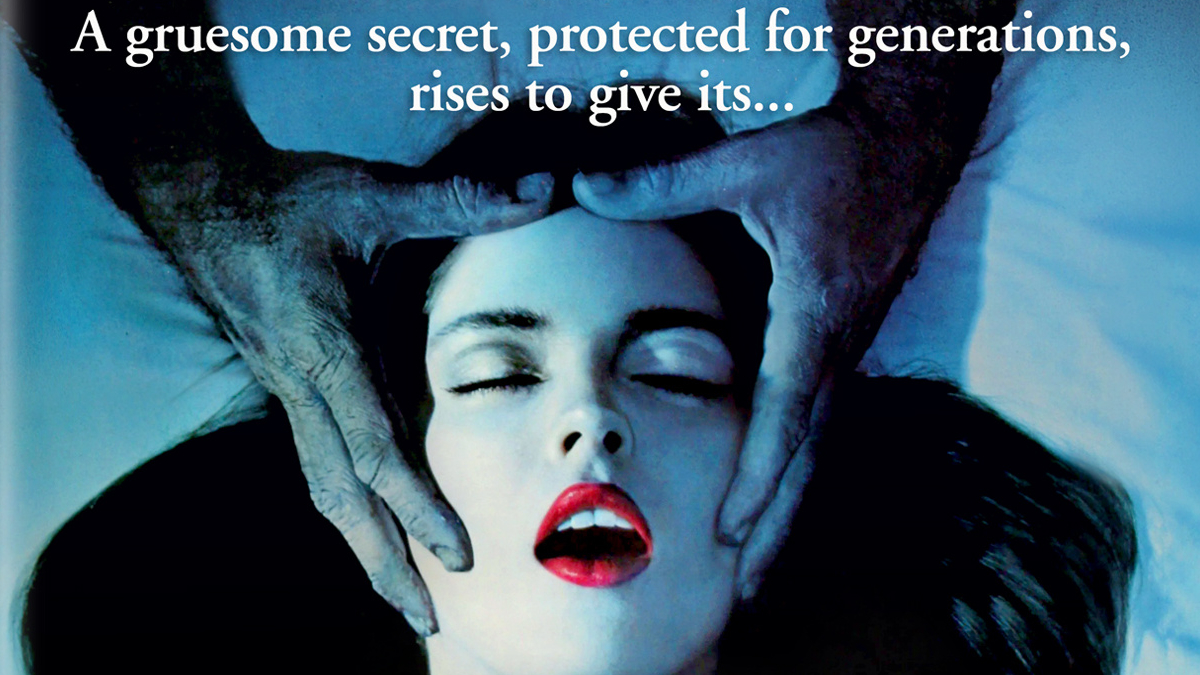
Ernest Borgnine (and a very young Sharon Stone) stars in Wes Craven’s early horror film Deadly Blessing. New to 4K UHD, loaded with special features from Kino Lorber.
The Film
Wes Craven filmography is as wildly varied and inconsistent as any horror director. One thing that the director could never be accused of is not trying to swing for the fences. Deadly Blessing is one of those horror films from the director that is highly entertaining because it’s so wrapped up in its fear of religious cults (as was the norm of the 1980s) and its truly deranged third-act twist. Starring an over-the-top Ernest Borgnine, Isaiah is a cult leader whose son, Jim (Jeff East), has left the order and will stop at nothing to get the land back from his daughter-in-law Martha (Maren Jensen), which he affectionately refers to as “the succubus”.
Part of the fun of the film is seeing Borgnine going hard with material that’s truly this arched and may be the only person that really understands just how ridiculous this all is. There is something with the way his eyes glint with a sense of childish glee through the entire film that indicates he understands what others don’t. The rest of the cast plays it all with a sort of semi-serious dramatic tone which makes it even more entertaining, especially as the film drives home. In fact, one can see and completely understand why Sharon Stone would eventually become a superstar. She’s transfixing as one of Martha’s friends even when the film requires her to do some truly silly acts.
Deadly Blessing almost feels like Wes Craven saw Sean Cunningham’s Friday the 13th and decided to double down, and by doing so creates something truly ridiculous you can’t help but laugh at (not with). Though this isn’t a bad thing. Craven has made something so self-serious without any sort of tongue-in-cheek or winking nod that one cannot help but laugh. It’s like no one decided to stop Craven and Company from driving off the cliff with a car full of explosives just to see what would happen. The result is something that needs to be seen to be believed. A film that has more confusing, laughable twists than a drunken game of Twister.
The Transfers
The all-new Brand New HDR/Dolby Vision Master – From a 4K Scan of the 35mm Original Camera Negative is an excellent upgrade. This new master is a huge upgrade from the 2013 Scream Factory Blu-ray. The Dolby Vision encoding gives everything greater detail within the blacks. The transfer shows no signs of wear and tear; there isn’t a scratch or blemish present through the runtime. There’s a clarity and a beautiful grain structure present in this upgraded 4K master that makes it feel like a freshly struck archival 35mm film print. Another big win for Kino Lorber.
The Extras
They include the following;
DISC 1 (4KUHD):
DISC 2 (BLU-RAY):
The first of two Audio Commentaries is an archival track with Director Wes Craven and Sean Clark, Author of Horror’s Hallowed Grounds. The duo opens with how the project came to Craven, which began with producer Max Keller working on a TV movie (Stranger in Our House), then eventually getting an offer to work with Keller again on this film. Some of the details include Craven rewriting the project and what he brought to that part of the development; working with Ernest Borgnine; the casting and working with Sharon Stone; filming in and around Dallas, Texas; a discussion of the supernatural elements and who was responsible for the ending; how his childhood as a strict Baptist informed the film’s religious elements along with some of the research he did on cults; working with Maren Jensen and what happened to her after this (which was her last film); why Craven was drawn towards family dynamics within horror films more than “friends” and why he feels this makes for a more powerful story; the surprising amount of animals that they had to deal with during the production; the accident that injured Borgnine during the production; some of the freedom he had on the production for some of the set pieces; how dreams inform a lot of his films and his fascination with dreams dating back to college and majoring in psychology; working with cinematographer Robert Jessup and why he chose Jessup; and much more.
The second Audio Commentary is an all-new track by Film Historians Troy Howarth and Eugenio Ercolani, beginning with their introductions and a joke about Wes Craven’s alter ego (Abe Snake) before diving into this divisive film amongst fans. Some of the details include the context in which this was made and the troubled post-production period in this film; the production schedule and budget and the various locations they shot in Texas; the films that Craven made before this film that were less than successful and troubled productions before the success of A Nightmare on Elm Street; the difference between the Amish and the Midianites that the religious cult is based on; a side conversation about the collaboration between Wes Craven and Sean Cunningham before Friday the 13th and Craven’s tangential involvement in that first film; the personal and professional history of Craven before making films and the context in which the director began making films; Craven’s work as compared to his contemporaries like Romero, Carpenter, et. al.; the work and collaboration of actor Michael Berryman in Craven’s films; the unique religious themes that this film tackles which is outside the norm of Craven’s work; the work and career of Sharon Stone – including her work through the 70s and 80s before reaching superstardom with Basic Instinct; the work of composer James Horner and their respective points of view on the score itself; the work and career of Ernest Borgnine and the accident that occurred involving the star; Craven’s thoughts on his career and time in horror film; a discussion of the various cast that appear in this film; and much more.
Say Your Prayers: Interview with Actor Michael Berryman (14:14) – in this archival interview with the actor opens with what attracts him to certain roles. Berryman goes on to discuss his first meeting with Peter Locke and Wes Craven after his role in One Flew Over the Cuckoo’s Nest, which eventually led to being cast in The Hills Have Eyes; how he approached his role as William in Deadly Blessing and how he always knew the twist at the end and the nature of the supernatural aspect; the dynamic between the various actors – including working with Sharon Stone; working with Ernest Borgnine; Craven’s transition to a bigger budget feature; how he was hung in the film and the rig they used; and more.
Secrets Revealed: Interview with Actress Susan Buckner (13:06) – in this archival interview with the actor opens with what she liked about this specific role. Buckner goes on to discuss her early career on the stage and how she was hired for a Dancing Troupe on Dean Martin’s Variety show; working on Grease and the fandom after that film; what she loved about working with Craven; her relationship with Maren Jensen and Sharon Stone on the set; how she hid her pregnancy from the production; her thoughts on the film; and more.
Rise of the Incubus: Interview with Designer John Naulin (6:41) – Note: This does contain spoilers for the ending so one should not want this before the film as to ruin the ending. This archival interview featuring John Naulin begins with a title script discussing the changing of the original ending to the one present in the film before Naulin discusses how he got involved with the project. Naulin goes on to discuss his time at Don Post Productions; what they did at the company and what he did; how Deadly Blessing came to them as a special project; the design and execution of the creature effect and Craven’s involvement; and much more.
So It Was Written: Interview with writers Glenn M. Benest and Matthew Barr (20:34) – in this archival interview with their thoughts on what they felt the film was ultimately about. Benest and Barr go on to discuss how they each got into screenwriting; how the idea for Deadly Blessing came through learning about the Amish; the duo developing the screenplay; how Craven came on and his contributions to the screenplay; what it is like working with Craven; being on set for the entire production; and much more.
TV Spots (1:38) – three thirty-second TV Spots.
Radio Spots (2:36) – five radio spots play over the original poster art.
Rounding out the special features are trailers for Deadly Blessing (2:31); April Fool’s Day (1:43); The Boogens (2:07); Silent Scream (1:16); Prophecy (1:06); Eyes of Laura Mars (3:34); New Year’s Evil (1:48); Cujo (1:47);
The Final Thought
Kino Lorber has provided collectors with another winning 4K UHD upgrade. Highest Possible Recommendations!!
Kino Lorber’s 4K UHD Edition of Deadly Blessing is out now.
Share this:
Like this:
Discover more from The Movie Isle
Subscribe to get the latest posts sent to your email.