It’s always interesting how someone chooses to adapt Bram Stoker’s often-told horror classic. Though the structure remains the same, you often find the nuances within that structure change significantly, giving you a varied result. Dan Curtis’s Dracula adaptation has interesting changes but allows for a truly wickedly fun performance by the vampy Jack Palance as the Count.
The most interesting aspect of the film and adaptation is making Lucy (Fiona Lewis) the focus of Dracula’s affections/lust. Screenwriters Curtis and Richard Matheson switch Mina (Penelope Horner) and Lucy’s roles here. Lucy is now the spitting image of the Count’s long-lost wife, Mina, a mere plaything. Harker, as well, is more of a Renfield-type character, and Arthur (Simon Ward) is more involved with Van Helsing’s (Nigel Davenport) hunt for Dracula.
Curtis’s second collaboration with Jack Palance (the first being The Strange Case of Dr. Jekyll and Mr. Hyde) is a pretty fun compact version of the Dracula mythos. Unable to show a lot of gore, Curtis and Palance have sided with a menacing version of Dracula. The result is an imposing, intimidating, far less romantic version of the story.
One will be surprised by how the film subverts the well-worn story points of Bram Stoker’s story and how many it stays true to. One wishes that Curtis had been able to make a lavish remake for a studio similar to John Badham’s 1979 Dracula with Frank Langella. All the same, this remains a pretty great, down-and-dirty, lean, economical horror film that fans of the story will delight in.
Frankenstein
Curtis understood how to scale back to create an intimate adaptation to classics. The work done on Mary Shelley’s Frankenstein stands as a testament to that notion. Though one can say that it does not come anywhere near the James Whale 1931 classic and its sequel, it stands on its own like Whale’s film, but standing closer to the novel. One does wonder how much Kenneth Branagh was inspired by this adaptation for his own.
Bo Svenson is a unique but ultimately inspired choice for the monster, as his performance is so far away from Boris Karloff’s lumbering child it can’t even be compared. Svenson’s more closely resembles the abandoned creation of Shelley’s work. A tragic figure that has no idea of its strength or understanding of the complexities of life. It’s heartbreaking work that’s paired beautifully with Robert Foxworth’s arrogant egomaniacal Dr. Frankenstein. Foxworth is perfectly cast as the unsympathetic doctor who tempts fate by playing god and pays the price for it. The way that Foxworth’s Frankenstein does not understand until the very last moments is a beautiful effect brought from the novel.
One does wish there were some way that Curtis was able to create the novel’s Antarctic bookends. That is a minor quibble for a film that manages to surprise with its artful visuals, considering its TV Movie origins. Most importantly, Curtis and Svenson manage to keep the tragedy, anger, and sadness of Frankenstein’s creation intact.
The Strange Case of Dr. Jekyll and Mr. Hyde
Of the two collaborations between Producer/Writer Dan Curtis and Star Jack Palance, their adaptation of The Strange Case of Dr. Jekyll and Mr. Hyde is the superior film. Palance is inspired casting as the doomed Doctor and his alter ego. The actor is on fire, devouring and chewing everything in his sight throughout the runtime of the film.
Told through flashback and voice-over narration by Jekyll’s friend and lawyer, George Devlin (Denholm Elliot), we see his meek but genius friend’s life turned upside down by the erratic and violent Mr. Hyde. What Devlin does not understand is that they are one in the same. Jekyll, through his research on the id of man, has unlocked his own animalistic nature and transforms into the ravenous Hyde. Under the guise of his breakthrough, revelatory research, Jekyll continues to unleash Hyde, who forms an unhealthy relationship with a bar girl (Billie Whitelaw). As Hyde’s tendencies turn murderous, there is no way for the man of science to control the man of violence.
Curtis’s original vision was not what thankfully ended up on screen. This scaled-down and dirty version of his original adaptation works because of how intimate it is. More of a chamber piece than a large-scale costume horror drama. The way the back alley by gaslight grime of the late 1800s London works perfectly with Palance’s performance. Adding in the stellar work of Denholm Elliot and the heartbreaking performance of Billie Whitelaw, you have something truly special and elevated beyond the film’s TV Movie Origins.
Full credit to not just due to Palance in this one-of-a-kind performance, but also his collaboration with Makeup FX legend Dick Smith. Smith’s work here unleashes something in Palance, and likewise is true of Palance. The makeup is not just on Hyde, but Smith, working with Palance creates subtle FX work on the normal visage for Palance, giving both such distinct visual looks that allow Palance to go places that the actor was rarely given a chance to. The result is a truly frightening performance that stands as one, if not “the” crowning achievement of the actor’s career.
The Transfer
Dracula
This is more of a traditional transfer as the film was shot on 35mm (and on location less). Kino’s work here is truly wonderful. The image is sharp while retaining the grain structure of the 35mm origins. The transfer is flawless with no dirt or scratches through the run time. The color reproduction and contrast levels are near perfect and the highlight of the transfer. Kino Lorber continues to marvel and amazing with the level of quality and care their transfer’s show.
Frankenstein and The Strange Case of Dr. Jekyll and Mr. Hyde
These are the two odds transfers that this reviewer has had to discuss in his decade of reviewing home video releases. Each are sourced and restored from their videotape masters, each having been shot on video. Though it should be qualified that these were shot on professional grade video of the era (1968 and 1973 respectively). I mention this and qualify everything because these are some of the best restorations in recent memories. The work here is masterful because they’ve managed to retain and keep the image stable and little to no ghosting (unfortunately there is some which cannot be helped). The image looks beautiful in that 70s era hazy look (think Geoffery Unsworth or the Dr. Who episodes of the era) that for this reviewer is stunning. Each of the films which take place in the Victorian Era have something added to their visual milieu with this video hazy look. The image itself is clean and has no scratches or dirt as its sourced from the tape itself. The level of detail will surprise many who have certain expectations from video from any era. Bravo to Kino Lorber for bringing these two shot on video films to Blu-ray in these beautiful restorations.
The Extras
They include the following;
Introductions to All Films by Jeff Thompson, Author of The Television Horrors of Dan Curtis
Dracula Audio Commentary by Mark Dawidziak
Dracula Interview with Actor Jack Palance
Dracula Interview with Producer/Director Dan Curtis
Dracula Spanish language soundtrack
Dracula Alternate Footage and Scenes
Frankenstein Audio Commentary by Film Scholar Rodney F. Hill (Hofstra University)
Frankenstein Audio Commentary with Actors Robert Foxworth (Victor Frankenstein) and John Karlen (Otto Roget)
Frankenstein ABC-TV Wide World Mystery Promos
Dr. Jekyll and Mr. Hyde Audio Commentary by Author, Artist and Film Historian Steve Bissette
Dr. Jekyll and Mr. Hyde Interview with Makeup Effects Artist Dick Smith
DISC ONE:
Dracula Introduction by Jeff Thompson, Author of The Television Horrors of Dan Curtis (7:02) – begins with this production aired on NBC (not ABC) after the premiere of a new TV Sitcom, Good Times. Thompson goes on to discuss the A-List cast and crew that Curtis put together for this particular production; the differences in adaptation, including Jack Palance’s performance, the changes made, connections made to Vlad the Impaler, the reasons why this connection was made; the score by Robert Cobert; the 3 hour version of Dracula which is now lost (though some footage appears on this disc); and much more.
The all-new Audio Commentary on Dracula is by Mark Dawidziak begins with his credentials (including books about this film, including a Richard Matheson book) before diving into the Dan Curtis-directed film. Dawidziak’s commentary track is a mostly a non-screen-specific track that charts everything from Dan Curtis’ career; his collaboration with Richard Matheson not only on this but on the other TV Movies and Series like The Night Stalker and Trilogy of Terror; Curtis’ rise in TV and Film; Richard Matheson’s career as a screenwriter, novelist, etc.; the of the Stoker novel itself and the reasons why it would eventually deviate from the source material; the work of actor Jack Palance in this picture and the other film he worked with Curtis on The Strange Case of Dr. Jekyll and Mr. Hyde; the films the production itself and anecdotes from it; and much more.
Dracula Interview with Actor Jack Palance (3:55) – the archival interview opens with the actor admitting that the work frightened him because he was becoming too much like Dracula. The actor goes on to discuss the reasons why he did the film.
Dracula Interview with Producer/Director Dan Curtis (4:20) – the archival interview discusses his love of the original story, the adaptation process with Richard Matheson, and much more.
Dracula Alternate Footage and Scenes (6:29) – this footage is presented accompanied by music from composer Robert Cobert’s score for the film. Much of it is inconsequential outtakes, though there is some great additional blood FX work at the end.
Trailer (2:52)
DISC TWO:
Frankenstein Introduction by Jeff Thompson, Author of The Television Horrors of Dan Curtis (4:15) – Thompson discusses Frankenstein (which aired the same night as Curtis’ own The Night Stalker) and the various cast and crew that helped bring this production to life. The author goes on to discuss the uniqueness of the production and this particular adaptation.
The first of two archival audio commentaries on Frankenstein is one by Film Scholar Rodney F. Hill (Hofstra University). Hill approaches the commentary track as an almost lecture on this film adaptation. It is mostly a non-screen-specific track that charts everything from Dan Curtis’ career; his career in TV and Film; the mega success of Dark Shadows; the various collaborators that worked with Curtis on this production, giving us various personal and professional historical details about these collaborators; production details on Frankenstein; production anecdotes; the adaptation and how similar and different it is from others from the Shelly novel; and much more.
The second of two archival audio commentaries on Frankenstein, hosted by Jim Pearson with Actors Robert Foxworth (Victor Frankenstein) and John Karlen (Otto Roget). The trio opens with introductions and their gregarious love of the project. This is a much more relaxed commentary track and less scholarly, more conversational. Pearson guides the conversation, discussing with Foxworth and Karlen the various aspects of the production; the adaptation of the Shelly novel; the TV show this Curtis production originated from ABC-TV Wide World Mystery; the other films Curtis produced under the banner; how each got involved; their work on the production – including anecdotes; the various actors they worked with on the film; and much more.
Frankenstein ABC-TV Wide World Mystery Promos (9:43) – if anyone wants to continue their shot of 70s nostalgia only need to see these kitschy, amazing promos from the ABC-TV Wide World Mystery series in which Frankensteinand Dr. Jekyll and Mr. Hyde were created for. Kino Lorber has restored these Promos from their Videotape masters as well. They include the intro/ads, recaps from the first part, the credits for the second part, and much more.
Dr. Jekyll and Mr. Hyde Introduction by Jeff Thompson, Author of The Television Horrors of Dan Curtis (4:33) – Thompson discusses Dr. Jekyll and Mr. Hyde (which first aired on Canadian TV), which was Emmy-nominated. Thompson discusses the reasons why they shot on Video rather than film. A would-be version that was to be filmed on location in London with Jason Robards. The various cast and crew that helped bring this production to life. The author goes on to discuss the uniqueness of the production and this particular adaptation, which is different than Stevenson’s novel which it is based. The music, which was later reused for the Film and TV series Dark Shadows.
The archival audio commentary on The Strange Case of Dr. Jekyll and Mr. Hyde is recorded by Author, Artist, and Film Historian Steve Bissette. Bissette begins with the Quote that opens the film and its authorship before diving into the Stevenson Adaptation. Some of the details include a discussion of the production details, such as the schedule, the budget, its premiere on Canadian and American television, and also the awards it was nominated for; Bissette’s own personal reflections on how he first saw the film; a discussion of the video technology that Curtis shot the production on – which discusses the perseveration and restoration of the materials; a larger discussion of the performance of Jack Palance; a larger discussion the professional and personal history of Palance; a larger discussion of the work of Makeup FX Supervisor/Artist Dick Smith and his collaboration with Palance for the production; a discussion of the critical reception of the film; a larger discussion of the various actors who appear in the film and their personal and professional histories; and much more.
Dr. Jekyll and Mr. Hyde Interview with Makeup Effects Artist Dick Smith (5:35) – in this archival interview, the Makeup legend discusses how he was hired onto the original Film Production, which was closed down and eventually was brought back on in the Jack Palance TV production. Smith goes on to discuss where he got inspiration for Palance’s makeup, how he worked with Palance for his normal makeup, the collaboration with Palance in the chair and with the makeup, and much more.
The Final Thought
Kino Cult has done a marvelous job bringing these truly special films to Blu-ray. Highest possible recommendations.

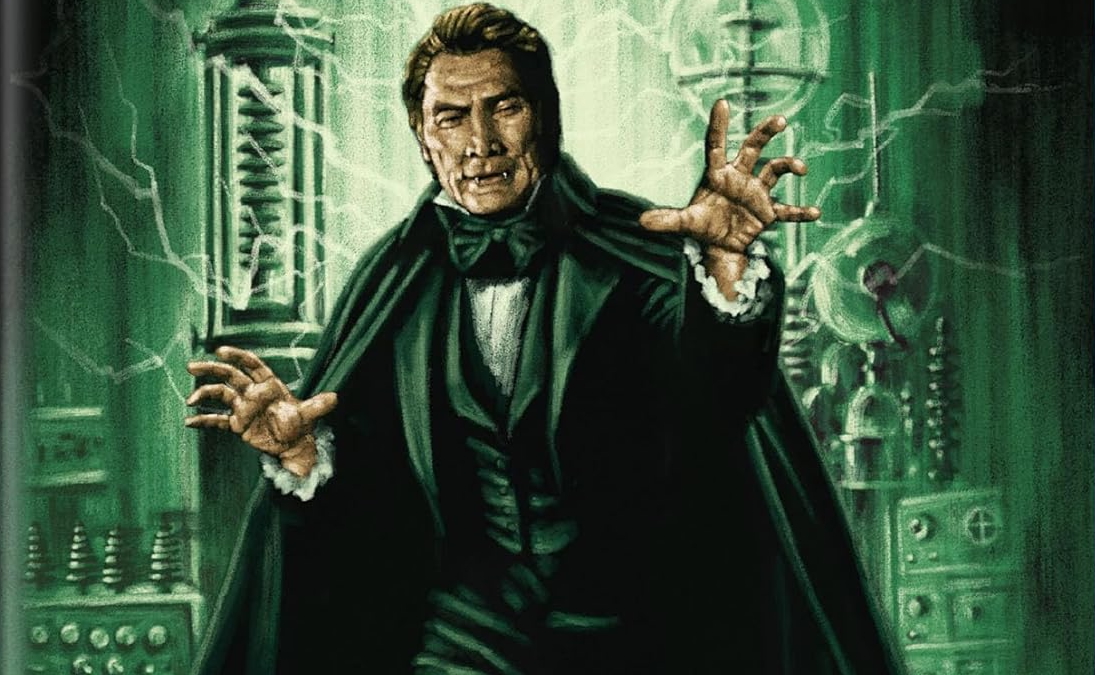
Dan Curtis’ Classic Monsters brings the Director/Writer/Producer’s adaptations of three classic monsters restored to Blu-ray, thanks to Kino Lorber.
The Film
Dracula
It’s always interesting how someone chooses to adapt Bram Stoker’s often-told horror classic. Though the structure remains the same, you often find the nuances within that structure change significantly, giving you a varied result. Dan Curtis’s Dracula adaptation has interesting changes but allows for a truly wickedly fun performance by the vampy Jack Palance as the Count.
The most interesting aspect of the film and adaptation is making Lucy (Fiona Lewis) the focus of Dracula’s affections/lust. Screenwriters Curtis and Richard Matheson switch Mina (Penelope Horner) and Lucy’s roles here. Lucy is now the spitting image of the Count’s long-lost wife, Mina, a mere plaything. Harker, as well, is more of a Renfield-type character, and Arthur (Simon Ward) is more involved with Van Helsing’s (Nigel Davenport) hunt for Dracula.
Curtis’s second collaboration with Jack Palance (the first being The Strange Case of Dr. Jekyll and Mr. Hyde) is a pretty fun compact version of the Dracula mythos. Unable to show a lot of gore, Curtis and Palance have sided with a menacing version of Dracula. The result is an imposing, intimidating, far less romantic version of the story.
One will be surprised by how the film subverts the well-worn story points of Bram Stoker’s story and how many it stays true to. One wishes that Curtis had been able to make a lavish remake for a studio similar to John Badham’s 1979 Dracula with Frank Langella. All the same, this remains a pretty great, down-and-dirty, lean, economical horror film that fans of the story will delight in.
Frankenstein
Curtis understood how to scale back to create an intimate adaptation to classics. The work done on Mary Shelley’s Frankenstein stands as a testament to that notion. Though one can say that it does not come anywhere near the James Whale 1931 classic and its sequel, it stands on its own like Whale’s film, but standing closer to the novel. One does wonder how much Kenneth Branagh was inspired by this adaptation for his own.
Bo Svenson is a unique but ultimately inspired choice for the monster, as his performance is so far away from Boris Karloff’s lumbering child it can’t even be compared. Svenson’s more closely resembles the abandoned creation of Shelley’s work. A tragic figure that has no idea of its strength or understanding of the complexities of life. It’s heartbreaking work that’s paired beautifully with Robert Foxworth’s arrogant egomaniacal Dr. Frankenstein. Foxworth is perfectly cast as the unsympathetic doctor who tempts fate by playing god and pays the price for it. The way that Foxworth’s Frankenstein does not understand until the very last moments is a beautiful effect brought from the novel.
One does wish there were some way that Curtis was able to create the novel’s Antarctic bookends. That is a minor quibble for a film that manages to surprise with its artful visuals, considering its TV Movie origins. Most importantly, Curtis and Svenson manage to keep the tragedy, anger, and sadness of Frankenstein’s creation intact.
The Strange Case of Dr. Jekyll and Mr. Hyde
Of the two collaborations between Producer/Writer Dan Curtis and Star Jack Palance, their adaptation of The Strange Case of Dr. Jekyll and Mr. Hyde is the superior film. Palance is inspired casting as the doomed Doctor and his alter ego. The actor is on fire, devouring and chewing everything in his sight throughout the runtime of the film.
Told through flashback and voice-over narration by Jekyll’s friend and lawyer, George Devlin (Denholm Elliot), we see his meek but genius friend’s life turned upside down by the erratic and violent Mr. Hyde. What Devlin does not understand is that they are one in the same. Jekyll, through his research on the id of man, has unlocked his own animalistic nature and transforms into the ravenous Hyde. Under the guise of his breakthrough, revelatory research, Jekyll continues to unleash Hyde, who forms an unhealthy relationship with a bar girl (Billie Whitelaw). As Hyde’s tendencies turn murderous, there is no way for the man of science to control the man of violence.
Curtis’s original vision was not what thankfully ended up on screen. This scaled-down and dirty version of his original adaptation works because of how intimate it is. More of a chamber piece than a large-scale costume horror drama. The way the back alley by gaslight grime of the late 1800s London works perfectly with Palance’s performance. Adding in the stellar work of Denholm Elliot and the heartbreaking performance of Billie Whitelaw, you have something truly special and elevated beyond the film’s TV Movie Origins.
Full credit to not just due to Palance in this one-of-a-kind performance, but also his collaboration with Makeup FX legend Dick Smith. Smith’s work here unleashes something in Palance, and likewise is true of Palance. The makeup is not just on Hyde, but Smith, working with Palance creates subtle FX work on the normal visage for Palance, giving both such distinct visual looks that allow Palance to go places that the actor was rarely given a chance to. The result is a truly frightening performance that stands as one, if not “the” crowning achievement of the actor’s career.
The Transfer
Dracula
This is more of a traditional transfer as the film was shot on 35mm (and on location less). Kino’s work here is truly wonderful. The image is sharp while retaining the grain structure of the 35mm origins. The transfer is flawless with no dirt or scratches through the run time. The color reproduction and contrast levels are near perfect and the highlight of the transfer. Kino Lorber continues to marvel and amazing with the level of quality and care their transfer’s show.
Frankenstein and The Strange Case of Dr. Jekyll and Mr. Hyde
These are the two odds transfers that this reviewer has had to discuss in his decade of reviewing home video releases. Each are sourced and restored from their videotape masters, each having been shot on video. Though it should be qualified that these were shot on professional grade video of the era (1968 and 1973 respectively). I mention this and qualify everything because these are some of the best restorations in recent memories. The work here is masterful because they’ve managed to retain and keep the image stable and little to no ghosting (unfortunately there is some which cannot be helped). The image looks beautiful in that 70s era hazy look (think Geoffery Unsworth or the Dr. Who episodes of the era) that for this reviewer is stunning. Each of the films which take place in the Victorian Era have something added to their visual milieu with this video hazy look. The image itself is clean and has no scratches or dirt as its sourced from the tape itself. The level of detail will surprise many who have certain expectations from video from any era. Bravo to Kino Lorber for bringing these two shot on video films to Blu-ray in these beautiful restorations.
The Extras
They include the following;
DISC ONE:
Dracula Introduction by Jeff Thompson, Author of The Television Horrors of Dan Curtis (7:02) – begins with this production aired on NBC (not ABC) after the premiere of a new TV Sitcom, Good Times. Thompson goes on to discuss the A-List cast and crew that Curtis put together for this particular production; the differences in adaptation, including Jack Palance’s performance, the changes made, connections made to Vlad the Impaler, the reasons why this connection was made; the score by Robert Cobert; the 3 hour version of Dracula which is now lost (though some footage appears on this disc); and much more.
The all-new Audio Commentary on Dracula is by Mark Dawidziak begins with his credentials (including books about this film, including a Richard Matheson book) before diving into the Dan Curtis-directed film. Dawidziak’s commentary track is a mostly a non-screen-specific track that charts everything from Dan Curtis’ career; his collaboration with Richard Matheson not only on this but on the other TV Movies and Series like The Night Stalker and Trilogy of Terror; Curtis’ rise in TV and Film; Richard Matheson’s career as a screenwriter, novelist, etc.; the of the Stoker novel itself and the reasons why it would eventually deviate from the source material; the work of actor Jack Palance in this picture and the other film he worked with Curtis on The Strange Case of Dr. Jekyll and Mr. Hyde; the films the production itself and anecdotes from it; and much more.
Dracula Interview with Actor Jack Palance (3:55) – the archival interview opens with the actor admitting that the work frightened him because he was becoming too much like Dracula. The actor goes on to discuss the reasons why he did the film.
Dracula Interview with Producer/Director Dan Curtis (4:20) – the archival interview discusses his love of the original story, the adaptation process with Richard Matheson, and much more.
Dracula Alternate Footage and Scenes (6:29) – this footage is presented accompanied by music from composer Robert Cobert’s score for the film. Much of it is inconsequential outtakes, though there is some great additional blood FX work at the end.
Trailer (2:52)
DISC TWO:
Frankenstein Introduction by Jeff Thompson, Author of The Television Horrors of Dan Curtis (4:15) – Thompson discusses Frankenstein (which aired the same night as Curtis’ own The Night Stalker) and the various cast and crew that helped bring this production to life. The author goes on to discuss the uniqueness of the production and this particular adaptation.
The first of two archival audio commentaries on Frankenstein is one by Film Scholar Rodney F. Hill (Hofstra University). Hill approaches the commentary track as an almost lecture on this film adaptation. It is mostly a non-screen-specific track that charts everything from Dan Curtis’ career; his career in TV and Film; the mega success of Dark Shadows; the various collaborators that worked with Curtis on this production, giving us various personal and professional historical details about these collaborators; production details on Frankenstein; production anecdotes; the adaptation and how similar and different it is from others from the Shelly novel; and much more.
The second of two archival audio commentaries on Frankenstein, hosted by Jim Pearson with Actors Robert Foxworth (Victor Frankenstein) and John Karlen (Otto Roget). The trio opens with introductions and their gregarious love of the project. This is a much more relaxed commentary track and less scholarly, more conversational. Pearson guides the conversation, discussing with Foxworth and Karlen the various aspects of the production; the adaptation of the Shelly novel; the TV show this Curtis production originated from ABC-TV Wide World Mystery; the other films Curtis produced under the banner; how each got involved; their work on the production – including anecdotes; the various actors they worked with on the film; and much more.
Frankenstein ABC-TV Wide World Mystery Promos (9:43) – if anyone wants to continue their shot of 70s nostalgia only need to see these kitschy, amazing promos from the ABC-TV Wide World Mystery series in which Frankensteinand Dr. Jekyll and Mr. Hyde were created for. Kino Lorber has restored these Promos from their Videotape masters as well. They include the intro/ads, recaps from the first part, the credits for the second part, and much more.
Dr. Jekyll and Mr. Hyde Introduction by Jeff Thompson, Author of The Television Horrors of Dan Curtis (4:33) – Thompson discusses Dr. Jekyll and Mr. Hyde (which first aired on Canadian TV), which was Emmy-nominated. Thompson discusses the reasons why they shot on Video rather than film. A would-be version that was to be filmed on location in London with Jason Robards. The various cast and crew that helped bring this production to life. The author goes on to discuss the uniqueness of the production and this particular adaptation, which is different than Stevenson’s novel which it is based. The music, which was later reused for the Film and TV series Dark Shadows.
The archival audio commentary on The Strange Case of Dr. Jekyll and Mr. Hyde is recorded by Author, Artist, and Film Historian Steve Bissette. Bissette begins with the Quote that opens the film and its authorship before diving into the Stevenson Adaptation. Some of the details include a discussion of the production details, such as the schedule, the budget, its premiere on Canadian and American television, and also the awards it was nominated for; Bissette’s own personal reflections on how he first saw the film; a discussion of the video technology that Curtis shot the production on – which discusses the perseveration and restoration of the materials; a larger discussion of the performance of Jack Palance; a larger discussion the professional and personal history of Palance; a larger discussion of the work of Makeup FX Supervisor/Artist Dick Smith and his collaboration with Palance for the production; a discussion of the critical reception of the film; a larger discussion of the various actors who appear in the film and their personal and professional histories; and much more.
Dr. Jekyll and Mr. Hyde Interview with Makeup Effects Artist Dick Smith (5:35) – in this archival interview, the Makeup legend discusses how he was hired onto the original Film Production, which was closed down and eventually was brought back on in the Jack Palance TV production. Smith goes on to discuss where he got inspiration for Palance’s makeup, how he worked with Palance for his normal makeup, the collaboration with Palance in the chair and with the makeup, and much more.
The Final Thought
Kino Cult has done a marvelous job bringing these truly special films to Blu-ray. Highest possible recommendations.
Kino Lorber’s Blu-ray Edition of Dan Curtis’ Classic Monsters is out now.
Share this:
Like this:
Discover more from The Movie Isle
Subscribe to get the latest posts sent to your email.