
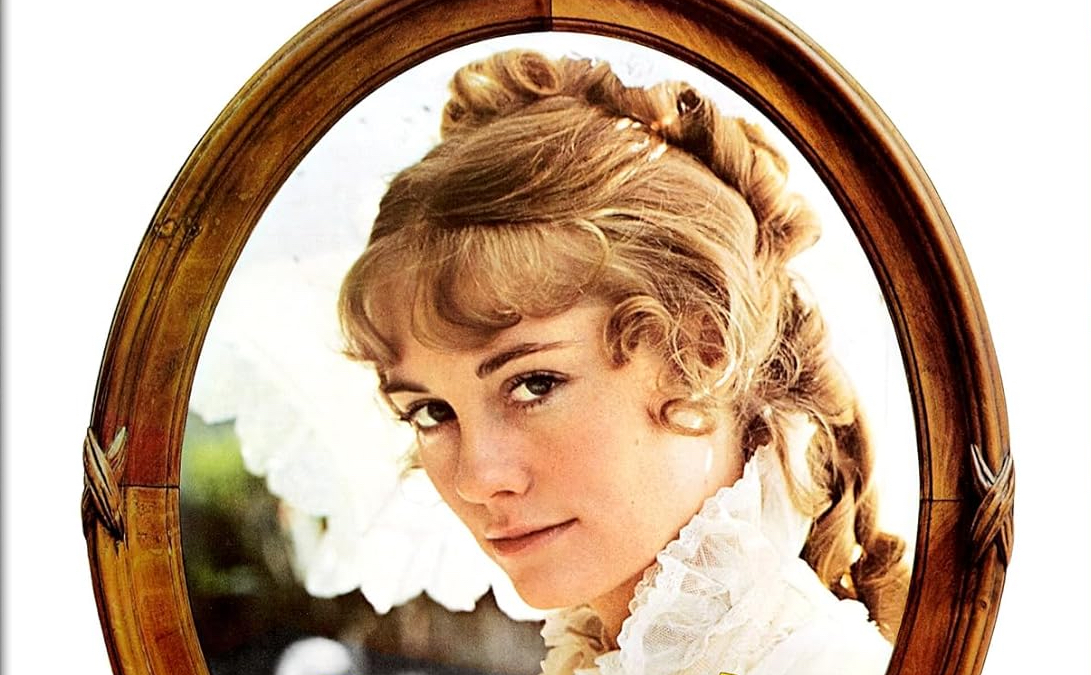
Cybil Shepard shines brightly in Daisy Miller. Director Peter Bogdanovich’s little-seen gem gets a new lease on life thanks to Kino Lorber’s Blu-ray with a new HD Master and extra features.
The Film
Quentin Tarantino was absolutely right about Daisy Miller. It’s a weird jaunty ride at the beginning. You’re unsure of how this is all going to play out. There’s definitely the Howard Hawks influence apparent with the dialog delivery – to which is at first an odd choice. What you think is a pile on of bad like the script, the direction, and the casting of both Barry Brown and Cybil Shepard – become the strongest of assets. Bogdanovich’s work here is all in service of the smack-in-the-face ending. Make no mistake, Daisy Miller is definitely an odd duck of a film but one that’s better than many films of the era. One that does not justify its lambasting and one deserving of reassessment.
The film feels like it’s going to be some sort of spiritual cousin to What’s Up Doc? with the uptight Expat Frederick Winterbourne (Barry Brown) smitten with the loquacious flibbertigibbet Daisy Miller (Cybil Shepard) as they meet at a Swiss Health Spa circa 1870s. Though labeled literally an idiot from all of society Miller is able to talk her way around the advances of men, inquiry of high society women, and even the mischievousness of her younger brother (James McMurtry).
It’s those constant circles that create a fuss within the confines of the stiff-upper-lip society that Frederick is a part of. However, Frederick cannot help but want to be with Daisy all the time. Even if she’s tangled into a “situationship” with Mr. Giovanelli (Duilio Del Prete) much to his chagrin. It is that jealousy and the various men and women of high society – taking the form of Mrs. Walker (Eileen Brennan) – that ultimately doom Daisy and Fredrick.
To say Daisy Miller unexpectedly ends is an understatement. As designed by screenwriter Fredric Raphael and executed by director Bogdanovich is an exercise in tone. One side is the candy of a romp that’s on par with anything the director has done. The other side, the ending, is the kind of precise straight razor that cuts to the quick of it all – leaving any goodwill suffocated. Like a soft kiss, followed by the hardest of slaps against the face.
The film is almost too effective in its execution leaving anyone who has only seen it once with a feeling of being hoodwinked. Though, Daisy Miller, perfectly exemplifies life and coming to terms with life’s plans. One minute you have none of the worries of the world – nouveau riche concerning yourself with the lightest of affairs. The next you have all the worries of the world and an existential crisis – life not caring the slightest about your station in society. That in itself is a reason to celebrate this rarest type of film. A comedy with the most acidic ends ever. Billy Wilder must have loved Daisy Miller as much as Frederick Winterbourne.
Proceed at your own risk. Only true cineaste need apply.
The Transfer
The all-new HD master – from a 4K Scan of the 35mm Original Camera Negative is positively luminous. The film shot by famed Italian cinematographer Alberto Spagnoli is a beautiful low-light diffuse wonder. The muted colors still retain their luster and accuracy. There is nary a scratch or blemish through the run time. Kino has done a marvelous job of bringing sharpness while retaining the soft-focus beauty of the dream-like imagery. The work here is as accomplished and nuanced as anything you’ll view in 2024.
The Extras
They include the following;
- Introduction by Director Peter Bogdanovich
- Audio Commentary by Director Peter Bogdanovich
- NEW Audio Commentary by Film Historian and Critic Peter Tonguette
- Remembering Daisy Miller: NEW Interview with Star Cybill Shepherd
- Theatrical Trailer
Introduction by Director Peter Bogdanovich (12:46) – this is more of a prologue than an introduction giving us context for why he chose the source material beyond Shepherd wanting to act in the film. Bogdanovich discusses the cast, the experience in Europe, and much more.
The first of two Audio Commentaries is an archival one by Director Peter Bogdanovich opens with a discussion of The Director’s Company (the production company formed by Francis Ford Coppola, William Friedkin, and himself) which produced the film. Some of the details include the hotel is the actual hotel in Switzerland that Henry James was to have written Daisy Miller; a discussion of the opening moment – including how he wanted Orson Welles to direct and himself and Shepherd to star in the film; the source music they used throughout the film; the costumes that were designed by Mariolina Bono; the novella Daisy Miller – the differences and similarities of the screenplay, historical facts about the work, and more; the work and casting of Barry Brown; the work of cinematographer Alberto Spagnoli and how the visual style was accomplished; the work of production designer Ferdinando Scarfiotti – and their approach to the film; the troubles of shooting magic hour for any scene; the work of Cloris Leechman; the best screening he had during the initial release; the work of screenwriter Fredric Raphael – leading to a discussion of what was added and taken out; the trouble the book had finding a publisher at the time James wrote it; the work of Shepherd and their work together; and much more. Anyone who’s listened to a Bogdanovich track knows the kind of wealth of knowledge the director dispels during his tracks, his one for Daisy Miller is no different.
The second of the two Audio Commentaries is an all-new track by Film Historian and Critic Peter Tonguette begins with his bonafides before diving into the film’s origins from a story by Henry James. Some of the details include how the opening lines up with director Bogdanovich’s other films and their specific style of opening; the relationship Bogdanovich had with legend Howard Hawks – some of the advice given to the young director about place as character; a discussion of his relationship with Bogdanovich both as a writing subject, interviewee, a friend, and a mentor of sort – including the various books he wrote and edited on Bogdanovich; a dissection of the director’s style and how it informs this particular story; the director’s ties to classic Hollywood and the Golden Age – how that separated himself from the Hollywood New Wave – how that drew Tonguette to the director’s works; where the film falls within Bogdanovich’s career – giving a detailed account of each of the 6 films he made before Daisy Miller; a detailed discussion of Bogdanovich’s unrealized dream project – and how it relates to certain themes within Daisy Miller; and much more. Tonguette does a great job of not just dissecting the film itself but the director’s career, style, and much more in this informational commentary track.
Remembering Daisy Miller: Interview with Star Cybill Shepherd (10:18) – the all-new interview opens with Shepherd discussing what the novel and film are about. Some of the other details include the first time she met Bogdanovich for The Last Picture Show; the fact that Welles lived with Bogdanovich and Shepherd – who suggested Daisy Miller for the duo; the release of the film and criticism towards the film itself; the working with actors Barry Brown, Eileen Brenan, Cloris Leachman; and much more.
Rounding out the special features are trailers for Daisy Miller (3:30); Mary, Queen of Scotts (3:41); Diary of a Mad Housewife (2:54); The Other Side of the Mountain (1:10); The Railway Children (4:04); Where the Lilies Bloom (3:10)
The Final Thought
Kino Lorber has done a wonderful job with their Blu-ray edition of Daisy Miller. Recommended!!!
Kino Lorber’s Blu-Ray edition of Daisy Miller is out now.
Discover more from The Movie Isle
Subscribe to get the latest posts sent to your email.
Pingback: 4K UHD Review: Kino Lorber’s Somewhere in Time (Special Edition) – The Movie Isle