Post-WW2 James Stewart and his deep dive into the darker, violent side of humanity was one of the best second-half careers an actor ever had. Stewart was a good actor before the war, but he became a great one (sans the method actors of the modern era). Beyond his work with Alfred Hitchcock, the actor’s most fruitful collaboration was with director Anthony Mann. The duo did everything from dramas to biopics to adventures over their decade-long working relationship. It was their Westerns that they are known for. Their work in the genre was both astutely postmodern in character and theme and classical in their structure.
Bend of the River is a prime example of the kind of work that Mann could push Stewart to. Stewart’s character, Glyn McLyntock, a man with a past, is leading families towards their plot along the Oregon Trail. McLyntock is a man content with leaving his past behind, but his past is not content with leaving him behind. Oregon is not a Promised Land but a territory that’s besieged by gold fever. Fever that has been infected by greed and opportunism.
Violence is a trade that McLyntock is proficient in but seems not to want anything to do with. We see this when he saves Arthur Kennedy’s Emerson Cole from being lynched. Time and time again, we see it as he and Cole form a friendship of sorts. They are forced to choose a side during some sort of moment of moral quandary. It’s these moments that slowly build to a crescendo of inevitability, where McLyntock and Cole are finally at odds with one another, that leads to a rousing finale.
One that reveals McLyntock’s past by a visual moment and action that perfectly illustrates just how good Stewart and Mann could be in film. Mann stages the entire film perfectly with an eye for geography and character. Borden Chase’s adaptation of the novel Bend of the Snake excels at creating character out of action beats that move the film forward. Few Westerns are as tightly constructed with morally complex characters as Bend in the River. Most of them were directed by Anthony Mann and more than likely starring Jimmy Stewart.
A stone-cold classic of the genre.
The Transfers
The all-new 4K Restoration from the 35mm 3-strip Original Negative by Universal Pictures in collaboration with The Film Foundation (Restoration Services conducted by NBCUniversal StudioPost) is a near-perfect Blu-ray release. There isn’t a scratch or blemish during the runtime of the film. The color reproduction is demo disc worthy with an image so sharp it feels like a newly struck archival 35mm print. The work done to bring this Technicolor marvel back to life is astounding. Halfway through 2026, and we have a contender for the best Blu-ray transfer of the year.
The Extras
They include the following;
NEW Audio Commentary by Film Historian/Writer Julie Kirgo and Author/Screenwriter C. Courtney Joyner
Archival Audio Commentary by Film Historian Toby Roan
Original Theatrical Trailer
The first of two Audio Commentaries is an all-new track by Film Historian/Writer Julie Kirgo and Author/Screenwriter C. Courtney Joyner. The duo begins with their credentials before diving into a “favorite film by a favorite director” for both. Some of the details include how this was an even bigger success than Winchester ’57, which was the first James Stewart/Anthony Mann collaboration; a discussion of the composer Hans Salter’s work on the score; a larger discussion of the Technicolor cinematography of Irving Glassberg including a note of interest getting a truly legendary star’s career started; a discussion of the two halves of Stewart’s careers that are divided by his service as a combat fighter pilot in WW2 and how much that affected him and his choices; a larger discussion throughout about the 8 films that Mann and Stewart made and the dissolving of the relationship and the film project that broke it; a discussion of the career of director Anthony Mann; a discussion of the location shoot in Oregon and also the studio shoot at Universal; a discussion of the various actors (some who would go on to legendary careers) and their work in the film and in their careers; and much more.
The second Audio Commentary is an archival track by Film Historian Toby Roan. Roan sets the film with general information about the James Stewart western. Some of the details include the horse, Pie, who starred in all the Stewart Westerns with him; the good luck hat Stewart wore through all his westerns; a discussion of the personal and professional life of actor Arthur Kennedy; a discussion of the career and personal life of director Anthony Mann; a discussion of the career of actor Julie Adams; the career and personal life of Stepin Fetchit; the real lifeboat that was dressed as a “steam boat” for the film; the work here and career of cinematographer Irving Glassberg and editor Russell F. Schoengarth; a discussion of the career and work of screenwriter Borden Chase; throughout the track, Roan gives interesting production details, showing tough a shoot it was; a larger discussion of the various locations that the production used in Oregon; a larger discussion throughout the various actors that appear and their careers; and much more.
Rounding out the special features are trailers for Bend in the River (1:47); Canyon Passage (1:34); High Noon (1:37); Night Passage (2:33); Gunfight at the O.K. Corral (2:13);
The Final Thought
Kino Lorber continues to bring some of the best forgotten Hollywood Classic Titles to Blu-ray. Highest Possible Recommendations!!

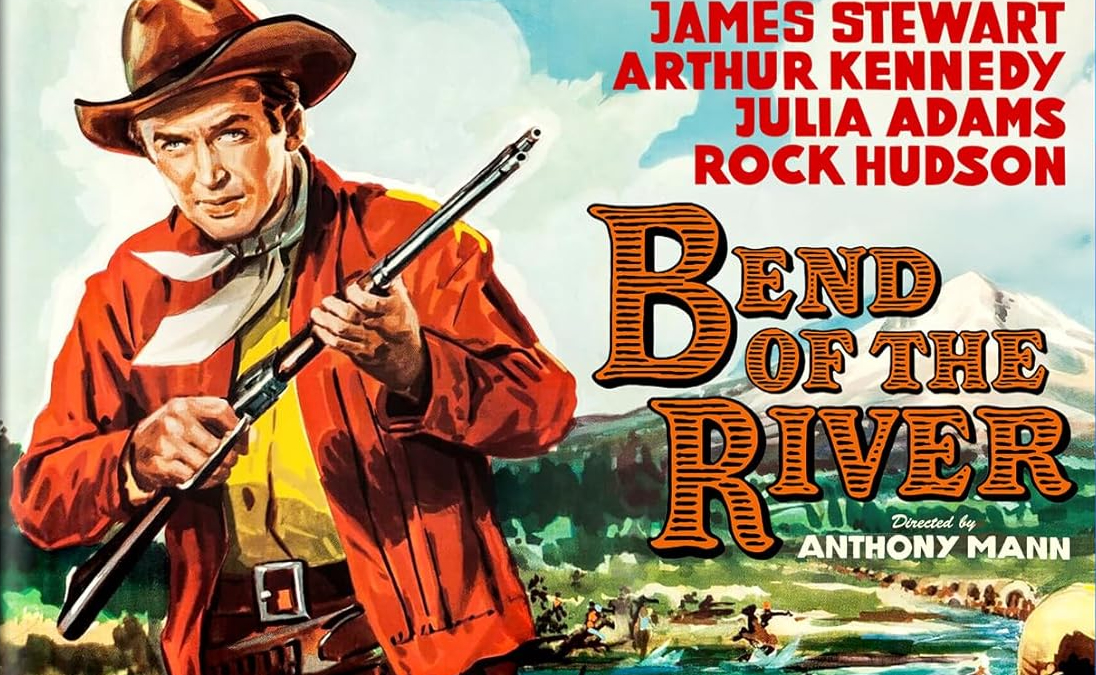
Bend of the River is one of the great James Stewart and director Anthony Mann westerns. New to Blu-ray from Kino Lorber.
The Film
Post-WW2 James Stewart and his deep dive into the darker, violent side of humanity was one of the best second-half careers an actor ever had. Stewart was a good actor before the war, but he became a great one (sans the method actors of the modern era). Beyond his work with Alfred Hitchcock, the actor’s most fruitful collaboration was with director Anthony Mann. The duo did everything from dramas to biopics to adventures over their decade-long working relationship. It was their Westerns that they are known for. Their work in the genre was both astutely postmodern in character and theme and classical in their structure.
Bend of the River is a prime example of the kind of work that Mann could push Stewart to. Stewart’s character, Glyn McLyntock, a man with a past, is leading families towards their plot along the Oregon Trail. McLyntock is a man content with leaving his past behind, but his past is not content with leaving him behind. Oregon is not a Promised Land but a territory that’s besieged by gold fever. Fever that has been infected by greed and opportunism.
Violence is a trade that McLyntock is proficient in but seems not to want anything to do with. We see this when he saves Arthur Kennedy’s Emerson Cole from being lynched. Time and time again, we see it as he and Cole form a friendship of sorts. They are forced to choose a side during some sort of moment of moral quandary. It’s these moments that slowly build to a crescendo of inevitability, where McLyntock and Cole are finally at odds with one another, that leads to a rousing finale.
One that reveals McLyntock’s past by a visual moment and action that perfectly illustrates just how good Stewart and Mann could be in film. Mann stages the entire film perfectly with an eye for geography and character. Borden Chase’s adaptation of the novel Bend of the Snake excels at creating character out of action beats that move the film forward. Few Westerns are as tightly constructed with morally complex characters as Bend in the River. Most of them were directed by Anthony Mann and more than likely starring Jimmy Stewart.
A stone-cold classic of the genre.
The Transfers
The all-new 4K Restoration from the 35mm 3-strip Original Negative by Universal Pictures in collaboration with The Film Foundation (Restoration Services conducted by NBCUniversal StudioPost) is a near-perfect Blu-ray release. There isn’t a scratch or blemish during the runtime of the film. The color reproduction is demo disc worthy with an image so sharp it feels like a newly struck archival 35mm print. The work done to bring this Technicolor marvel back to life is astounding. Halfway through 2026, and we have a contender for the best Blu-ray transfer of the year.
The Extras
They include the following;
The first of two Audio Commentaries is an all-new track by Film Historian/Writer Julie Kirgo and Author/Screenwriter C. Courtney Joyner. The duo begins with their credentials before diving into a “favorite film by a favorite director” for both. Some of the details include how this was an even bigger success than Winchester ’57, which was the first James Stewart/Anthony Mann collaboration; a discussion of the composer Hans Salter’s work on the score; a larger discussion of the Technicolor cinematography of Irving Glassberg including a note of interest getting a truly legendary star’s career started; a discussion of the two halves of Stewart’s careers that are divided by his service as a combat fighter pilot in WW2 and how much that affected him and his choices; a larger discussion throughout about the 8 films that Mann and Stewart made and the dissolving of the relationship and the film project that broke it; a discussion of the career of director Anthony Mann; a discussion of the location shoot in Oregon and also the studio shoot at Universal; a discussion of the various actors (some who would go on to legendary careers) and their work in the film and in their careers; and much more.
The second Audio Commentary is an archival track by Film Historian Toby Roan. Roan sets the film with general information about the James Stewart western. Some of the details include the horse, Pie, who starred in all the Stewart Westerns with him; the good luck hat Stewart wore through all his westerns; a discussion of the personal and professional life of actor Arthur Kennedy; a discussion of the career and personal life of director Anthony Mann; a discussion of the career of actor Julie Adams; the career and personal life of Stepin Fetchit; the real lifeboat that was dressed as a “steam boat” for the film; the work here and career of cinematographer Irving Glassberg and editor Russell F. Schoengarth; a discussion of the career and work of screenwriter Borden Chase; throughout the track, Roan gives interesting production details, showing tough a shoot it was; a larger discussion of the various locations that the production used in Oregon; a larger discussion throughout the various actors that appear and their careers; and much more.
Rounding out the special features are trailers for Bend in the River (1:47); Canyon Passage (1:34); High Noon (1:37); Night Passage (2:33); Gunfight at the O.K. Corral (2:13);
The Final Thought
Kino Lorber continues to bring some of the best forgotten Hollywood Classic Titles to Blu-ray. Highest Possible Recommendations!!
Kino Lorber’s Blu-ray Edition of Bend of the River is out now.
Share this:
Like this:
Discover more from The Movie Isle
Subscribe to get the latest posts sent to your email.