The words that launched a thousand cheer and dance squad routines over the last three decades. They are also the words of a massively popular video game. Lastly, they are the title of two 90s cult martial arts action films based on those video games and featuring that song that launched those dance and cheer routines.
The first film in the series, directed by Paul WS Anderson, is lean on story and big on action (albeit of the PG-13 variety). Mortal Kombat is an adroit video game adaptation as it takes its cues from Enter the Dragon, Blood Sport, or any number of tournament films rather than what at the time was a thin mythology of the series (it has grown in the decades since). Anderson, given a decent budget and allowed to film on location in Thailand, created a surprisingly large-scale film that echoes the very best of the subgenre. Working with cinematographer John R. Leonetti (who would later direct the sequel, more on that later…), Anderson’s film always sides on scale and grandeur. Though some of the VFX is dated CGI, the director always knows how best to shoot a set or a location.
The script by Kevin Droney took the characters from the series Liu Kang, Johnny Cage, Sonya Blade, and expounded on their archetypes to their natural ends, and created a story around them. By making the less God-like characters the heroes and the Demi-Gods like Raiden, Scorpion, Sub-Zero, Reptile, and Shang Tsung, either villain or mentor roles, it kept the film interesting and gives the trilogy of heroes insurmountable odds to face. Yes, some of the plot points are cliché (see Liu Kang’s revenge for his brother’s death, Sonya’s revenge for her partner, Johnny’s… ego), but it is done with such earnestness by the actors that you can’t help but be won over by the film.
Any complaints or criticisms one has melt away as Liu Kang and Shang Tsung face off, and The Immortal’s Techno Syndrome kicks into high gear. At that point, Anderson and Company had created a convincing kick ass martial arts film and the first successful video game adaptation.
Mortal Kombat: Annihilation
Not all sequels are created equal. The proof is in Mortal Kombat: Annihilation, the sequel to the surprise hit adaptation of the popular video game series. Cinematographer John R. Leonetti takes over directing from Paul WS Anderson. He does a fine job of directing what can be nicely considered a leveled-down script. Part of the fun of the first film was that it took the conventions of the subgenre it was working in and made a well-oiled machine of a film. In Mortal Kombat: Annihilation, everything is clunkier and less refined and defined. From scripting to casting to action, nothing works as well as the far superior original.
The film, picking up where the original left off, finds Earth instantly in trouble (again) with Shao Kahn (80s/90s du jour baddie Brian Thompson) appearing to begin his reign of terror on Earth. His plan works as he manages to kill one of our heroes (bye-bye Johnn Cage, no longer played by Linden Ashby), kidnaps Kitana (Talisa Soto), leaving Liu Kang (Robin Shou) and Sonya (bye-bye to Bridget Wilson, Sandra Hess taking over the role). Liu and Sonya must go back to Outerworld if they’re to save Kitana and Earth (though Earth seems secondary to Liu Kang) from Shao Kahn and his group of various fighters (some from the video game, some not).
The biggest issue with the sequel is its recasting of most of the original cast, including losing the weirdly delightful energy of Christopher Lambert as Raiden in exchange for James Remar sporting a blonde dye job. Recasting isn’t bad in theory. Every recast in Mortal Kombat: Annihilation results in a film that lacks the punchiness (pun intended) of the first film, with Lambert, Ashby, and Wilson’s respective performances helping elevate the original film. As a result, there isn’t any real energy brought to the film by its performers.
Add into the mix lackluster VFX and action scenes, and you get a sequel that fails to miss the mark. It would be forgivable if the film felt like a lively B-movie like the original. Unfortunately, it is more paint-by-numbers sequel rehash than an inspired next chapter in a would-be series. One wishes that Mortal Kombat: Annihilation lived up to its predecessor, something that just feels too big a task.
The Transfers
Each film features an all-new 4K restoration by Arrow Films from the original camera negatives approved by director Paul W.S. Anderson and director John R. Leonetti, presented in Dolby Vision (HDR10 compatible). Regardless of what one thinks of either film, these transfers are reference quality. Each of the films looks flawless in 4K with the Dolby Vision Encoding. There isn’t a scratch or blemish throughout the runtime on both. Mortal Kombat: Annihilation is so good a transfer/upgrade to 4K that it calls out just how terrible (even for 1997) the VFX/rendering was for the film. Arrow Video and Warner Brothers partnership continues to bear the best upgraded 4K transfers.
The Extras
They include the following;
DISC 1 – MORTAL KOMBAT
Brand new audio commentary with director Paul W.S. Anderson
Brand new audio commentary with comic book expert and podcast host Dave Baxter
Cage Match: Linden Ashby Steps Back Into the Ring
Leveling Up: John R. Leonetti on his Journey from DP to Director
Quarters to Millions: Taking Mortal Kombat from Arcade to Screen
The Heavyweight: Tom Woodruff Jr. On Bringing Goro to Life
Mortal Kombat: A Journey Behind the Scenes featurette
On-set interview bites with the cast and director and B-roll footage
Theatrical trailers
Image gallery
DISC 2 – MORTAL KOMBAT: ANNIHILATION
Brand new audio commentary with director John R. Leonetti moderated by filmmaker Gillian Wallace Horvat
Brand new audio commentary with comic book expert and podcast host Dave Baxter
The Queen of the Night: Musetta Vander finds the Duality in Sindel
Techno, Taiko, Orcho: Composer George S. Clinton Settles the Mortal Kombat score
The Man of a Thousand Deaths: JJ Perry Makes Moves in Mortal Kombat
On-set interview bites with the cast and director and B-roll footage
Theatrical trailer
Image gallery
DISC 1 – MORTAL KOMBAT
The all-new audio commentary with director Paul W.S. Anderson begins with a cheeky call out to the title, and how meeting another Paul Anderson at Sundance both needed to use their middle names. Some of the details include how he came about casting Robin Shou and how his stunt experience with Jackie Chan’s stunt team became vital; hiring HK Stunt Crews for this film, and how it affected the production; the reason why he felt he was hired for this after only one independent British film; a discussion of the work and collaboration with Cinematographer John R. Leonetti and how they accomplished the visual style; working with Christopher Lambert and how they managed to get him to Thailand; working with New Line Cinema’s owner/CEO Bob Shaye and how he forced a certain kind of chaos that he felt was “good for filmmakers”; audiences in America versus Britian and a story about his first movie going experience; the issues with shooting at a studio that was near the Van Nuys airport; the development and construction of Goro – including the eventual costs; how Peter Greenway inspired Anderson for this film; how he prepared for this shoot and how it helped him for his future in big budget effect’s heavy filmmaking; his collaboration with Robin Shou during the fight scenes and what he learned about filming these scenes; a discussion of the additional photography and what that consisted of; a discussion of the various fight/action scenes; a discussion of the various actors/stunt performers and working with them; a discussion of the production shoot in Los Angeles and the locations, when and where they filmed in Thailand; and much more.
The second all-new audio commentary track is with comic book expert and podcast host Dave Baxter. After discussing his credentials and his podcast, before diving into the film. Some of the details include how much of the opening was invented for the film and how there was limited story there was for the first few video games; the release of a comic book that you had to purchase directly from Midway (the company that produced the game); the history of the making of Mortal Kombat the game – including how this originally started as a Jean Claude Van Damne; the Spielberg Cameo that never happened; the casting of Michael Jai White and how his casting in Spawn had him drop out; a discussion of the various issues that came up when the video game makers were producing the video game; a discussion of the hiring of screenwriter Kevin Droney and the development process; a larger discussion of the work of fight choreographer Pat Johnson and his ties to New Line Cinema and their largest hit of the early 1990s; the history of the iconic title track by The Immortals; a larger discussion of the play mechanics, game easter eggs and hidden treasures and much more; a larger discussion of the novelization that was based on earlier drafts and how that was different and was changed; a larger discussion throughout of the lore, the characters, the settings, and the story of the Video Game series and how they relate to the movie; and much more.
Cage Match: Linden Ashby Steps Back Into the Ring (16:13) – is an all-new interview with actor Linden Ashby, who begins with his limited experience with video games before discussing how he came to be cast in Mortal Kombat. The Johnny Cage actor goes on to discuss how he developed the character; the improvisational nature of some of the lines; how they came up with the Goro fight out of necessity because of the nature of the puppet; working with Anderson as a director and collaborator; training and working on the fight scenes; and much more.
Leveling Up: John R. Leonetti on his Journey from DP to Director (16:16) – is an all-new interview with cinematographer John R. Leonetti, who begins by discussing just how tough the shoot was to get the visual look they wanted. Leonetti goes on to discuss his family’s long history in Hollywood, beginning with his father’s work, and his brother Matthew eventually forming a whole business; working with his brother which the Mortal Kombat films were a full circle moment; the process of being hired for the film; the collaboration with Anderson; the difficulty accomplishing the visual style he and Anderson were going for – including shooting Goro; how he eventually got the directing the sequel; what has made this such an enduring franchise; and much more.
Quarters to Millions: Taking Mortal Kombat from Arcade to Screen (18:16) – is an all-new interview with producer Lawrence Kasanoff, beginning with how an incident at an arcade convinced him he needed to adapt this video game to the big screen. Kasanoff goes on to discuss how his relationship with Midway led to him securing the rights to the video game; the casting process – what they were looking for in actors; the test screening process; the additional photography process; the process in making the sequel; the difficulties in making the sequel; and much more.
The Heavyweight: Tom Woodruff Jr. On Bringing Goro to Life (15:43) – is an all-new interview with designer and suit performer Tom Woodruff, who begins with his first job in designing and performing in The Monster Squad as the Gill Man. Woodruff goes on to discuss how he was brought onto the film by producer Kasanoff; how they approached the design and creation of Goro; some of the advanced mechanics of the suit, and how they accomplished such a complex makeup application – how the work in Alien 3 helped with this production; the crew they had onset to help with not just application, but puppeteering, and assisting with issues; wearing the suit and difficulties in creating a character; and much more.
Mortal Kombat: A Journey Behind the Scenes featurette (15:10) – is a vintage making-of featurette look at the behind-the-scenes of the making of the film. Featuring interviews with director Paul WS Anderson, Producer Lawrence Kasnoff, Stars Robin Shou, Cary-Hiroyuki Tagawa, Linden Ashby, Bridgette Wilson, Christopher Lambert, Talisa Soto, choreographer Pat Johnson, and VFX supervisor Alison Savitch.
Behind the Scenes (12:46) – the collection of video b-roll footage from the preproduction, rehearsal, fight training, and production of the film is presented without any narration. Much of the footage is the same footage from the above featurette.
On-set interview bites – which takes you to a submenu allowing you to access the following cast or crew member’s small EPK-style interview, most done on-set:
Paul WS Anderson (0:39)
Linden Ashby (0:28)
Robin Shou (0:16)
Cary-Hiroyuki Tagawa (0:47)
Bridgette Wilson (0:48)
Christopher Lambert (0:37)
Theatrical trailer (1:49)
TV Spots (3:50) – six TV spots that range from 60 to 30 seconds.
Image gallery – the gallery consists of an overwhelming 599 images that range from production stills, promotional stills, behind-the-scenes photos, and poster art.
DISC 2 – MORTAL KOMBAT: ANNIHILATION
The first all-new audio commentary track is with director John R. Leonetti, moderated by filmmaker Gillian Wallace Horvat. After introductions, Leonetti dives into what the opening of the iconic song by the Immortals conjures up for him. Some of the details include where the title came from and why they dropped the two from the sequel; a longer discussion about why Christopher Lambert, Bridgette Wilson, and Linden Ashby, along with their recasting, the relationship he had with James Remar because of their respective work with Walter Hill; the visual style he changed from the Paul WS Anderson original; the development of the screenplay much of which Lawrence Kasanoff wrote the story about; working of production designer Charles Wood; the work of stunt performer and fight choreographer JJ Perry; a discussion of why they chose to shoot with the Cameras they did and additionally why they chose 1.85 rather than the 2.40 aspect ratio; a discussion of the location shoot and production schedule which were cut by the studio; some of the interesting crew stories from shooting locations around the world; the appearance by Ray Park pre-Episode 1 and the fight choreography; a larger discussion of the various actors that appear in the film; and much more.
This second all-new audio commentary track features comic book expert and podcast host Dave Baxter. Baxter discusses his credentials, his podcast, and his time as a gamer in his childhood, before diving into the sequel. This is essentially a continuation of his track from the first disc. Some of the details include the changes in the video games and how they translated into the movie sequel; the career and personal life of Talisa Soto, and the reason why he retired; a larger discussion of the various stunt choreographers and their work here and outside of the Mortal Kombat series; a discussion of the various stunt performers and their work here and in other films and in the Mortal Kombat video games; a larger discussion of the various actors that appear in the film and a discussion of the various parts that were recast; a larger discussion throughout of the lore, the characters, the settings, and the story of the Video Game series and how they relate to the movie sequel; and much more. There is some overlap between the two tracks.
The Queen of the Night: Musetta Vander finds the Duality in Sindel (18:29) – is an all-new interview with actor Musetta Vander, who opens with how she approached the role from a dancer’s perspective. The actor goes on to discuss her career as a dancer and how that translated into a career in Music Videos and acting, and eventually led to her film career; the various roles and parts she played because of her South African accent before getting Mortal Kombat: Annihilation; the audition process to get the role, including the fact they had casted another person in London after they offered her the role only to fire that other actor; the research she did for the role including playing the video game; the stunt work and the physical nature of the production; and much more.
Techno, Taiko, Orcho: Composer George S. Clinton Settles the Mortal Kombat score (16:21) – is an all-new interview with composer George S. Clinton, opens with how he began in pop music, but how Cheek and Chong asked him to compose their films and eventually transitioned over to film composition. Clinton goes on to discuss how the temp score scored so low during the screening process it allowed him to do more EMD-influenced orchestrations, or as he called it, “Techno, Taiko, Orcho”; what exactly was Techno, Taiko, Orcho, and what instruments had it consist of; how he came to use Buckethead as the featured guitarist on the score; how he temped the film in his studio and experimented; how his work on American Ninja influenced his work on Mortal Kombat; and much more.
The Man of a Thousand Deaths: JJ Perry Makes Moves in Mortal Kombat (19:56) – is an all-new interview with stunt performer J.J. Perry, who played Cyrax, Scorpion, and Noob Saibot in the film, he begins with seeing Enter the Dragon as a child, which changed his life forever. Perry goes on to discuss how he trained in martial arts until he went into the military; how his career in the military and being stationed in South Korea led to training with some of the best martial artists in the world; how a chance meeting at a tourney led to eventually working on stunt work on JCVD’s Lionheart; how that eventually led to being stunt performer; the life of a stunt performer working around the world and how the ethos from the military informed that life; how he did not get hired or even attempted to on the original Mortal Kombatbut was brought on for the additional photography to stunt double for Linden Ashby and how that lead to Mortal Kombat: Annihilation; a larger discussion of the various action bits he worked on both films and what he worked on specifically, and the injuries he sustained; and much more.
On-set interview bites – which takes you to a submenu allowing you to access the following cast or crew member’s small EPK-style interview, most done on-set:
John Leonetti (0:53)
Lawrence Kasanoff (0:59)
Irina Pantaeva (0:39)
Lynn ‘Red’ Williams (1:17)
Sandra Hess (1:18)
Talisa Soto (1:02)
Robin Shou (1:14)
Theatrical trailer (1:30)
TV Spots (1:18) – three 30-second TV spots.
Image gallery – the gallery consists of an even more impressive number of images than the original’s 664 images, which range from production stills, promotional stills, behind-the-scenes photos, and poster art.
The Final Thought
Arrow Video continues to produce amazing sets for the best of film fan favorites. Highest Possible Recommendations!!

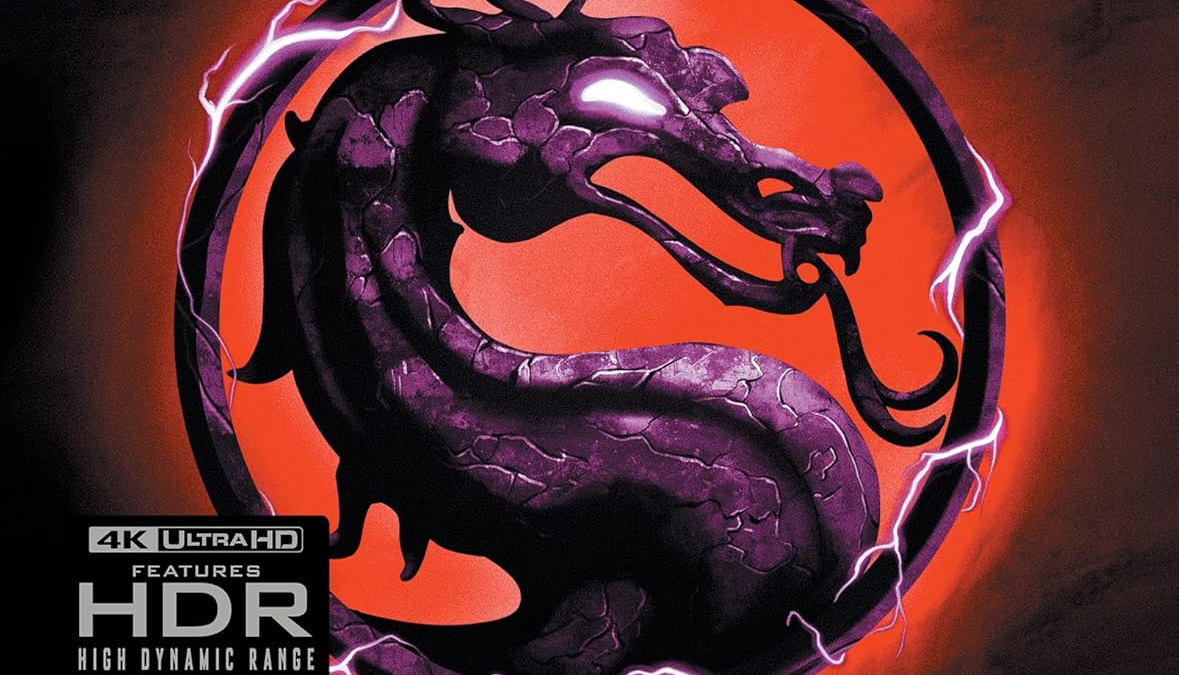
Fatality!!! The 90s Martial Arts Cult Classics Mortal Kombat and Mortal Kombat: Annihilation come to 4K UHD from Arrow Video with new restorations and special features.
The Films
MORTAL KOMBAT!!!!!
The words that launched a thousand cheer and dance squad routines over the last three decades. They are also the words of a massively popular video game. Lastly, they are the title of two 90s cult martial arts action films based on those video games and featuring that song that launched those dance and cheer routines.
The first film in the series, directed by Paul WS Anderson, is lean on story and big on action (albeit of the PG-13 variety). Mortal Kombat is an adroit video game adaptation as it takes its cues from Enter the Dragon, Blood Sport, or any number of tournament films rather than what at the time was a thin mythology of the series (it has grown in the decades since). Anderson, given a decent budget and allowed to film on location in Thailand, created a surprisingly large-scale film that echoes the very best of the subgenre. Working with cinematographer John R. Leonetti (who would later direct the sequel, more on that later…), Anderson’s film always sides on scale and grandeur. Though some of the VFX is dated CGI, the director always knows how best to shoot a set or a location.
The script by Kevin Droney took the characters from the series Liu Kang, Johnny Cage, Sonya Blade, and expounded on their archetypes to their natural ends, and created a story around them. By making the less God-like characters the heroes and the Demi-Gods like Raiden, Scorpion, Sub-Zero, Reptile, and Shang Tsung, either villain or mentor roles, it kept the film interesting and gives the trilogy of heroes insurmountable odds to face. Yes, some of the plot points are cliché (see Liu Kang’s revenge for his brother’s death, Sonya’s revenge for her partner, Johnny’s… ego), but it is done with such earnestness by the actors that you can’t help but be won over by the film.
Any complaints or criticisms one has melt away as Liu Kang and Shang Tsung face off, and The Immortal’s Techno Syndrome kicks into high gear. At that point, Anderson and Company had created a convincing kick ass martial arts film and the first successful video game adaptation.
Mortal Kombat: Annihilation
Not all sequels are created equal. The proof is in Mortal Kombat: Annihilation, the sequel to the surprise hit adaptation of the popular video game series. Cinematographer John R. Leonetti takes over directing from Paul WS Anderson. He does a fine job of directing what can be nicely considered a leveled-down script. Part of the fun of the first film was that it took the conventions of the subgenre it was working in and made a well-oiled machine of a film. In Mortal Kombat: Annihilation, everything is clunkier and less refined and defined. From scripting to casting to action, nothing works as well as the far superior original.
The film, picking up where the original left off, finds Earth instantly in trouble (again) with Shao Kahn (80s/90s du jour baddie Brian Thompson) appearing to begin his reign of terror on Earth. His plan works as he manages to kill one of our heroes (bye-bye Johnn Cage, no longer played by Linden Ashby), kidnaps Kitana (Talisa Soto), leaving Liu Kang (Robin Shou) and Sonya (bye-bye to Bridget Wilson, Sandra Hess taking over the role). Liu and Sonya must go back to Outerworld if they’re to save Kitana and Earth (though Earth seems secondary to Liu Kang) from Shao Kahn and his group of various fighters (some from the video game, some not).
The biggest issue with the sequel is its recasting of most of the original cast, including losing the weirdly delightful energy of Christopher Lambert as Raiden in exchange for James Remar sporting a blonde dye job. Recasting isn’t bad in theory. Every recast in Mortal Kombat: Annihilation results in a film that lacks the punchiness (pun intended) of the first film, with Lambert, Ashby, and Wilson’s respective performances helping elevate the original film. As a result, there isn’t any real energy brought to the film by its performers.
Add into the mix lackluster VFX and action scenes, and you get a sequel that fails to miss the mark. It would be forgivable if the film felt like a lively B-movie like the original. Unfortunately, it is more paint-by-numbers sequel rehash than an inspired next chapter in a would-be series. One wishes that Mortal Kombat: Annihilation lived up to its predecessor, something that just feels too big a task.
The Transfers
Each film features an all-new 4K restoration by Arrow Films from the original camera negatives approved by director Paul W.S. Anderson and director John R. Leonetti, presented in Dolby Vision (HDR10 compatible). Regardless of what one thinks of either film, these transfers are reference quality. Each of the films looks flawless in 4K with the Dolby Vision Encoding. There isn’t a scratch or blemish throughout the runtime on both. Mortal Kombat: Annihilation is so good a transfer/upgrade to 4K that it calls out just how terrible (even for 1997) the VFX/rendering was for the film. Arrow Video and Warner Brothers partnership continues to bear the best upgraded 4K transfers.
The Extras
They include the following;
DISC 1 – MORTAL KOMBAT
DISC 2 – MORTAL KOMBAT: ANNIHILATION
DISC 1 – MORTAL KOMBAT
The all-new audio commentary with director Paul W.S. Anderson begins with a cheeky call out to the title, and how meeting another Paul Anderson at Sundance both needed to use their middle names. Some of the details include how he came about casting Robin Shou and how his stunt experience with Jackie Chan’s stunt team became vital; hiring HK Stunt Crews for this film, and how it affected the production; the reason why he felt he was hired for this after only one independent British film; a discussion of the work and collaboration with Cinematographer John R. Leonetti and how they accomplished the visual style; working with Christopher Lambert and how they managed to get him to Thailand; working with New Line Cinema’s owner/CEO Bob Shaye and how he forced a certain kind of chaos that he felt was “good for filmmakers”; audiences in America versus Britian and a story about his first movie going experience; the issues with shooting at a studio that was near the Van Nuys airport; the development and construction of Goro – including the eventual costs; how Peter Greenway inspired Anderson for this film; how he prepared for this shoot and how it helped him for his future in big budget effect’s heavy filmmaking; his collaboration with Robin Shou during the fight scenes and what he learned about filming these scenes; a discussion of the additional photography and what that consisted of; a discussion of the various fight/action scenes; a discussion of the various actors/stunt performers and working with them; a discussion of the production shoot in Los Angeles and the locations, when and where they filmed in Thailand; and much more.
The second all-new audio commentary track is with comic book expert and podcast host Dave Baxter. After discussing his credentials and his podcast, before diving into the film. Some of the details include how much of the opening was invented for the film and how there was limited story there was for the first few video games; the release of a comic book that you had to purchase directly from Midway (the company that produced the game); the history of the making of Mortal Kombat the game – including how this originally started as a Jean Claude Van Damne; the Spielberg Cameo that never happened; the casting of Michael Jai White and how his casting in Spawn had him drop out; a discussion of the various issues that came up when the video game makers were producing the video game; a discussion of the hiring of screenwriter Kevin Droney and the development process; a larger discussion of the work of fight choreographer Pat Johnson and his ties to New Line Cinema and their largest hit of the early 1990s; the history of the iconic title track by The Immortals; a larger discussion of the play mechanics, game easter eggs and hidden treasures and much more; a larger discussion of the novelization that was based on earlier drafts and how that was different and was changed; a larger discussion throughout of the lore, the characters, the settings, and the story of the Video Game series and how they relate to the movie; and much more.
Cage Match: Linden Ashby Steps Back Into the Ring (16:13) – is an all-new interview with actor Linden Ashby, who begins with his limited experience with video games before discussing how he came to be cast in Mortal Kombat. The Johnny Cage actor goes on to discuss how he developed the character; the improvisational nature of some of the lines; how they came up with the Goro fight out of necessity because of the nature of the puppet; working with Anderson as a director and collaborator; training and working on the fight scenes; and much more.
Leveling Up: John R. Leonetti on his Journey from DP to Director (16:16) – is an all-new interview with cinematographer John R. Leonetti, who begins by discussing just how tough the shoot was to get the visual look they wanted. Leonetti goes on to discuss his family’s long history in Hollywood, beginning with his father’s work, and his brother Matthew eventually forming a whole business; working with his brother which the Mortal Kombat films were a full circle moment; the process of being hired for the film; the collaboration with Anderson; the difficulty accomplishing the visual style he and Anderson were going for – including shooting Goro; how he eventually got the directing the sequel; what has made this such an enduring franchise; and much more.
Quarters to Millions: Taking Mortal Kombat from Arcade to Screen (18:16) – is an all-new interview with producer Lawrence Kasanoff, beginning with how an incident at an arcade convinced him he needed to adapt this video game to the big screen. Kasanoff goes on to discuss how his relationship with Midway led to him securing the rights to the video game; the casting process – what they were looking for in actors; the test screening process; the additional photography process; the process in making the sequel; the difficulties in making the sequel; and much more.
The Heavyweight: Tom Woodruff Jr. On Bringing Goro to Life (15:43) – is an all-new interview with designer and suit performer Tom Woodruff, who begins with his first job in designing and performing in The Monster Squad as the Gill Man. Woodruff goes on to discuss how he was brought onto the film by producer Kasanoff; how they approached the design and creation of Goro; some of the advanced mechanics of the suit, and how they accomplished such a complex makeup application – how the work in Alien 3 helped with this production; the crew they had onset to help with not just application, but puppeteering, and assisting with issues; wearing the suit and difficulties in creating a character; and much more.
Mortal Kombat: A Journey Behind the Scenes featurette (15:10) – is a vintage making-of featurette look at the behind-the-scenes of the making of the film. Featuring interviews with director Paul WS Anderson, Producer Lawrence Kasnoff, Stars Robin Shou, Cary-Hiroyuki Tagawa, Linden Ashby, Bridgette Wilson, Christopher Lambert, Talisa Soto, choreographer Pat Johnson, and VFX supervisor Alison Savitch.
Behind the Scenes (12:46) – the collection of video b-roll footage from the preproduction, rehearsal, fight training, and production of the film is presented without any narration. Much of the footage is the same footage from the above featurette.
On-set interview bites – which takes you to a submenu allowing you to access the following cast or crew member’s small EPK-style interview, most done on-set:
Theatrical trailer (1:49)
TV Spots (3:50) – six TV spots that range from 60 to 30 seconds.
Image gallery – the gallery consists of an overwhelming 599 images that range from production stills, promotional stills, behind-the-scenes photos, and poster art.
DISC 2 – MORTAL KOMBAT: ANNIHILATION
The first all-new audio commentary track is with director John R. Leonetti, moderated by filmmaker Gillian Wallace Horvat. After introductions, Leonetti dives into what the opening of the iconic song by the Immortals conjures up for him. Some of the details include where the title came from and why they dropped the two from the sequel; a longer discussion about why Christopher Lambert, Bridgette Wilson, and Linden Ashby, along with their recasting, the relationship he had with James Remar because of their respective work with Walter Hill; the visual style he changed from the Paul WS Anderson original; the development of the screenplay much of which Lawrence Kasanoff wrote the story about; working of production designer Charles Wood; the work of stunt performer and fight choreographer JJ Perry; a discussion of why they chose to shoot with the Cameras they did and additionally why they chose 1.85 rather than the 2.40 aspect ratio; a discussion of the location shoot and production schedule which were cut by the studio; some of the interesting crew stories from shooting locations around the world; the appearance by Ray Park pre-Episode 1 and the fight choreography; a larger discussion of the various actors that appear in the film; and much more.
This second all-new audio commentary track features comic book expert and podcast host Dave Baxter. Baxter discusses his credentials, his podcast, and his time as a gamer in his childhood, before diving into the sequel. This is essentially a continuation of his track from the first disc. Some of the details include the changes in the video games and how they translated into the movie sequel; the career and personal life of Talisa Soto, and the reason why he retired; a larger discussion of the various stunt choreographers and their work here and outside of the Mortal Kombat series; a discussion of the various stunt performers and their work here and in other films and in the Mortal Kombat video games; a larger discussion of the various actors that appear in the film and a discussion of the various parts that were recast; a larger discussion throughout of the lore, the characters, the settings, and the story of the Video Game series and how they relate to the movie sequel; and much more. There is some overlap between the two tracks.
The Queen of the Night: Musetta Vander finds the Duality in Sindel (18:29) – is an all-new interview with actor Musetta Vander, who opens with how she approached the role from a dancer’s perspective. The actor goes on to discuss her career as a dancer and how that translated into a career in Music Videos and acting, and eventually led to her film career; the various roles and parts she played because of her South African accent before getting Mortal Kombat: Annihilation; the audition process to get the role, including the fact they had casted another person in London after they offered her the role only to fire that other actor; the research she did for the role including playing the video game; the stunt work and the physical nature of the production; and much more.
Techno, Taiko, Orcho: Composer George S. Clinton Settles the Mortal Kombat score (16:21) – is an all-new interview with composer George S. Clinton, opens with how he began in pop music, but how Cheek and Chong asked him to compose their films and eventually transitioned over to film composition. Clinton goes on to discuss how the temp score scored so low during the screening process it allowed him to do more EMD-influenced orchestrations, or as he called it, “Techno, Taiko, Orcho”; what exactly was Techno, Taiko, Orcho, and what instruments had it consist of; how he came to use Buckethead as the featured guitarist on the score; how he temped the film in his studio and experimented; how his work on American Ninja influenced his work on Mortal Kombat; and much more.
The Man of a Thousand Deaths: JJ Perry Makes Moves in Mortal Kombat (19:56) – is an all-new interview with stunt performer J.J. Perry, who played Cyrax, Scorpion, and Noob Saibot in the film, he begins with seeing Enter the Dragon as a child, which changed his life forever. Perry goes on to discuss how he trained in martial arts until he went into the military; how his career in the military and being stationed in South Korea led to training with some of the best martial artists in the world; how a chance meeting at a tourney led to eventually working on stunt work on JCVD’s Lionheart; how that eventually led to being stunt performer; the life of a stunt performer working around the world and how the ethos from the military informed that life; how he did not get hired or even attempted to on the original Mortal Kombatbut was brought on for the additional photography to stunt double for Linden Ashby and how that lead to Mortal Kombat: Annihilation; a larger discussion of the various action bits he worked on both films and what he worked on specifically, and the injuries he sustained; and much more.
On-set interview bites – which takes you to a submenu allowing you to access the following cast or crew member’s small EPK-style interview, most done on-set:
Theatrical trailer (1:30)
TV Spots (1:18) – three 30-second TV spots.
Image gallery – the gallery consists of an even more impressive number of images than the original’s 664 images, which range from production stills, promotional stills, behind-the-scenes photos, and poster art.
The Final Thought
Arrow Video continues to produce amazing sets for the best of film fan favorites. Highest Possible Recommendations!!
Arrow Video’s 4K UHD Mortal Kombat Kollection is out June 30th.
Share this:
Like this:
Discover more from The Movie Isle
Subscribe to get the latest posts sent to your email.