A touching and very human debut feature from Japanese writer/director Miiku Sakanishi on connection with others and how (and why) we capture memories to preserve moments in time. Memorizu has its World Premiere at Tribeca Festival on 6th June.
Director Miiku Sakanishi sets the tone from the outset of his feature debut, with the opening images showing different people sitting looking outwards as the sea and landscape are framed in the window of a ferry. After a few moments, we switch to the ferry terminal, where we meet Yuta (Tasuku Emoto), his wife Yuki (Moeka Hoshi), and their young daughter Hana. We quickly gather that Yuta is about to board the ferry and leave for a few weeks, and he uses his smart phone to capture images and videos of his family before he departs. He’s leaving to look after his father-in-law Makoto (Issey Ogata) who owns a photography portrait studio in rural Kyushu but who is recovering from a leg fracture and needs assistance.
As Yuta settles into his new surroundings, he keeps contact with his family by sending snaps taken on his phone, and having video calls with them. His images are a way of maintaining contact in the present, but the images are largely ephemeral. Makato’s business has him taking posed photographs of people at important times in their lives – weddings, school portraits – to be kept as memories of the past. Both methods capture a moment in time, however Makato’s is important for the subject of the photograph, Yuta’s for himself.
While Yuta is away, his wife continues to take their daughter to school and go to work herself, where she is a personal tour guide for Chinese visitors to Tokyo. She, too, offers to take pictures of her clients outside restaurants or shops they have visited, so that they have the memory and can share when they return home.
Memorizu is one of those films in which nothing much happens, except life. Daily, ordinary, routine life happens; dogs are walked, neighbours help each other out, couples marry, old friends die. These things happen all the time, all around us, and Sakanishi is asking us to realise their importance. Why do we make images? To either preserve a moment for us to remember a feeling, or to share with other to make a connection.
This is a gentle-paced, reflective film, which encourages the viewer to pause and consider not only what our own collection of photographs – whether digital or analogue – means to us, and also perhaps to look up from our screens once in a while to appreciate what and who is around us. It may feel mundane, but the memories we make while our family and friends are still with us will remain once those people are gone.
Memorizu is quite an achievement for a debut filmmaker, and I’m hoping the film gets the acknowledgement it truly deserves.
Memorizu receives its World Premiere at Tribeca Festival 2026.

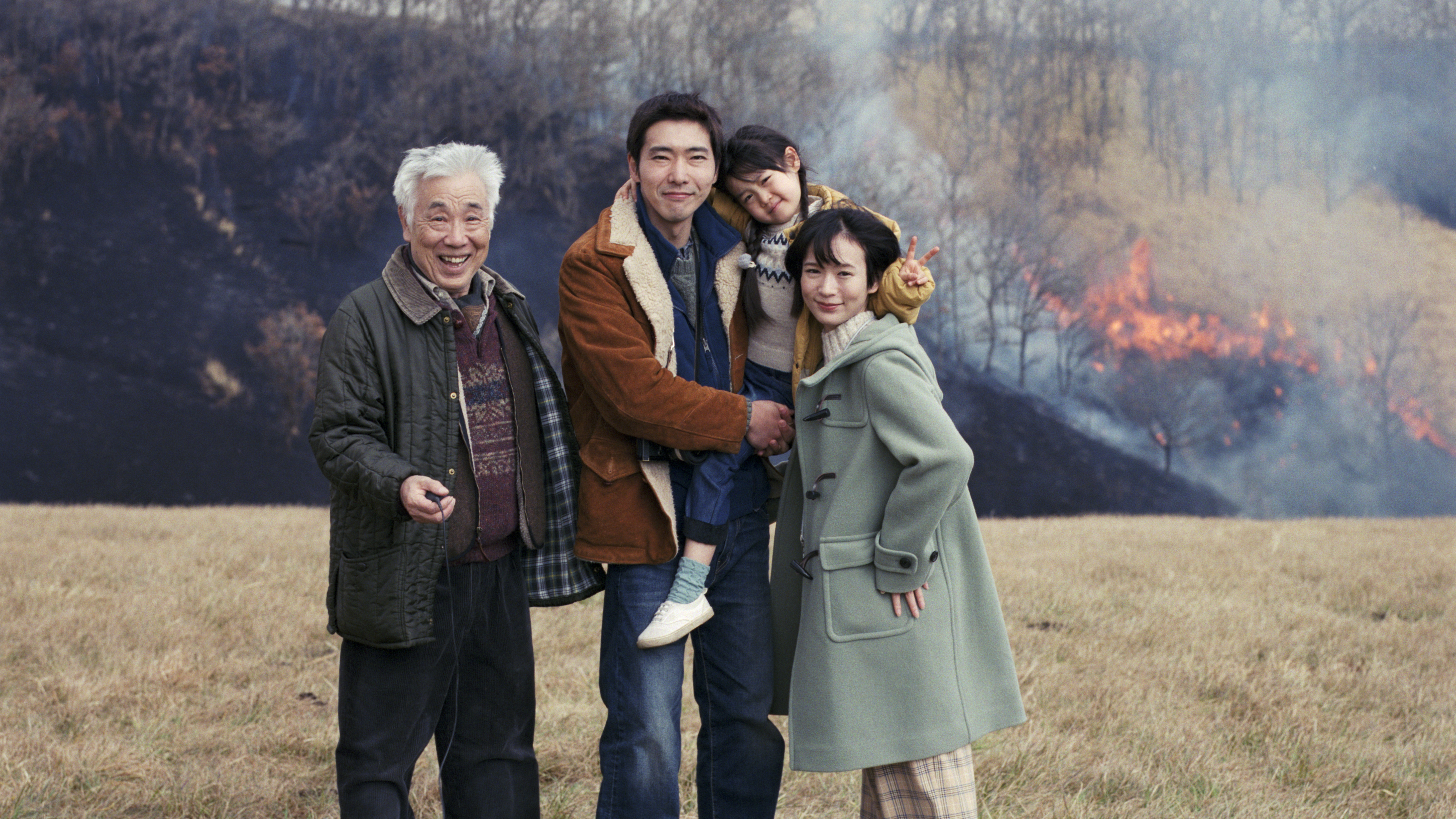
A touching and very human debut feature from Japanese writer/director Miiku Sakanishi on connection with others and how (and why) we capture memories to preserve moments in time. Memorizu has its World Premiere at Tribeca Festival on 6th June.
Director Miiku Sakanishi sets the tone from the outset of his feature debut, with the opening images showing different people sitting looking outwards as the sea and landscape are framed in the window of a ferry. After a few moments, we switch to the ferry terminal, where we meet Yuta (Tasuku Emoto), his wife Yuki (Moeka Hoshi), and their young daughter Hana. We quickly gather that Yuta is about to board the ferry and leave for a few weeks, and he uses his smart phone to capture images and videos of his family before he departs. He’s leaving to look after his father-in-law Makoto (Issey Ogata) who owns a photography portrait studio in rural Kyushu but who is recovering from a leg fracture and needs assistance.
As Yuta settles into his new surroundings, he keeps contact with his family by sending snaps taken on his phone, and having video calls with them. His images are a way of maintaining contact in the present, but the images are largely ephemeral. Makato’s business has him taking posed photographs of people at important times in their lives – weddings, school portraits – to be kept as memories of the past. Both methods capture a moment in time, however Makato’s is important for the subject of the photograph, Yuta’s for himself.
While Yuta is away, his wife continues to take their daughter to school and go to work herself, where she is a personal tour guide for Chinese visitors to Tokyo. She, too, offers to take pictures of her clients outside restaurants or shops they have visited, so that they have the memory and can share when they return home.
Memorizu is one of those films in which nothing much happens, except life. Daily, ordinary, routine life happens; dogs are walked, neighbours help each other out, couples marry, old friends die. These things happen all the time, all around us, and Sakanishi is asking us to realise their importance. Why do we make images? To either preserve a moment for us to remember a feeling, or to share with other to make a connection.
This is a gentle-paced, reflective film, which encourages the viewer to pause and consider not only what our own collection of photographs – whether digital or analogue – means to us, and also perhaps to look up from our screens once in a while to appreciate what and who is around us. It may feel mundane, but the memories we make while our family and friends are still with us will remain once those people are gone.
Memorizu is quite an achievement for a debut filmmaker, and I’m hoping the film gets the acknowledgement it truly deserves.
Memorizu receives its World Premiere at Tribeca Festival 2026.
Share this:
Like this:
Discover more from The Movie Isle
Subscribe to get the latest posts sent to your email.