My love and affection for the last of John Carpenter’s Apocalypse Trilogy has grown over the years since its initial release. Much of that adoration came with my growing film and literature knowledge base. The more Noir I watched, Hardboiled Detective novels I read, Stephen King I ingested, and H.P. Lovecraft I experienced, this film came beckoning. In the Mouth of Madness is all those things and more.
Arcane Publishing has brought in ace insurance investigator John Trent (Sam Neill) to find the recently missing Sutter Cane (Jürgen Prochnow). Cane is Arcane’s biggest-selling author. In fact, the novelist is the biggest-selling author worldwide. His books cause mass hysteria in his readers, both figurative and very literal. Trent, smelling a publicity stunt, takes the job to find the reclusive, now missing, author.
The film is fertile grounds for Carpenter, who directed from a Michael De Luca script. Part of the genius of the film is that it is as much Philip Marlowe as it is Cthulhu. That perfect balance of detective fiction and supernatural horror is rare in film, something that Carpenter is an expert in. The subtle and not-so-subtle work here is as much a credit to the filmmaker as it is to Sam Neill and Jürgen Prochnow.
Much of the heavy lifting rests on the shoulders of Sam Neill. The star of The Possession, Jurassic Park, and Event Horizon is as committed as any actor, maybe more so. His work as Trent is both playful and serious. It’s a balancing act the actor understands better than most, having worked on a slew of tricky material before this film. What we get is a fully realized character with Neill, something many others would have never approached. Many would have played the joke or made it too self-serious, never understanding the joke that Carpenter is going for. Trent, as a character, suffers no fools, thinking there is a con behind every case he takes. Neill pushes that ethos in the character to the point of ridiculousness till the end of the film; Trent’s disbelief in the apocalypse waiting to see the strings that he never finds at the end of days.
As Carpenter films go, In the Mouth of Madness sides on the more playful side of horror. A film dealing with the end of the world as we know it should not be as funny as this one is. The director’s dry wit is in full view during most of the film. There are visual flourishes that play out for comedic and gruesome effect, sometimes in the same set piece (see the Mrs. Pickman scenes). Though not omnipresent, Carpenter does manage sly jabs at the publishing world, authors, authorship, Hollywood, and filmmaking.
In the Mouth of Madness is as great a ’90s horror film as you’ll find. The film is aided greatly by having Carpenter and Neill at the top of their games. Though the least of Carpenter’s Apocalypse Trilogy, it’s better than all (albeit one) H.P. Lovecraft-inspired adaptations.
The Transfer
The all-new 4K restoration from the original 35mm camera negative by Arrow Films, presented in Dolby Vision (HDR10 compatible), is an excellent transfer. The black levels, which are of key importance on a film that was darkly lit even during its daylight scenes, are perfect in Dolby Vision. The transfer is so good that there are key moments that played out before in darkness that this transfer now shows detail levels, making you feel like you’re watching a new film. Another win for Arrow Video and their 4K UHD upgrades.
The Extras
They include the following;
Archive audio commentary with director John Carpenter and producer Sandy King Carpenter
Archive audio commentary with director John Carpenter and director of photography Gary B. Kibbe
Brand new audio commentary by filmmakers Rebekah McKendry & Elric Kane, co-hosts of Colors of the Dark podcast
Making Madness, a newly filmed interview with producer Sandy King Carpenter
Do You Read Sutter Cane?, a newly filmed interview with actor Jürgen Prochnow
The Whisperer of the Dark, an archive interview with actress Julie Carmen
Greg Nicotero’s Things in the Basement, an archive interview with special effects artist Greg Nicotero
We Are What He Writes, a new featurette in praise of John Carpenter and In the Mouth of Madness
Reality Is Not What It Used To Be, a new appreciation by film scholar Alexandra Heller-Nicholas
Horror’s Hallowed Grounds, an archive featurette looking at the locations used in the film
Home Movies From Hobb’s End, behind-the-scenes footage
The Making of In the Mouth of Madness, a vintage featurette
Theatrical trailer and TV spots
The first of three commentaries is a newer archival one by Carpenter and producer Sandy King Carpenter. The commentary finds Carpenter in a relaxed but loquacious mood. The track opens with Carpenter introducing both himself and his producer/wife, discussing this being his first Canadian shoot. This commentary, rather than being a technical-based one, is more anecdotal. Some of the details include dishing about working with Chuck Heston; Howard Hawks references; Sam Neill not understanding the box office juggernaut that was Jurassic Park; the various locations they used during the production; getting Cronenberg’s art/production design team; and much more. Carpenter himself seems to be enjoying watching the film, even laughing a couple of times. It’s a great commentary.
The second commentary track is an older archival commentary by King and Cinematographer Gary B. Kibbe. The commentary is very dry and technical, focusing on the shooting of the film and the challenges inherent in the production. Note: this commentary has been included on every Home Video Release since its Laser Disc debut in 1995.
The third and final commentary track is by filmmakers Rebekah McKendry & Elric Kane, co-hosts of Colors of the Dark podcast, which opens with their excitement for discussing a favorite of theirs and why the musical theme is similar to Metallica’s Enter Sandman. Some of the details include the history of cursed books in literature and film; the directors that were attached before Carpenter; how different the film is to Carpenter’s filmography, even in his horror film; a discussion of the work of Sam Neill here and in other films; the budget for the film; the work of cinematographer Garry Kibbe; the visual similarity to detective fiction and neo noir and films like Lost Highway and characters like Phillip Marlowe; HP Lovecraft’s imprint in pop culture at the time and how its grown since; a consistent conversation of how Carpenter and crew make the film feel bigger on a smaller budget; the strong connections to HP Lovecraft and other horror works about madness and the end of the world; a larger discussion of the various Visual and Practical FX work done in the film; a larger discussion of the various actors who appear in the film; and much more.
Making Madness, with producer Sandy King Carpenter (21:37) – in the all-new interview with the producer, begins with her time in art/animation at UCLA and how she transitioned over to live action and working for Roger Corman. King Carpenter goes on to discuss how she worked and fell in love with Carpenter on Starman; how their business relationship works and why it is so successful; how she went from Script Supervisor to Associate Producer to full-on Producer, taking over for Larry Franco; Carpenter’s similarity to working with Francis Ford Coppola; how In the Mouth of Madness was developed and when she became involved with the project; the troubles with New Line and the productions – including why Canada was chosen to shoot; Carpenter’s relationship with the actors including Sam Neill and what made those connections so strong; her relationship with Heston, Sam Neill, Julie Carmen, and Jürgen Prochnow; and much more.
Do You Read Sutter Cane?, with actor Jürgen Prochnow (6:46) – in this all-new interview with the actor begins with how he got the role in the film directly from John Carpenter. Prochnow goes on to discuss loving the script and the inventiveness of the script for a horror film; how he approached the role of Sutter Cane; his reference point of Apocalypse Now and The Third Man for his role; working with Carpenter; and much more.
The Whisperer Of The Dark, with Julie Carmen (9:47) – this archival interview with actress Julie Carmen, who opens her discussion on how she got the part (it was through Sandy King, who had worked with her on a TV movie). The actress goes on to discuss the interesting inspirations for the role; the chemistry between her and Neill – including a love scene that was cut from the film; working with Sam Neill; her first impression of the screenplay; working with Carpenter as a director; and much more.
Greg Nicotero’s Things In The Basement (16:35) – this archival interview with actress Greg Nicotero begins with how his work on Body Bags transitioned into work In the Mouth of Madness. Nicotero goes onto discuss the personal excitement of being able to personal collaborate with Carpenter during this time in his career; the giant monster that’s featured in the film and how it was built and accomplished; the challenges and grueling nature of making impressive make-up effects on a limited budget; the original ending and how it changed and even how the ending in theater had changed as well; and much more.
We Are What He Writes (33:25) – is an all-new featurette in praise of John Carpenter and In the Mouth of Madness. More than just a look at In the Mouth of Madness, but a deep dive into Carpenter’s career and how the themes, interests, and politics of his other films relate to In the Mouth of Madness. This fascinating documentary/visual essay is divided into three sections and hosted by three critics. Part I – Madness for Mass Consumption hosted by Camille Zaurin, Part II – Not the Carpenters Too! hosted by Tom Rutter, and Part III – God Shouldn’t Be a Hack Horror Writer hosted by George Lea. This featurette is a truly great informational look at what makes this film great, but also how the career, both good and bad, shaped John Carpenter’s various films.
Reality Is Not What It Used To Be (11:27) – is an all-new appreciation by film scholar Alexandra Heller-Nicholas that looks at the concept of cursed literary text and art in history. Heller-Nicholas goes on to discuss the troupe in other films and within In the Mouth of Madness and what makes the Carpenter film such an effective horror film. Satanic panic, music censorship, and heavy metal are all discussed, and the echoes in the film as well. The visual essay is wonderfully written by Heller-Nicholas and sharply edited by Jonathan Zaurin.
Horror’s Hallowed Grounds (11:31) – is an archival installment of the ongoing web series that finds the locations from famous horror films from the past. This episode, of course, looks at the locations in and around Ontario, Canada the production used to film In the Mouth of Madness.
Home Movies From Hobb’s End (12:08) – is an archival set of B-Roll footage shot on location and behind the scenes for the film. To be clear, this is not EPK footage but video shot by (what appears to be) KNB FX artists in and around the production. Some of the footage can be seen in other featurettes, but this compiles it together in long, uninterrupted takes. It’s a fascinating look behind the scenes of the various makeup effects that were done on-set.
Vintage Making of… (5:03) – this 90s-flavored behind-the-scenes featurette is great fun, albeit light on information (as many EPKs are), and is so 90s it even includes the deep-voiced Trailer Guy doing the narration.
Theatrical trailer (1:47)
TV spots (9:35) – consists of 12 TV Spots ranging from 30 to 45 to 60 seconds.
Image Gallery – the gallery consists of 90 pieces of poster art, production stills, lobby cards and more. It can be navigated using your next and back chapter stop buttons.
The Final Thought
Arrow’s 4K UHD upgrade for In the Mouth of Madness is another winner for the label. Highest possible recommendations!!

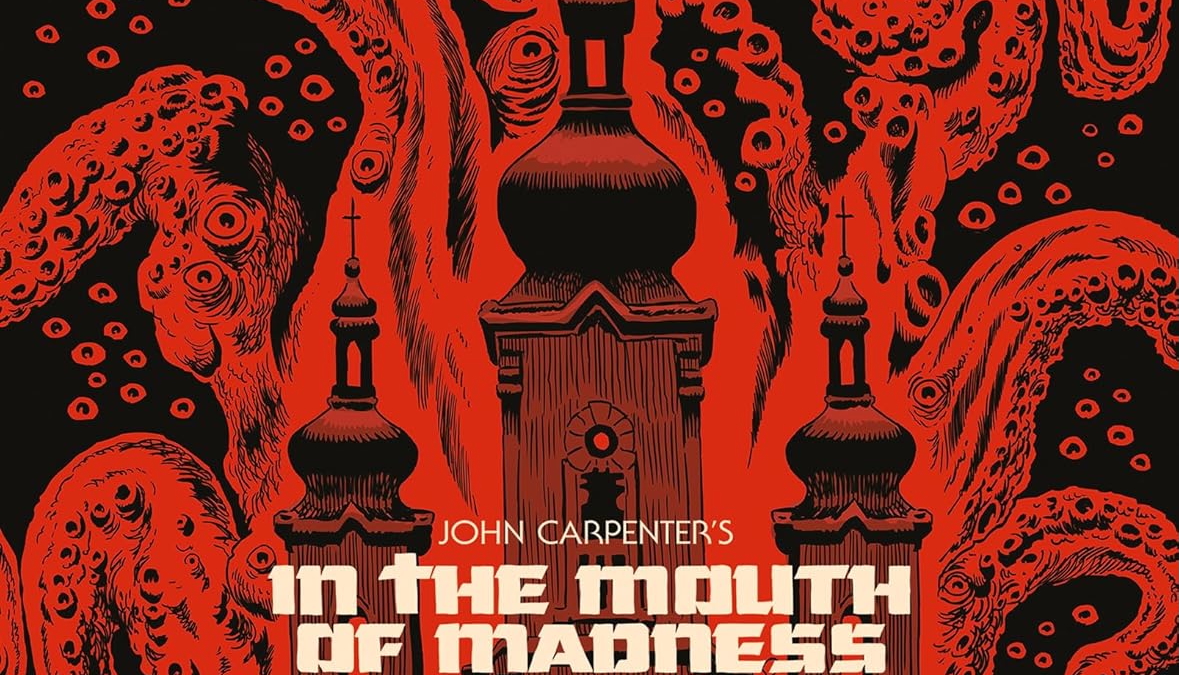
John Carpenter’s In the Mouth of Madness comes to 4K UHD thanks to Arrow Video with a new 4K Restoration and special features.
The Film
My love and affection for the last of John Carpenter’s Apocalypse Trilogy has grown over the years since its initial release. Much of that adoration came with my growing film and literature knowledge base. The more Noir I watched, Hardboiled Detective novels I read, Stephen King I ingested, and H.P. Lovecraft I experienced, this film came beckoning. In the Mouth of Madness is all those things and more.
Arcane Publishing has brought in ace insurance investigator John Trent (Sam Neill) to find the recently missing Sutter Cane (Jürgen Prochnow). Cane is Arcane’s biggest-selling author. In fact, the novelist is the biggest-selling author worldwide. His books cause mass hysteria in his readers, both figurative and very literal. Trent, smelling a publicity stunt, takes the job to find the reclusive, now missing, author.
The film is fertile grounds for Carpenter, who directed from a Michael De Luca script. Part of the genius of the film is that it is as much Philip Marlowe as it is Cthulhu. That perfect balance of detective fiction and supernatural horror is rare in film, something that Carpenter is an expert in. The subtle and not-so-subtle work here is as much a credit to the filmmaker as it is to Sam Neill and Jürgen Prochnow.
Much of the heavy lifting rests on the shoulders of Sam Neill. The star of The Possession, Jurassic Park, and Event Horizon is as committed as any actor, maybe more so. His work as Trent is both playful and serious. It’s a balancing act the actor understands better than most, having worked on a slew of tricky material before this film. What we get is a fully realized character with Neill, something many others would have never approached. Many would have played the joke or made it too self-serious, never understanding the joke that Carpenter is going for. Trent, as a character, suffers no fools, thinking there is a con behind every case he takes. Neill pushes that ethos in the character to the point of ridiculousness till the end of the film; Trent’s disbelief in the apocalypse waiting to see the strings that he never finds at the end of days.
As Carpenter films go, In the Mouth of Madness sides on the more playful side of horror. A film dealing with the end of the world as we know it should not be as funny as this one is. The director’s dry wit is in full view during most of the film. There are visual flourishes that play out for comedic and gruesome effect, sometimes in the same set piece (see the Mrs. Pickman scenes). Though not omnipresent, Carpenter does manage sly jabs at the publishing world, authors, authorship, Hollywood, and filmmaking.
In the Mouth of Madness is as great a ’90s horror film as you’ll find. The film is aided greatly by having Carpenter and Neill at the top of their games. Though the least of Carpenter’s Apocalypse Trilogy, it’s better than all (albeit one) H.P. Lovecraft-inspired adaptations.
The Transfer
The all-new 4K restoration from the original 35mm camera negative by Arrow Films, presented in Dolby Vision (HDR10 compatible), is an excellent transfer. The black levels, which are of key importance on a film that was darkly lit even during its daylight scenes, are perfect in Dolby Vision. The transfer is so good that there are key moments that played out before in darkness that this transfer now shows detail levels, making you feel like you’re watching a new film. Another win for Arrow Video and their 4K UHD upgrades.
The Extras
They include the following;
The first of three commentaries is a newer archival one by Carpenter and producer Sandy King Carpenter. The commentary finds Carpenter in a relaxed but loquacious mood. The track opens with Carpenter introducing both himself and his producer/wife, discussing this being his first Canadian shoot. This commentary, rather than being a technical-based one, is more anecdotal. Some of the details include dishing about working with Chuck Heston; Howard Hawks references; Sam Neill not understanding the box office juggernaut that was Jurassic Park; the various locations they used during the production; getting Cronenberg’s art/production design team; and much more. Carpenter himself seems to be enjoying watching the film, even laughing a couple of times. It’s a great commentary.
The second commentary track is an older archival commentary by King and Cinematographer Gary B. Kibbe. The commentary is very dry and technical, focusing on the shooting of the film and the challenges inherent in the production. Note: this commentary has been included on every Home Video Release since its Laser Disc debut in 1995.
The third and final commentary track is by filmmakers Rebekah McKendry & Elric Kane, co-hosts of Colors of the Dark podcast, which opens with their excitement for discussing a favorite of theirs and why the musical theme is similar to Metallica’s Enter Sandman. Some of the details include the history of cursed books in literature and film; the directors that were attached before Carpenter; how different the film is to Carpenter’s filmography, even in his horror film; a discussion of the work of Sam Neill here and in other films; the budget for the film; the work of cinematographer Garry Kibbe; the visual similarity to detective fiction and neo noir and films like Lost Highway and characters like Phillip Marlowe; HP Lovecraft’s imprint in pop culture at the time and how its grown since; a consistent conversation of how Carpenter and crew make the film feel bigger on a smaller budget; the strong connections to HP Lovecraft and other horror works about madness and the end of the world; a larger discussion of the various Visual and Practical FX work done in the film; a larger discussion of the various actors who appear in the film; and much more.
Making Madness, with producer Sandy King Carpenter (21:37) – in the all-new interview with the producer, begins with her time in art/animation at UCLA and how she transitioned over to live action and working for Roger Corman. King Carpenter goes on to discuss how she worked and fell in love with Carpenter on Starman; how their business relationship works and why it is so successful; how she went from Script Supervisor to Associate Producer to full-on Producer, taking over for Larry Franco; Carpenter’s similarity to working with Francis Ford Coppola; how In the Mouth of Madness was developed and when she became involved with the project; the troubles with New Line and the productions – including why Canada was chosen to shoot; Carpenter’s relationship with the actors including Sam Neill and what made those connections so strong; her relationship with Heston, Sam Neill, Julie Carmen, and Jürgen Prochnow; and much more.
Do You Read Sutter Cane?, with actor Jürgen Prochnow (6:46) – in this all-new interview with the actor begins with how he got the role in the film directly from John Carpenter. Prochnow goes on to discuss loving the script and the inventiveness of the script for a horror film; how he approached the role of Sutter Cane; his reference point of Apocalypse Now and The Third Man for his role; working with Carpenter; and much more.
The Whisperer Of The Dark, with Julie Carmen (9:47) – this archival interview with actress Julie Carmen, who opens her discussion on how she got the part (it was through Sandy King, who had worked with her on a TV movie). The actress goes on to discuss the interesting inspirations for the role; the chemistry between her and Neill – including a love scene that was cut from the film; working with Sam Neill; her first impression of the screenplay; working with Carpenter as a director; and much more.
Greg Nicotero’s Things In The Basement (16:35) – this archival interview with actress Greg Nicotero begins with how his work on Body Bags transitioned into work In the Mouth of Madness. Nicotero goes onto discuss the personal excitement of being able to personal collaborate with Carpenter during this time in his career; the giant monster that’s featured in the film and how it was built and accomplished; the challenges and grueling nature of making impressive make-up effects on a limited budget; the original ending and how it changed and even how the ending in theater had changed as well; and much more.
We Are What He Writes (33:25) – is an all-new featurette in praise of John Carpenter and In the Mouth of Madness. More than just a look at In the Mouth of Madness, but a deep dive into Carpenter’s career and how the themes, interests, and politics of his other films relate to In the Mouth of Madness. This fascinating documentary/visual essay is divided into three sections and hosted by three critics. Part I – Madness for Mass Consumption hosted by Camille Zaurin, Part II – Not the Carpenters Too! hosted by Tom Rutter, and Part III – God Shouldn’t Be a Hack Horror Writer hosted by George Lea. This featurette is a truly great informational look at what makes this film great, but also how the career, both good and bad, shaped John Carpenter’s various films.
Reality Is Not What It Used To Be (11:27) – is an all-new appreciation by film scholar Alexandra Heller-Nicholas that looks at the concept of cursed literary text and art in history. Heller-Nicholas goes on to discuss the troupe in other films and within In the Mouth of Madness and what makes the Carpenter film such an effective horror film. Satanic panic, music censorship, and heavy metal are all discussed, and the echoes in the film as well. The visual essay is wonderfully written by Heller-Nicholas and sharply edited by Jonathan Zaurin.
Horror’s Hallowed Grounds (11:31) – is an archival installment of the ongoing web series that finds the locations from famous horror films from the past. This episode, of course, looks at the locations in and around Ontario, Canada the production used to film In the Mouth of Madness.
Home Movies From Hobb’s End (12:08) – is an archival set of B-Roll footage shot on location and behind the scenes for the film. To be clear, this is not EPK footage but video shot by (what appears to be) KNB FX artists in and around the production. Some of the footage can be seen in other featurettes, but this compiles it together in long, uninterrupted takes. It’s a fascinating look behind the scenes of the various makeup effects that were done on-set.
Vintage Making of… (5:03) – this 90s-flavored behind-the-scenes featurette is great fun, albeit light on information (as many EPKs are), and is so 90s it even includes the deep-voiced Trailer Guy doing the narration.
Theatrical trailer (1:47)
TV spots (9:35) – consists of 12 TV Spots ranging from 30 to 45 to 60 seconds.
Image Gallery – the gallery consists of 90 pieces of poster art, production stills, lobby cards and more. It can be navigated using your next and back chapter stop buttons.
The Final Thought
Arrow’s 4K UHD upgrade for In the Mouth of Madness is another winner for the label. Highest possible recommendations!!
Arrow Video’s 4K UHD Edition of In the Mouth of Madness is out October 28th.
Share this:
Like this:
Discover more from The Movie Isle
Subscribe to get the latest posts sent to your email.