As the title indicates, the film is about the siege laid upon the lord Toyotomi at his castle as the evil mastermind Tokugawa Ieyasu can rule all of Japan. Only Toyotomi’s ninja, led by Kirigakure Saizo can be his only hope. With supplies and hope running short, can Saizo and his daring mission be completed and stop Tokugawa?
Director Tokuzô Tanaka was given a massive budget for the fourth film in the franchise, and everything is put on screen. The action scenes, both epic and small-scale scale are impeccably crafted here. There isn’t a moment of this action film that isn’t perfectly created for maximum impact. That is the power of the film and its brisk 87-minute runtime… it swells with every bit of action you could possibly want, but always aimed at progressing the story.
Though it would be enough if the film were just a kick ass action film but screenwriter Hajime Takaiwa creates a film that spins a web of political corruption and machinations that lengthier films do not successfully weave. The shifting game of chess at the center of the film that Toyotomi and Tokugawa play is heartbreaking because from the beginning, one knows Toyotomi’s outmatched by a far superior opponent.
The ends with a truly stunning visual moment that etches its star Raizô Ichikawa into the mythic figure he has rightfully become.
Shinobi 5: The Return of Mist Raizo
Picking up literally minutes after Shinobi 4 has ended, rather than being another epic siege film, this is a low-down and dirty revenge picture that’s as crafty as its predecessor and even darker. Toyotomi and Saizo, now on the run from the defector ruler of all of Japan, Tokugawa, and his many allies, seek solace in the confines of the castle of one of their few friends. Though there are many who would turn them in. Saizo, having no choice against the wishes of Toyotomi and the woman he loves, wages an all-out war against Tokugawa.
Director Kazuo Ikehiro takes over for Tokuzô Tanaka, and there isn’t a misstep here. The film, though smaller in scale, is by no means any less of a film. Kazuo manages to create a series of action scenes that are different stylistically from the operatic nature of Tokuzô’s ones in Shinobi 4. Shinobi 5: The Return of Mist Raizo and its action scenes are slicker and more refined more akin to the modern era of ninja films we are used to. There is a mid-film action scene with the use of light and shadow that may be the best in the series.
Screenwriter Hajime Takaiwa returns for the direct sequel that finds a more personal, slower-paced (albeit not by much) film. One that finds new wrinkles in a story that could have been a retread. Shinobi 5 finds Saizo not just dealing with his responsibilities as a ninja, but also the possibility of finding love and starting a real life away from servitude. Takaiwa finds that perfect tone for a film that is more bitter than sweet. One where the victory is the darkest and emptiest of wins.
Truly a high point of the series.
Shinobi 6: The Last Iga Spy
With his dying breath, Saizo tells his son Kirigakure Saisuke that the girl he thinks is his sister isn’t his sister but a princess he must protect. Saizo’s son devotes his life to becoming the ultimate ninja, as good if not better than his father (a lofty task, no doubt). Now years older, his son finds the princess, now a grown young woman, being groomed by an evil, corrupt politician, and involves himself in a game of intrigue pitting ninja against ninja. The power of the nation stands in the balance.
In trading Screenwriter Hajime Takaiwa for two new writers Kinya Naoi and Kei Hattori the series got a film with a truly overly complicated plot that feels the weight of itself. Princesses in hiding, lecherous lords, ninjas exacting revenge, house against house. The film is heavy on story and light on action, taking away from the balanced formula of the previous five films so deftly were able to create.
Another new director in Kazuo Mori, understands how the shoot a political thriller and action scenes he’s just not given enough of it to do. The rainy nighttime rooftop battle is spectacular and epic, recalling the best of the series. Other than this scene, many of the action scenes feel like retreads of the last two films. That inventive spirit of 4 and 5 has evaporated for what feels like plot exposition for a new hero. Though the film is beautiful, with wonderfully constructed scenes with dollied camera movements that are truly inspired. One will want to revisit the original of the series if one is seeking that masterful touch of inspired action.
The Transfer
High-Definition digital transfer of each film presented on two discs, made available on Blu-ray (1080p) for the first time outside of Japan, are excellently sourced transfers of these wonderful black and white widescreen films. The images on all three films are verbose, saturated images with a beautiful patina of film grain. The transfers are sharp, nearly free of specks, dirt, or scratches. Each film’s transfer is beautifully done and will delight fans of the film series.
The Extras
They include the following;
Interview with Japanese period film historian Taichi Kasuga
Interview with ninja film scholar Mance Thompson
Select-scene audio commentary on Siege by Tom Mes
The Tragedy of Mist Saizo – a visual essay by film critic Hayley Scanlon
The Faces of Raizo – a visual essay by Tom Mes
The Select-scene audio commentary on Siege by Tom Mes is 49 minutes in total and is broken down into four sections: In the Beginning; The Legendary Samurai; Raizo and Daiei; The Daiei Style. The track does open with the term Ninja or Shinobi no mono, and the history of it. Mes goes on to discuss the history of the series, both the films’ stories and the history of Japan that the films portray; the myth of the ninja; what are the ten Braves of Sanada of which Mist Saizo is one of; the real like Tokugawa and Toyotomi clans and their war; the history of studio Daiei – including Akira Kurosawa making of Rashomon influenced how they made films at the studio; the star of this set of films Raizo Ichikawa; the way these films were released in Japan and the style of the B-picture of Daiei; and much more.
Interview with Japanese period film historian Taichi Kasuga (24:10) – the historian discusses Daiei Studios’ historical films beginning with their rise with Akira Kurosawa’s Rashomon. Kasuga goes on to discuss other directors who rose through the ranks of Daiei to make historical dramas and their strict adherence to accuracy; Daiei’s distinct style and their reputation for their emphasis on the technical in their period films; how these stylistic and technical designs were applied to the Shinobi series – making for a striking visual B-movie action series; and much more. In Japanese with English subtitles.
The Faces of Raizo (4:21) – in this all-new visual essay by Tom Mes dissects how star Raizô Ichikawa, throughout his career, took on different roles and how the actor’s look could change and affect his performances throughout his varied career. Mes’s essay uses beautiful text (the font of Radiance film to the keen eye) at specific moments to accentuate the point of the beautifully edited, by Mes, piece of visual deconstruction. Note: Stay till the end of the essay for a listing of all the films featured on the featurette.
Interview with ninja film scholar Mance Thompson (18:12) – Thompson opens with the difference in Ninja films pre-WWII and post-WWII in how they were portrayed and the tones of the film. The film scholar goes on to discuss how the Shinobi series was not the first for the ninja to wear the iconic garb, but was the most famous; the reasons why the series was the most famous, but also the most well-regarded of the ninja movies; the historical facts that were accurate and which were not; the accuracy of sons taking on the jobs of their fathers in feudal Japan that’s portrayed in Shinobi 6; the various historical figures that are in the three films and how they fit into history and the story of the series; and much more.
The Tragedy of Mist Saizo (11:34) – is an all-new visual essay by film critic Hayley Scanlon looking at the larger role that the character Mist Saizo plays in the Shinobi film series. Scanlon discusses the trilogy of the longer series in this box set – both the historical points the film portrays, the story and themes the films discuss, and much more. The visual essay is written by Scanlon and edited by Tom Mes.
The Final Thought
Radiance continues to provide some of the best catalog box set releases. Highest possible recommendations!!!

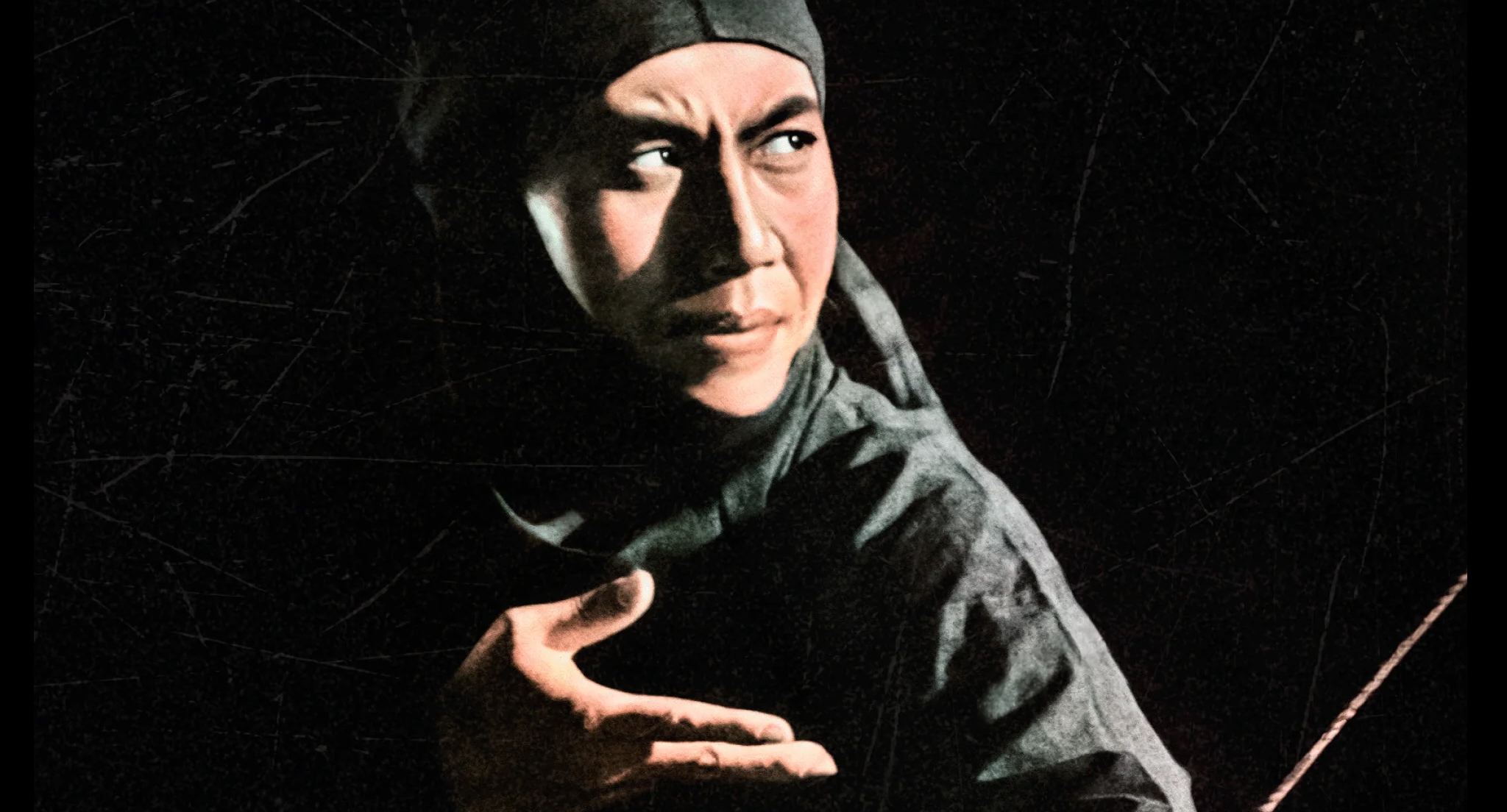
Raizo Ichikawa is back as the original Ninja in Radiance Films’ Blu-Ray box set Shinobi Vol. 2.
The Film
Shinobi 4: Siege
As the title indicates, the film is about the siege laid upon the lord Toyotomi at his castle as the evil mastermind Tokugawa Ieyasu can rule all of Japan. Only Toyotomi’s ninja, led by Kirigakure Saizo can be his only hope. With supplies and hope running short, can Saizo and his daring mission be completed and stop Tokugawa?
Director Tokuzô Tanaka was given a massive budget for the fourth film in the franchise, and everything is put on screen. The action scenes, both epic and small-scale scale are impeccably crafted here. There isn’t a moment of this action film that isn’t perfectly created for maximum impact. That is the power of the film and its brisk 87-minute runtime… it swells with every bit of action you could possibly want, but always aimed at progressing the story.
Though it would be enough if the film were just a kick ass action film but screenwriter Hajime Takaiwa creates a film that spins a web of political corruption and machinations that lengthier films do not successfully weave. The shifting game of chess at the center of the film that Toyotomi and Tokugawa play is heartbreaking because from the beginning, one knows Toyotomi’s outmatched by a far superior opponent.
The ends with a truly stunning visual moment that etches its star Raizô Ichikawa into the mythic figure he has rightfully become.
Shinobi 5: The Return of Mist Raizo
Picking up literally minutes after Shinobi 4 has ended, rather than being another epic siege film, this is a low-down and dirty revenge picture that’s as crafty as its predecessor and even darker. Toyotomi and Saizo, now on the run from the defector ruler of all of Japan, Tokugawa, and his many allies, seek solace in the confines of the castle of one of their few friends. Though there are many who would turn them in. Saizo, having no choice against the wishes of Toyotomi and the woman he loves, wages an all-out war against Tokugawa.
Director Kazuo Ikehiro takes over for Tokuzô Tanaka, and there isn’t a misstep here. The film, though smaller in scale, is by no means any less of a film. Kazuo manages to create a series of action scenes that are different stylistically from the operatic nature of Tokuzô’s ones in Shinobi 4. Shinobi 5: The Return of Mist Raizo and its action scenes are slicker and more refined more akin to the modern era of ninja films we are used to. There is a mid-film action scene with the use of light and shadow that may be the best in the series.
Screenwriter Hajime Takaiwa returns for the direct sequel that finds a more personal, slower-paced (albeit not by much) film. One that finds new wrinkles in a story that could have been a retread. Shinobi 5 finds Saizo not just dealing with his responsibilities as a ninja, but also the possibility of finding love and starting a real life away from servitude. Takaiwa finds that perfect tone for a film that is more bitter than sweet. One where the victory is the darkest and emptiest of wins.
Truly a high point of the series.
Shinobi 6: The Last Iga Spy
With his dying breath, Saizo tells his son Kirigakure Saisuke that the girl he thinks is his sister isn’t his sister but a princess he must protect. Saizo’s son devotes his life to becoming the ultimate ninja, as good if not better than his father (a lofty task, no doubt). Now years older, his son finds the princess, now a grown young woman, being groomed by an evil, corrupt politician, and involves himself in a game of intrigue pitting ninja against ninja. The power of the nation stands in the balance.
In trading Screenwriter Hajime Takaiwa for two new writers Kinya Naoi and Kei Hattori the series got a film with a truly overly complicated plot that feels the weight of itself. Princesses in hiding, lecherous lords, ninjas exacting revenge, house against house. The film is heavy on story and light on action, taking away from the balanced formula of the previous five films so deftly were able to create.
Another new director in Kazuo Mori, understands how the shoot a political thriller and action scenes he’s just not given enough of it to do. The rainy nighttime rooftop battle is spectacular and epic, recalling the best of the series. Other than this scene, many of the action scenes feel like retreads of the last two films. That inventive spirit of 4 and 5 has evaporated for what feels like plot exposition for a new hero. Though the film is beautiful, with wonderfully constructed scenes with dollied camera movements that are truly inspired. One will want to revisit the original of the series if one is seeking that masterful touch of inspired action.
The Transfer
High-Definition digital transfer of each film presented on two discs, made available on Blu-ray (1080p) for the first time outside of Japan, are excellently sourced transfers of these wonderful black and white widescreen films. The images on all three films are verbose, saturated images with a beautiful patina of film grain. The transfers are sharp, nearly free of specks, dirt, or scratches. Each film’s transfer is beautifully done and will delight fans of the film series.
The Extras
They include the following;
The Select-scene audio commentary on Siege by Tom Mes is 49 minutes in total and is broken down into four sections: In the Beginning; The Legendary Samurai; Raizo and Daiei; The Daiei Style. The track does open with the term Ninja or Shinobi no mono, and the history of it. Mes goes on to discuss the history of the series, both the films’ stories and the history of Japan that the films portray; the myth of the ninja; what are the ten Braves of Sanada of which Mist Saizo is one of; the real like Tokugawa and Toyotomi clans and their war; the history of studio Daiei – including Akira Kurosawa making of Rashomon influenced how they made films at the studio; the star of this set of films Raizo Ichikawa; the way these films were released in Japan and the style of the B-picture of Daiei; and much more.
Interview with Japanese period film historian Taichi Kasuga (24:10) – the historian discusses Daiei Studios’ historical films beginning with their rise with Akira Kurosawa’s Rashomon. Kasuga goes on to discuss other directors who rose through the ranks of Daiei to make historical dramas and their strict adherence to accuracy; Daiei’s distinct style and their reputation for their emphasis on the technical in their period films; how these stylistic and technical designs were applied to the Shinobi series – making for a striking visual B-movie action series; and much more. In Japanese with English subtitles.
The Faces of Raizo (4:21) – in this all-new visual essay by Tom Mes dissects how star Raizô Ichikawa, throughout his career, took on different roles and how the actor’s look could change and affect his performances throughout his varied career. Mes’s essay uses beautiful text (the font of Radiance film to the keen eye) at specific moments to accentuate the point of the beautifully edited, by Mes, piece of visual deconstruction. Note: Stay till the end of the essay for a listing of all the films featured on the featurette.
Interview with ninja film scholar Mance Thompson (18:12) – Thompson opens with the difference in Ninja films pre-WWII and post-WWII in how they were portrayed and the tones of the film. The film scholar goes on to discuss how the Shinobi series was not the first for the ninja to wear the iconic garb, but was the most famous; the reasons why the series was the most famous, but also the most well-regarded of the ninja movies; the historical facts that were accurate and which were not; the accuracy of sons taking on the jobs of their fathers in feudal Japan that’s portrayed in Shinobi 6; the various historical figures that are in the three films and how they fit into history and the story of the series; and much more.
The Tragedy of Mist Saizo (11:34) – is an all-new visual essay by film critic Hayley Scanlon looking at the larger role that the character Mist Saizo plays in the Shinobi film series. Scanlon discusses the trilogy of the longer series in this box set – both the historical points the film portrays, the story and themes the films discuss, and much more. The visual essay is written by Scanlon and edited by Tom Mes.
The Final Thought
Radiance continues to provide some of the best catalog box set releases. Highest possible recommendations!!!
Radiance Films’ Blu-ray Edition of Shinobi Vol. 2 is out now
Share this:
Like this:
Discover more from The Movie Isle
Subscribe to get the latest posts sent to your email.