Sometimes you aren’t sure how a film is going to age. In 1985, Michael Keaton was a superstar in my eyes. Mr. Mom had to be one of the funniest films ever made. Add to the fact that my dad took me to see Night Shift (in the theaters) way too early, and I remember Keaton swinging around a party as Tarzan was one of my formative memories… yeah. Like I said. Superstar. Gung Ho was the perfect recipe for me to love as a kid. I am part Japanese, so anything Japanese culture in US-made films was catnip (see my undying love of Buckaroo Bonzai). So when I did eventually see the film, I adored it.
Cut to forty years later. Having not seen Gung Ho since its release on DVD. This had me worried. The film would have aged badly like a molded piece of fruit. For the most part, it is a pleasant surprise that the Ron Howard film is respectful (ish) to the cultural touchstones of the Japanese and shows American workers for their stubborn sticks in the mud they can be. Somehow, the Howard film manages to meet a middle ground on both parties, giving us a “can’t we all get along and play nice” ending that, yes, is a fairy tale but is well… is kind of nice in this era of flaming garbage we’re in.
The film’s setup is oddly prescient in 2025 as Keaton’s Hunt Stevenson goes to Japan and somehow convinces Japan’s corporate giant Assan Motors to come to America to save an ailing Pennsylvania town whose factory closed recently. Assan sends Kazihiro (Gedde Watanabe) as the plant manager to get the Americans into shape and in line with Japanese corporate Culture. This does not go well as both men attempt to please their respective forces: Stevenson, the workers, and Kazihiro, the corporate bosses in Japan. It all comes to a head with a bet over if the American workers can produce 15,000 cars in one month, and the lies that Stevenson tells to motivate the unmotivated Americans.
In a lot of ways, it plays out like an old WW2 propaganda film about the need for the US workforce in the factories. That isn’t a bad thing, but anyone looking for the complexities in their workforce dramas should look elsewhere (Jonathan Demme’s wonderful Swing Shift could be a start). Howard brings a feel-good winning tone to the comedy. This may be the hardest type of comedy to successfully bring to the screen. Additionally, one where both cultures being portrayed are given equal screentime and levity. Keaton and Watanabe are a great duo on screen with chemistry to spare. One wishes that they starred in more films together, as the film’s heart and soul is their relationship.
Gung Ho is truly a rarity nowadays, a smart, handsomely shot widescreen comedy. One that isn’t insulting to a culture in the way that many of the era are. Pair it with another smart, handsomely shot widescreen comedy of the era, Real Genius, for a truly fun night of 1980s Comedies.
The Transfer
The all-new HD Master – From a 4K Scan of the 35mm Original Camera Negative is a near flawless representation of the film’s widescreen cinematography. The transfer has that specific 1980s anamorphic widescreen look that’s as slick as it is beautiful. Shot on location in Japan, Pittsburgh, and Argentina, the film has a beautiful, unifying look from the director of photography by Donald Peterman (who also shot Point Break), that comes off excellently on Blu-ray. There isn’t a single scratch, speck of dirt, or issue with the image. Kino has done a wonderful job of bringing this widescreen shot comedy to high definition.
The Extras
They include the following;
NEW Audio Commentary by Film Historian and Author Dwayne Epstein
Finding Common Ground: NEW Interview with Actor Gedde Watanabe
A Big Old Movie: NEW Interview with Actor George Wendt
The all-new Audio Commentary by Film Historian and Author Dwayne Epstein opens with the origins of the film with a 60 Minute episode. Some of the details include the production’s budget; the working title of the film before it became Gung Ho; the trouble the production had with finding an automobile plant that would allow them to film; the lawsuit that ensued over the origins of the story – one which is still ongoing; Stevie Ray Vaughn has guitar solos in the score; the casting what-if’s of both Bill Murray and Eddie Murphy in the Michael Keaton role; a discussion of the TV series that lasted one season; a discussion of the various locations that the production used; a discussion of the various actors that appear in the film; and much more.
Finding Common Ground (13:00) – the all-new interview begins with the Actor Gedde Watanabe discussing the correct pronunciation of his character’s name and his take on the character. The actor goes on to talk about how Tom Hanks helped him, whom he worked with on Volunteers, get the role in Gung Ho; the audition process; working with Ron Howard, and how they collaborated on the character; the research done for the role including speaking with a Toyota executive; how bad his Japanese was at the time; working with Michael Keaton; shooting in both Pittsburg and Argentina; his own connections with Argentina and his family; and much more.
A Big Old Movie (10:00) – the all-new interview begins with Actor George Wendt discussing the fact that Cheers got him the role in Gung Ho and his impressions of being on a “big movie”. The actor goes on to discuss that his own goal was to be in Second City in Chicago; the difference between stage and film; how the production ended up Argentina; the times outside of production while in Argentina; filming the softball game; filming the Keaton fight in the grocery store; and much more.

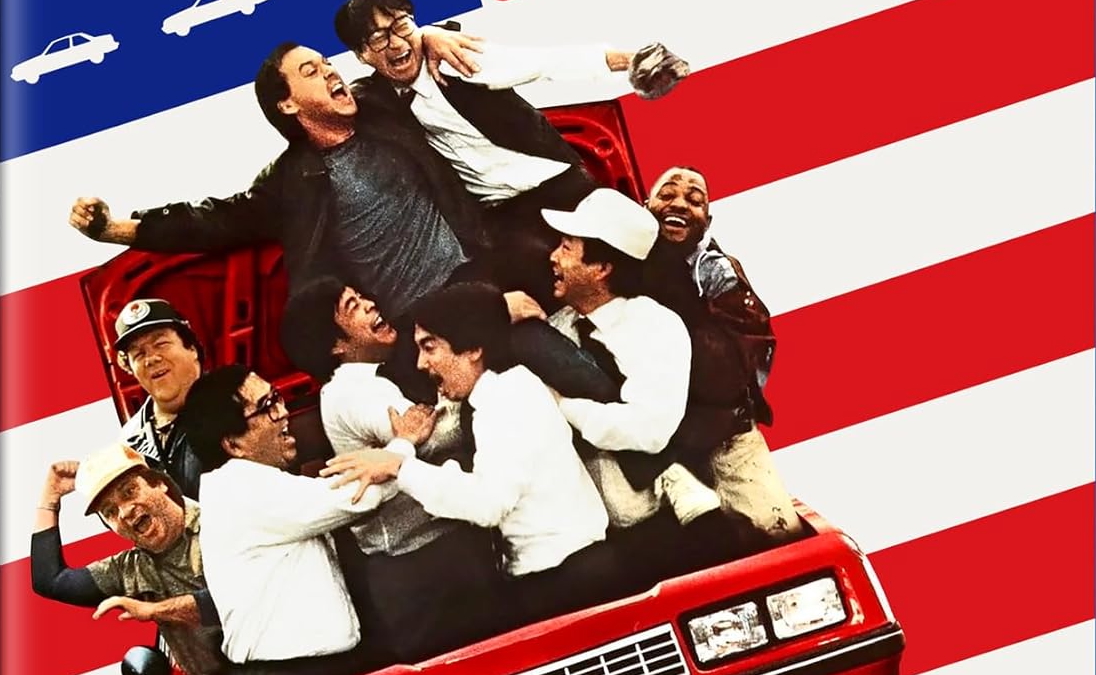
Michael Keaton and Gedde Watanabe star in Ron Howard’s Gung Ho. New to Blu-ray from Kino Lorber.
The Film
Sometimes you aren’t sure how a film is going to age. In 1985, Michael Keaton was a superstar in my eyes. Mr. Mom had to be one of the funniest films ever made. Add to the fact that my dad took me to see Night Shift (in the theaters) way too early, and I remember Keaton swinging around a party as Tarzan was one of my formative memories… yeah. Like I said. Superstar. Gung Ho was the perfect recipe for me to love as a kid. I am part Japanese, so anything Japanese culture in US-made films was catnip (see my undying love of Buckaroo Bonzai). So when I did eventually see the film, I adored it.
Cut to forty years later. Having not seen Gung Ho since its release on DVD. This had me worried. The film would have aged badly like a molded piece of fruit. For the most part, it is a pleasant surprise that the Ron Howard film is respectful (ish) to the cultural touchstones of the Japanese and shows American workers for their stubborn sticks in the mud they can be. Somehow, the Howard film manages to meet a middle ground on both parties, giving us a “can’t we all get along and play nice” ending that, yes, is a fairy tale but is well… is kind of nice in this era of flaming garbage we’re in.
The film’s setup is oddly prescient in 2025 as Keaton’s Hunt Stevenson goes to Japan and somehow convinces Japan’s corporate giant Assan Motors to come to America to save an ailing Pennsylvania town whose factory closed recently. Assan sends Kazihiro (Gedde Watanabe) as the plant manager to get the Americans into shape and in line with Japanese corporate Culture. This does not go well as both men attempt to please their respective forces: Stevenson, the workers, and Kazihiro, the corporate bosses in Japan. It all comes to a head with a bet over if the American workers can produce 15,000 cars in one month, and the lies that Stevenson tells to motivate the unmotivated Americans.
In a lot of ways, it plays out like an old WW2 propaganda film about the need for the US workforce in the factories. That isn’t a bad thing, but anyone looking for the complexities in their workforce dramas should look elsewhere (Jonathan Demme’s wonderful Swing Shift could be a start). Howard brings a feel-good winning tone to the comedy. This may be the hardest type of comedy to successfully bring to the screen. Additionally, one where both cultures being portrayed are given equal screentime and levity. Keaton and Watanabe are a great duo on screen with chemistry to spare. One wishes that they starred in more films together, as the film’s heart and soul is their relationship.
Gung Ho is truly a rarity nowadays, a smart, handsomely shot widescreen comedy. One that isn’t insulting to a culture in the way that many of the era are. Pair it with another smart, handsomely shot widescreen comedy of the era, Real Genius, for a truly fun night of 1980s Comedies.
The Transfer
The all-new HD Master – From a 4K Scan of the 35mm Original Camera Negative is a near flawless representation of the film’s widescreen cinematography. The transfer has that specific 1980s anamorphic widescreen look that’s as slick as it is beautiful. Shot on location in Japan, Pittsburgh, and Argentina, the film has a beautiful, unifying look from the director of photography by Donald Peterman (who also shot Point Break), that comes off excellently on Blu-ray. There isn’t a single scratch, speck of dirt, or issue with the image. Kino has done a wonderful job of bringing this widescreen shot comedy to high definition.
The Extras
They include the following;
The all-new Audio Commentary by Film Historian and Author Dwayne Epstein opens with the origins of the film with a 60 Minute episode. Some of the details include the production’s budget; the working title of the film before it became Gung Ho; the trouble the production had with finding an automobile plant that would allow them to film; the lawsuit that ensued over the origins of the story – one which is still ongoing; Stevie Ray Vaughn has guitar solos in the score; the casting what-if’s of both Bill Murray and Eddie Murphy in the Michael Keaton role; a discussion of the TV series that lasted one season; a discussion of the various locations that the production used; a discussion of the various actors that appear in the film; and much more.
Finding Common Ground (13:00) – the all-new interview begins with the Actor Gedde Watanabe discussing the correct pronunciation of his character’s name and his take on the character. The actor goes on to talk about how Tom Hanks helped him, whom he worked with on Volunteers, get the role in Gung Ho; the audition process; working with Ron Howard, and how they collaborated on the character; the research done for the role including speaking with a Toyota executive; how bad his Japanese was at the time; working with Michael Keaton; shooting in both Pittsburg and Argentina; his own connections with Argentina and his family; and much more.
A Big Old Movie (10:00) – the all-new interview begins with Actor George Wendt discussing the fact that Cheers got him the role in Gung Ho and his impressions of being on a “big movie”. The actor goes on to discuss that his own goal was to be in Second City in Chicago; the difference between stage and film; how the production ended up Argentina; the times outside of production while in Argentina; filming the softball game; filming the Keaton fight in the grocery store; and much more.
Rounding out the special features are trailers for Uncle Buck (1:59); Hot Pursuit (1:54); Best Defense (2:46); Fletch (1:35); The Experts (1:32); The Secret of My Success (2:09); One Good Cop (2:10); Out of Sight (2:35);
The Final Thought
Kino Lorber has provided a great transfer and extra features for the 80s classic comedy. Recommended!
Kino Lorber’s Edition of Gung Ho is out now
Share this:
Like this:
Discover more from The Movie Isle
Subscribe to get the latest posts sent to your email.