Chow Yun-Fat stars in Hong Kong 1941, a melodramatic romantic wartime thriller about the WWII Japanese invasion of Hong Kong. New to Blu-ray from Eureka Entertainment.
The Film
Hong Kong 1941 is a film that doesn’t think being a melodrama is a bad thing. In fact, it isn’t a bad thing, rather, it’s the film’s biggest asset. Director Po-Chih Leong’s thriller never succumbs to a history lesson, nor does it completely become a genre exercise rather something in between. Anchored by a youthful, charismatic lead performance by Chow Yun-fat, Hong Kong 1941 shows why the magnetic actor would go on to superstardom.
Nam (Cecilia Yip) falls in love with two men. The rebellious coolie Keung (Alex Man) and the charming enigmatic Fei (Chow Yun-fat). As they all plan to run away from Hong Kong with dreams of fortunes in America, they are besieged by WW2 and the invasion by the Japanese. During the intervening months, Keung becomes a rebel, and Fei collaborates with the Japanese while Nam and her family attempt to concede to the Japanese officers who have come into their lives. Their choices both divide and bring the trio back together with deadly consequences. Can Nam, Keung, and Fei all escape Hong Kong to a brighter future?
As much as the film is a romance and about a trio of characters is the barn burning performance by Chow Yun-fat is what makes the film a must-watch. From the opening moments on the balcony, Chow is at his charismatic best. One wants nothing more than to follow Fei and his exploits, even when we see him do questionable things. Yip and Man are good, but they are outshone by Chow and his charisma whenever he is on or off-screen.
On a smaller scale than, say, something like Spielberg’s Empire of the Sun, Hong Kong 1941 manages to tell the story of the Japanese invasion of China deftly. Also, more authentically, as it’s telling isn’t using Anglo actors to tell what is very much a Chinese story. The framework of a love triangle allows for a film that isn’t as dour or as maudlin as one would expect. That isn’t to say they shy away from the cruelty of the occupation; one needs to see the firecracker scene, but the romance makes everything easier, as there is a balance within the tone.
Hong Kong 1941 is a wonderful discovery for any Chow Yun-fat fan or fans of Hong Kong cinema in general.
The Transfer
The all-new transfer from a new 4K restoration is an excellent reproduction of the wonderful 35mm photography by cinematographer Brian Lai. Eureka continues to release truly revelatory discs of Asian cinema. Even titles like Hong Kong 1941 are given the time, care, and are beautifully restored. That restoration is due in large part to Fortune Star’s work, but the work here from Eureka to bring this to Blu-ray should be discounted. There isn’t a scratch, blemish, or speck of dirt throughout the runtime of the film. The razor-sharp image is near flawless. Fans of the film will be pleased by the presentation that puts the prior iterations of the film on home video to shame.
The Extras
They include the following;
New audio commentary by East Asian film expert Frank Djeng (NY Asian Film Festival)
Tony Rayns on Hong Kong 1941
Crossing Cultures: Interview with Director Po-Chih Leong
Po-Chih Leong on Hong Kong 1941 and Cultural Identity
Archival interviews with Chow Yun-fat, Cecilia Yip, and Paul Chuh
Original theatrical trailers
The all-new audio commentary by East Asian film expert Frank Djeng (NY Asian Film Festival) opens with his credentials before diving into the film. Some of the details include the literal translation of the title; the release, and the box office success of the film; a discussion of the personal history of D&B Pictures co-owner Dickson Poon; the critical response of the film and awards it was nominated for; a discussion of Chow Yun-Fat performance and his work at the time and how the film shows his jump in his acting quality and what is essentially his star making performance; the fact that Chow, Man, and Yip all dubbed their own voices – a larger discussion of the voice actors who dubbed the onscreen actors; a discussion of the life and career of Cecilia Yip; the cameo by director Po-Chih Leong; a larger discussion of director Po-Chih Leong; a discussion of the life and career of Alex Man; a discussion of the life and career of Chow Yun-fat; a great story about Djeng being on the same flight with Chow Yun-fat; a larger discussion of the cultural norms that appear in the film; a larger discussion of the historical context in which the film takes place in; a larger discussion of the various locations the production used – including the reasons they filmed in Macau instead of Hong Kong; discussion throughout the commentary track about the various actors and their work here and throughout their career – keep your notes app open you’ll want to write some of the films down; and much more.
Tony Rayns on Hong Kong 1947 (30:28) – new interview with film critic and historian Tony Rayns on the contemporary impact of Hong Kong 1941. Rayns goes on to discuss the other film made around the same time that dealt with the similar subject Love in a Fallen City also starring Chow Yun-Fat; DB Films’ formation, and this is the first film from the production house (co-created by Sammo Hung); the lack of budget makes this a small portrait and not a full-on Japanese invasion of China (unlike Spielberg’s Empire of the Sun); the critical response to the film; the life and career of Director Po-Chih Leong – who was born and raised in Britain and eventually immigrated to HK; the life and career of Chow Yun-fat, including what this film did for his career (including a great aside and the actual footage of Rayns’ cameo in a TVB series with the star); the life and career of Cecilia Yip; the life and career of Alex Man; the lack of Japanese language and casting of Cantonese actors instead Japanese; and much more.
Crossing Cultures: Interview with Director Po-Chih Leong (21:46) – In this archival interview, the director discusses how he came to immigrate from London to Hong Kong. Po-Chih Leong goes on to discuss his various acting roles in his films and other directors’ films; the success of the film and what separated it from the director’s other work up until that time; a discussion of the infamous firecracker scene; a discussion of his film Shanghai 1920 starring John Lone and the troubles with making this film – including how Lone was going to be cast in Farewell my Concubine; working with Sammo Hung as a producer and an actor; his documentary about the Hong Kong changeover – Riding the Tiger; and much more. The interview by Fred Ambroisine is more of a career overview than specifically about Hong Kong 1941.
Po-Chih Leong on Hong Kong 1941 and Cultural Identity (21:37) – Masterclass Filmed at Udine FAR EAST FILM FESTIVAL in April 2023. The director not only discusses Hong Kong 1941 but also Ping Pong and Banana Cop. They discuss each of the film’s origins/development, the themes, the stories, and how they are tied to identity, and much more. The director adds very personal anecdotes from his life and how they relate to his life in Hong Kong and also in London.
Archival interviews – can be accessed through a submenu.
Cecilia Yip Interview #1 (29:08) – This interview begins with how she started with a modeling career and then transitioning to acting. Some of the details include her favorite actors; her opinions on her work in Hong Kong 1941; her knowledge of the subject matter (the Japanese invasion of Hong Kong) at the time; working with director Po-Chih Leong; her approach to the role of Nam; working with Alex Man and Chow Yun-fat; and much more. In Chinese with English Subtitles.
Cecilia Yip Interview #2 (4:22) – this brief interview was more of an EPK style with questions like what it was like kissing Chow Yun-fat, about her character, and the story of the film. In Chinese with English Subtitles.
Cecilia Yip Interview #3 (11:33) – this interview covers similar ground as the first interview with her beginnings as a model and eventually transitioning to acting; her role in Hong Kong 1941; acting in general. In Chinese with English Subtitles.
Chow Yun-fat Interview #1 (13:13) – The interview begins with his approach to acting, which is more of a naturalistic, honest approach to the craft. The actor goes on to discuss his lack of star behavior, his desire to be a normal person in his everyday life, and how he approaches that, his big break (which was on TVB – the HK Television station), working with John Woo, the reasons why they work so well together, the reason the films focus so much on male and male relationships, and much more. This interview is more focused on is work with John Woo.
Chow Yun-fat Interview #2 (5:32) – this interview, like the second interview with Yip, is very much so an EKP style format with questions about his character, and favorite moments from Hong Kong 1941. In Chinese with English Subtitles.
Paul Chuh (Pui) (8:29) – the actor discusses how he got the role and his approach to the role, the collaboration with director Po-Chih Leong, and much more. In Chinese with English Subtitles.
Hong Kong Theatrical Trailer (4:02) – Chinese with English Subtitles
International Release Trailer (3:48) – English Dubbed
The Final Thought
Eureka Entertainment gives this vital HK-Film a beautiful, informative special edition release. Highest recommendations!

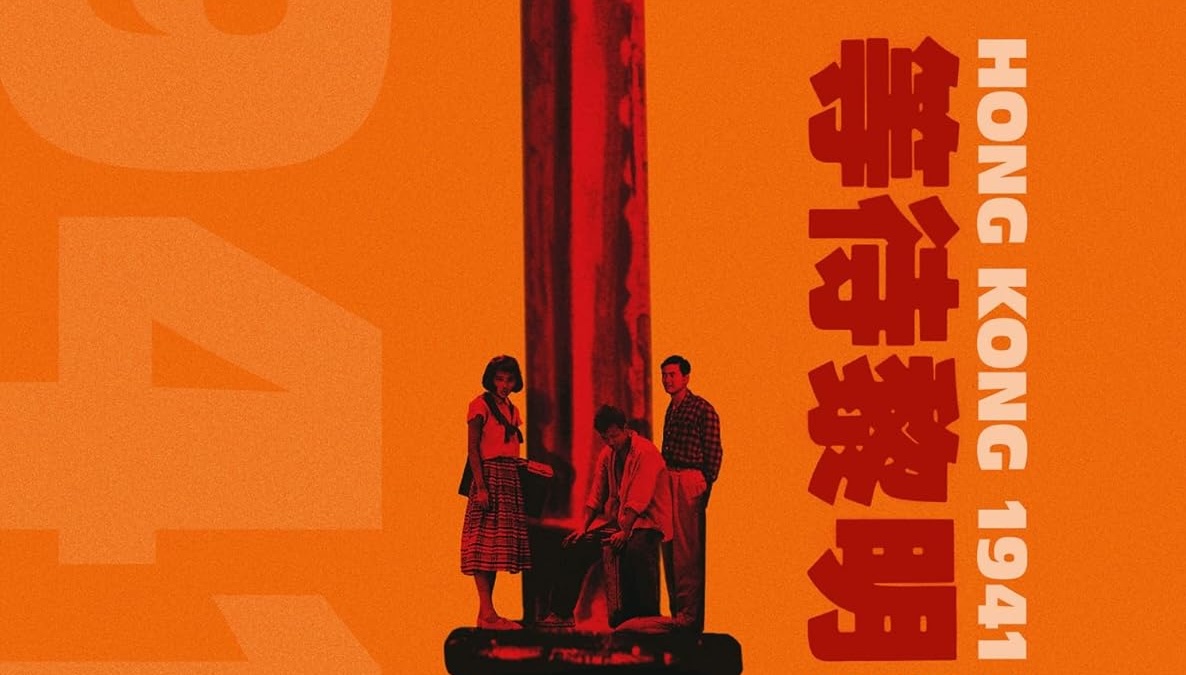
Chow Yun-Fat stars in Hong Kong 1941, a melodramatic romantic wartime thriller about the WWII Japanese invasion of Hong Kong. New to Blu-ray from Eureka Entertainment.
The Film
Hong Kong 1941 is a film that doesn’t think being a melodrama is a bad thing. In fact, it isn’t a bad thing, rather, it’s the film’s biggest asset. Director Po-Chih Leong’s thriller never succumbs to a history lesson, nor does it completely become a genre exercise rather something in between. Anchored by a youthful, charismatic lead performance by Chow Yun-fat, Hong Kong 1941 shows why the magnetic actor would go on to superstardom.
Nam (Cecilia Yip) falls in love with two men. The rebellious coolie Keung (Alex Man) and the charming enigmatic Fei (Chow Yun-fat). As they all plan to run away from Hong Kong with dreams of fortunes in America, they are besieged by WW2 and the invasion by the Japanese. During the intervening months, Keung becomes a rebel, and Fei collaborates with the Japanese while Nam and her family attempt to concede to the Japanese officers who have come into their lives. Their choices both divide and bring the trio back together with deadly consequences. Can Nam, Keung, and Fei all escape Hong Kong to a brighter future?
As much as the film is a romance and about a trio of characters is the barn burning performance by Chow Yun-fat is what makes the film a must-watch. From the opening moments on the balcony, Chow is at his charismatic best. One wants nothing more than to follow Fei and his exploits, even when we see him do questionable things. Yip and Man are good, but they are outshone by Chow and his charisma whenever he is on or off-screen.
On a smaller scale than, say, something like Spielberg’s Empire of the Sun, Hong Kong 1941 manages to tell the story of the Japanese invasion of China deftly. Also, more authentically, as it’s telling isn’t using Anglo actors to tell what is very much a Chinese story. The framework of a love triangle allows for a film that isn’t as dour or as maudlin as one would expect. That isn’t to say they shy away from the cruelty of the occupation; one needs to see the firecracker scene, but the romance makes everything easier, as there is a balance within the tone.
Hong Kong 1941 is a wonderful discovery for any Chow Yun-fat fan or fans of Hong Kong cinema in general.
The Transfer
The all-new transfer from a new 4K restoration is an excellent reproduction of the wonderful 35mm photography by cinematographer Brian Lai. Eureka continues to release truly revelatory discs of Asian cinema. Even titles like Hong Kong 1941 are given the time, care, and are beautifully restored. That restoration is due in large part to Fortune Star’s work, but the work here from Eureka to bring this to Blu-ray should be discounted. There isn’t a scratch, blemish, or speck of dirt throughout the runtime of the film. The razor-sharp image is near flawless. Fans of the film will be pleased by the presentation that puts the prior iterations of the film on home video to shame.
The Extras
They include the following;
The all-new audio commentary by East Asian film expert Frank Djeng (NY Asian Film Festival) opens with his credentials before diving into the film. Some of the details include the literal translation of the title; the release, and the box office success of the film; a discussion of the personal history of D&B Pictures co-owner Dickson Poon; the critical response of the film and awards it was nominated for; a discussion of Chow Yun-Fat performance and his work at the time and how the film shows his jump in his acting quality and what is essentially his star making performance; the fact that Chow, Man, and Yip all dubbed their own voices – a larger discussion of the voice actors who dubbed the onscreen actors; a discussion of the life and career of Cecilia Yip; the cameo by director Po-Chih Leong; a larger discussion of director Po-Chih Leong; a discussion of the life and career of Alex Man; a discussion of the life and career of Chow Yun-fat; a great story about Djeng being on the same flight with Chow Yun-fat; a larger discussion of the cultural norms that appear in the film; a larger discussion of the historical context in which the film takes place in; a larger discussion of the various locations the production used – including the reasons they filmed in Macau instead of Hong Kong; discussion throughout the commentary track about the various actors and their work here and throughout their career – keep your notes app open you’ll want to write some of the films down; and much more.
Tony Rayns on Hong Kong 1947 (30:28) – new interview with film critic and historian Tony Rayns on the contemporary impact of Hong Kong 1941. Rayns goes on to discuss the other film made around the same time that dealt with the similar subject Love in a Fallen City also starring Chow Yun-Fat; DB Films’ formation, and this is the first film from the production house (co-created by Sammo Hung); the lack of budget makes this a small portrait and not a full-on Japanese invasion of China (unlike Spielberg’s Empire of the Sun); the critical response to the film; the life and career of Director Po-Chih Leong – who was born and raised in Britain and eventually immigrated to HK; the life and career of Chow Yun-fat, including what this film did for his career (including a great aside and the actual footage of Rayns’ cameo in a TVB series with the star); the life and career of Cecilia Yip; the life and career of Alex Man; the lack of Japanese language and casting of Cantonese actors instead Japanese; and much more.
Crossing Cultures: Interview with Director Po-Chih Leong (21:46) – In this archival interview, the director discusses how he came to immigrate from London to Hong Kong. Po-Chih Leong goes on to discuss his various acting roles in his films and other directors’ films; the success of the film and what separated it from the director’s other work up until that time; a discussion of the infamous firecracker scene; a discussion of his film Shanghai 1920 starring John Lone and the troubles with making this film – including how Lone was going to be cast in Farewell my Concubine; working with Sammo Hung as a producer and an actor; his documentary about the Hong Kong changeover – Riding the Tiger; and much more. The interview by Fred Ambroisine is more of a career overview than specifically about Hong Kong 1941.
Po-Chih Leong on Hong Kong 1941 and Cultural Identity (21:37) – Masterclass Filmed at Udine FAR EAST FILM FESTIVAL in April 2023. The director not only discusses Hong Kong 1941 but also Ping Pong and Banana Cop. They discuss each of the film’s origins/development, the themes, the stories, and how they are tied to identity, and much more. The director adds very personal anecdotes from his life and how they relate to his life in Hong Kong and also in London.
Archival interviews – can be accessed through a submenu.
Hong Kong Theatrical Trailer (4:02) – Chinese with English Subtitles
International Release Trailer (3:48) – English Dubbed
The Final Thought
Eureka Entertainment gives this vital HK-Film a beautiful, informative special edition release. Highest recommendations!
Eureka Entertainment Edition of Hong Kong 1941 is out June 17th
Share this:
Like this:
Discover more from The Movie Isle
Subscribe to get the latest posts sent to your email.