
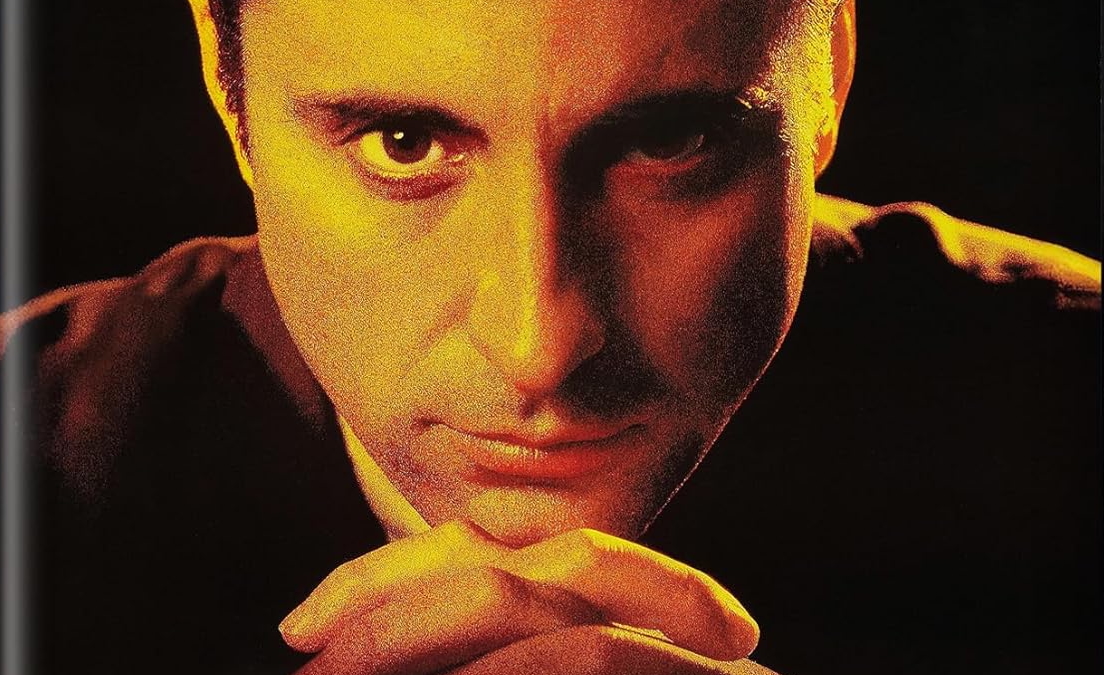
Andy Garcia and a who’s who of 90s greats star in the post-Tarantino crime caper Things to Do in Denver When You’re Dead. New to 4K UHD from Kino Lorber.
The Film
I’m not going to say growing up in the 90s was the best time to be a burgeoning Cineaste. But… growing up in the 90s was the best time to be a burgeoning Cineaste. Home video, the beginnings of the internet, and film culture were at its apex. It was a beautiful time, and the access was such that you could watch something and not already have informed opinion of it. There was space enough to go into a film and fall in love with it without worry of the overwhelming noise of opinion for or against a film.
I mention this because when I first saw Things to Do in Denver When You’re Dead there was not much out there. It felt like part of the pastiche of Tarantino stylized crime capers that were verbosely (oftentimes overly) written dialog and quirky characters with quirky affections. What surprised me about Things to Do in Denver When You’re Dead and what jolted me in that first viewing was other than dialog the film felt very different than Tarantino’s two films (at the time).
This was not Reservoir Dogs or Pulp Fiction. It was morose and dark. It felt like a funeral procession and not the sort of idiosyncratic film intelligent pop culture nuclear bombs that Tarantino had directed. Things to Do in Denver When You’re Dead even thirty years on is still that same funeral procession to the finality of low-end criminals too stupid to not screw up a simple job that it was when original released. Scott Rosenberg’s script shares literally nothing in common with Tarantino’s scripts other than a panache and intelligence of story and character. Even that is approached differently as Rosenberg’s work feels less crackerjack wise-ass and more morose indignation.
Yes, there are moments of wild violence and surprising turn of events, but director Gary Fleder and cinematographer Elliot Davis’s visual style is on the cusp of stylized never pushing over into overtly cinematic. Even in the set piece moments there’s a groundedness that makes things subdue and never overtly comedic.
The acting is uniformly excellent with the standouts being both Christopher Walken as the nameless “Man with the Plan” and Treat Williams manic Critical Bill. Both understand the arched nature of the script and lean into the ebbs and flows of the world better than anyone. Christopher Lloyd does do some great maudlin work as the broken soul of the film but he’s in the film all too briefly to really elevate everything – though his final moments with Andy Garcia is one of the highlights of the film.
Ultimately, Things to Do in Denver When You’re Dead is an arresting crime thriller that was wrongly labeled a Tarantino knock-off.
The Transfer
The all-new HDR/Dolby Vision Master – From a 4K Scan of the 35mm Original Camera Negative is an excellent example of what a new 4K Master with HDR encoding can do for a thirty-year-old film. The disc use of HDR is a great example of how amazing UHD is and how close it gets us to the theatrical experience. There isn’t a blemish, scratch or fleck of dirt on the flawless transfer. The grain structure, the clarity, the color are all perfectly balanced resulting in another wonderful transfer for Kino Lorber and their 4K UHD releases.
The Extras
They include the following;
DISC 1 (4KUHD):
- NEW Audio Commentary by Director Gary Fleder and Writer Scott Rosenberg
- NEW Audio Commentary by Filmmaker/Historian Daniel Kremer
DISC 2 (BLU-RAY):
- NEW Audio Commentary by Director Gary Fleder and Writer Scott Rosenberg
- NEW Audio Commentary by Filmmaker/Historian Daniel Kremer
- Things to Direct in Denver When You’re Dead: Interview with Director Gary Fleder
- Things to Perform in Denver When You’re Dead: Interview with Actor Andy Garcia
- Things to Write in Denver When You’re Dead: Interview with Screenwriter Scott Rosenberg
- Things to Design in Denver When You’re Dead: Interview with designer Nelson Coates
- Production Featurette
- Theatrical Trailer
The first of two all-new Audio Commentaries is by Director Gary Fleder and Writer Scott Rosenberg begins with the origins of the film and how it’s a metaphor for mortality. Some of the other details include how original producers (The Samaha brothers) got this script to various actors and how that spread out and eventually got to Miramax; why the film is set in Denver; the story about Tony Scott wanting to direct the film; the casting of Dagney – including the casting what-if’s of actresses, including anecdotes about how contentious the casting got; the original cast of James Caan as the Man with the Plan – and how Christopher Walken came aboard; the admission by Rosenberg the plot and the plan is ridiculous and their justification; the casting of Andy Garcia – which leads to a discussion of Fleder’s transparency about how rigid he was about blocking and visuals; the casting of Furiza Balk – how Seymour Cassell recommended her for the part; the casting of Christopher Llyod and who was originally cast; the work and casting of Treat Williams; some of the reshoots that occurred because of Miramax; what they were shooting when they got word that Caan had dropped out of the picture; the test screening process – which is a discussion on both of their accounts of how they went and anecdotes from the screening process; the writing of the script and how it was done on spec and how this brought the very specific tone; the homophobic and racial slurs used in the film and the way that it was charged and their intent for it to be charged; going to the Cannes film festival – a discussion of the experience going to the festival and the success it had there; a larger discussion of the other film festivals that the film went to including Telluride, Toronto, London, Hamptons – and the reactions the film got at the festivals; the critical response and the release because of those review; a larger discussion of the shadow of Tarantino and Pulp Fiction that loomed over the film; a larger discussion throughout of the various actors appear in the film; and much more. Fleder and Rosenberg delivery a breezy informational commentary try that’s more lively conversation between old collaborators and friends than dry scholarly account of the production.
The second of two all-new Audio Commentaries is by Filmmaker/Historian Daniel Kremer opens with the Warren Zevon song the film’s title is based on and it appears over the end credits. Some of the details include how this is grouped into the Post-Tarantino crime films, including examples, and how this lines up and separates itself from that group of films; a discussion of how the film came to be made at Miramax; the career and work here of Gabrielle Anwar; the production schedule in both Denver and Los Angeles; the work here and career of Andy Garcia and why he was cast in the film by Miramax at the time; a discussion of producer Cary Woods and his output during the Miramax and Independent film boom; the work and career of Treat Williams; the various films that take place and were filmed in Denver; the dream of Miramax and the realities of the troubling studio – including a great discussion of Troy Duffy and his eventual film The Boondock Saints; the work and career of director Gary Fleder and screenwriter Scott Rosenberg; the work and career of cinematographer Elliot Davis; a larger discussion of the cast that appear in the film; and much more. Kremer’s track is an wealth of information on the production and themes of the film.
Things to Direct in Denver When You’re Dead: Interview with Director Gary Fleder (17:42) – in this all-new interview with the director begins with how his career had stalled in 1992 after graduating USC film school. Fleder goes onto describe that screenwriter Scott Rosenberg wrote Denver on spec – how Tony Scott wanted to direct and met to discuss the possibilities. The director goes on to discuss how Pulp Fiction after its critical and commercial success loomed large over Denver and its lack of success; the casting process – including casting what-if’s; anecdotes from the production – including some of the missteps he felt he made as a director; the collaboration with cinematographer Elliot Davis – and some of the tensions that came out of Fleder’s prior work as a cameraman; the post production process – the troubles with preview screenings; being invited to Cannes and its success there – saving the film from Miramax; the premiere, its release and failure – including a story about Siskel and Ebert; and more.
Things to Perform in Denver When You’re Dead: Interview with Actor Andy Garcia (19:21) – in this all-new interview with star begins with his love of the script by Scott Rosenberg. Garcia goes on to discuss what attracted him to the character and the film itself. The actor goes on to discuss the first meeting with Gary Fleder; the Runion style of the dialog in script was Rosenberg’s style as a person; working with Christopher Walken in the film – including some great anecdotes about the actor; and more.
Things to Write in Denver When You’re Dead: Interview with Screenwriter Scott Rosenberg (16:00) – in this all-new interview with the screenwriter begins how after college moved to Los Angeles and began to write scripts, went to school UCLA and USC, and eventually hooking up with director Scott Rosenberg. The screenwriter goes onto discuss being a working screenwriter but not having anything produced. Rosenberg discusses that after his father’s cancer diagnosis and finding the second love of his life were the impetus for writing Denver; after landing at Miramax and how other bigger directors wanting to do the film – and how he always stuck by director Gary Fleder; how special the experience was on this film and how different it was than other writer’s experiences; the casting and working with Christopher Walken; how he approached and inspiration of the dialog; how the actors helped develop the screenplay and what they brought during production; the rise of the film’s cult status; and much more.
Things to Design in Denver When You’re Dead: Interview with designer Nelson Coates (23:21) – the all-new interview with the production designer begins with how he approached the work on this lower budgeted and shorter production of a non-union independent production. Coates discusses the design approach to accomplish some of the unique sets like the ice cream shop, the afterlife set, the night club, the various apartments, the freeway set (and why it was a set and created in a studio space), and much more.
Production Featurette (5:10) – in this vintage EPK-style featurette the cast and crew that looks that the characters, plot, and stylized world of the film.
Rounding out the special features are trailers for Things to Do in Denver When You’re Dead (2:10); Internal Affairs (2:00); Twisted (2:03); Deceived (1:47); Bad Lieutenant (3:20); The Usual Suspects (2:28); Out of Sight (2:35); Ronin (2:29); 2 Days in the Valley (3:01); In Bruges (2:30)
The Final Thought
Kino Lorber has produced another worthy special edition for a cult 90s films. Recommended!!
Kino Lorber’s 4K UHD Edition of Things to Do in Denver When You’re Dead is out April 29th
Discover more from The Movie Isle
Subscribe to get the latest posts sent to your email.
Pingback: 4K UHD Review: Kino Lorber’s Curdled (Special Edition) – The Movie Isle