A Herring Fishery in Post-War Northern Japan is ground zero for family and work drama in Kinji Fukasaku’s Jakoman and Tetsu. New to Blu-ray from 88 Films.
The Film
The deeper you give into Director Kinji Fukasaku’s massive filmography the more you begin to realize a few things. One, there was very few genres he did not tackle. Two, of those genres there were even fewer he was not successful at. Three, those entries always had something more on its mind than just the story it was telling. Fukasaku’s Jakoman and Tetsu is a perfect example of all three of these notions.
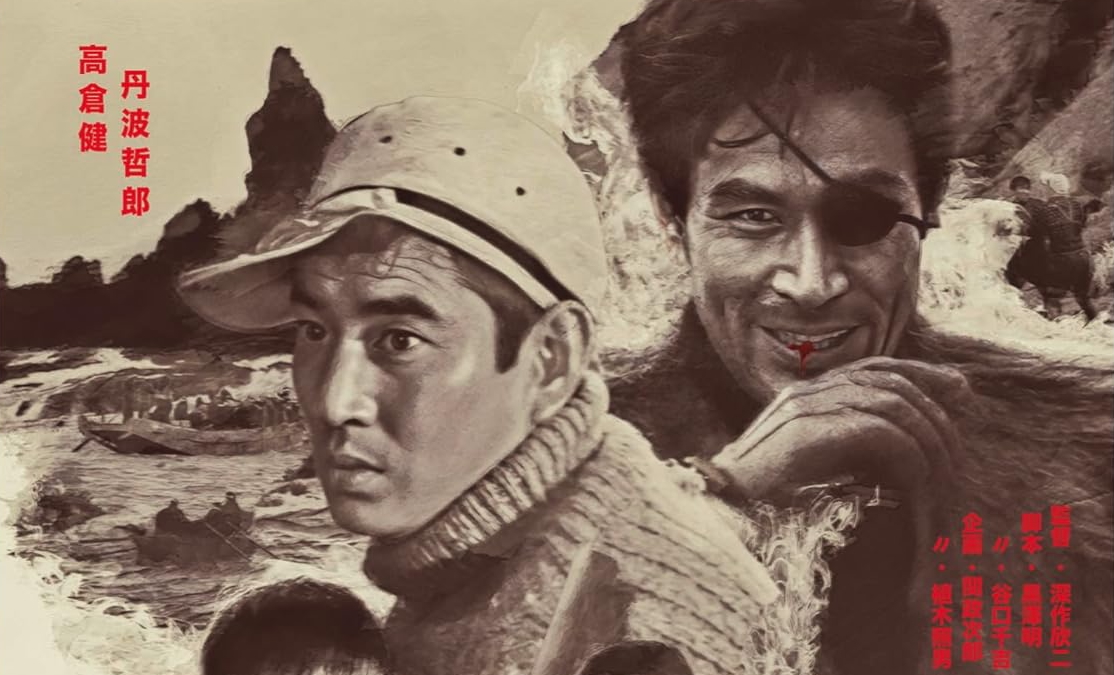
Set during the Herring season in the northern island of Hokkaido. Jakoman and Tetsu does not just tell the story of the titled characters (played by Tetsurō Tamba and Ken Takakura respectively) who are bracingly at odds with one another but of the workers/fisherman and Tetsu’s abrasive father Kyubei (Isao Yamagata) who looks at everyone who works for him as literal scum. As tensions mount between worker and employer so does those between Jakoman and Testu who approach life very differently. Things come to a head as the Herring begin to run. Can Testu with his aimable and good-natured way find a solution for all.
Part of the joys of Jakoman and Tetsu is the multi-faceted story being told beyond the primary A-B storylines. The script by Akira Kurosawa and Senkichi Taniguchi based on the novel by Keizo Kajino finds the inflection points of humanity beyond the contentious and action forward story of the two young men battling over ideals. The way that the script ties to those themes of how one treats another human is some of the most satisfying of Fukasaku’s career.
Both Tetsurō Tamba and Ken Takakura are magnificent as the leads – not so much villain and hero or antagonist and protagonist but rather two opposing viewpoints. Tamba’s Jakoman is as bitter as the harsh winter the film takes place in. Takakura’s Tetsu is as warm and understanding and the wood burning stoves that keep homes and warehouses warm. As the two men come to battle both with ideals and their fists the film soars in the way that a truly great Kurosawa picture does.
Jakoman and Tetsu is not a Kurosawa picture though. It’s a Kinji Fukasaku picture. There in lies its true power. As Fukasaku’s power lies in his refusal to see genre pictures as anything less than what they are – a means to an end. Like the best of Fukasaku pictures the message wither you like it or not hits you in the face.
The Transfer
The high-definition transfer in its original 2.35.1 aspect ratio is a solid presentation of the black and white shot film. The transfer itself does show some wear and tear – e.g., minor scratches and dirt throughout. When one considers that the film is over six decades old, and any full restoration may be just to cost prohibitive for 88 Films or Toei – it is understandable that the film shows some worn love. None of these affections inhibit the viewing experience and again are minor but must be mentioned. The contrast, sharpness and black levels are all solid throughout.
The Extras
They include the following;
Audio Commentary by Tom Mes & Jasper Sharp
Brand New Filmed Introduction by Mark Schilling
Stills Gallery
The all-new Audio Commentary by Tom Mes & Jasper Sharp begins with their bonafides before diving into the film. Some of the details include a discussion of the Toei logo which is similar to the opening moments of the film; the filming locations (in Hokkaido Japan) and production schedule of the film; a discussion of the rights and releasing of Japanese films throughout the world and how this effects how director’s and studios are view – how Toei has really limited the release of their films along with Toho; the release of the film and its box office success – as well as other films of the year and the time it was release was successful; the origins of the film as a novel and a discussion of novelist Keizo Kajino; the contentious relationship between star Ken Takakura and director Fukasaku; the work both here and elsewhere of star Ken Takakura – including the Abashiri Prison series; the work of Tetsurō Tamba – and a side conversation about his work in You Only Live Twice, which he’s most famous for; the location of Hokkaido as it’s portrayed on film and its history in Japanese culture and it’s a place in history as a place of banishment – films set on the island include Year One in the North starring Ken Watanabe, the Wandering Guitarist series starring Akira Kobayashi, and more; a larger discussion throughout the work of director Kinji Fukasaku – both before this film and after this film, his style, his concerns and themes of his film; a larger discussion throughout the work of various actor’s that appear in the film; and much more.
The 100 Million Yen Star (18:21) – is what 88 Films is labelling a “Brand New Filmed Introduction by Mark Schilling”. More of a full-on interview with the critic discussing the film and specifically the social context of post-war Japan that this takes place; the novel and adaptation by Akira Kurosawa; the work of star Ken Takakura – and his contentious relationship with director Kinji Fukasaku; stories from the production; a discussion of the various other cast members; the work here of Fukasaku and how it relates to his filmography; and much more. Schilling give us a context for the film without spoiling much of the film.
Stills Gallery (1:02) – the image gallery consisting of production photos and poster art runs automatically with the score playing in the background.
The Final Thought
Jakoman and Tetsu is a little-seen Kinji Fukasaku gem waiting to be discovered. 88 Films has found a truly wonderful film that will fit perfectly within its excellently curated label. Recommended!!!

A Herring Fishery in Post-War Northern Japan is ground zero for family and work drama in Kinji Fukasaku’s Jakoman and Tetsu. New to Blu-ray from 88 Films.
The Film
The deeper you give into Director Kinji Fukasaku’s massive filmography the more you begin to realize a few things. One, there was very few genres he did not tackle. Two, of those genres there were even fewer he was not successful at. Three, those entries always had something more on its mind than just the story it was telling. Fukasaku’s Jakoman and Tetsu is a perfect example of all three of these notions.
Set during the Herring season in the northern island of Hokkaido. Jakoman and Tetsu does not just tell the story of the titled characters (played by Tetsurō Tamba and Ken Takakura respectively) who are bracingly at odds with one another but of the workers/fisherman and Tetsu’s abrasive father Kyubei (Isao Yamagata) who looks at everyone who works for him as literal scum. As tensions mount between worker and employer so does those between Jakoman and Testu who approach life very differently. Things come to a head as the Herring begin to run. Can Testu with his aimable and good-natured way find a solution for all.
Part of the joys of Jakoman and Tetsu is the multi-faceted story being told beyond the primary A-B storylines. The script by Akira Kurosawa and Senkichi Taniguchi based on the novel by Keizo Kajino finds the inflection points of humanity beyond the contentious and action forward story of the two young men battling over ideals. The way that the script ties to those themes of how one treats another human is some of the most satisfying of Fukasaku’s career.
Both Tetsurō Tamba and Ken Takakura are magnificent as the leads – not so much villain and hero or antagonist and protagonist but rather two opposing viewpoints. Tamba’s Jakoman is as bitter as the harsh winter the film takes place in. Takakura’s Tetsu is as warm and understanding and the wood burning stoves that keep homes and warehouses warm. As the two men come to battle both with ideals and their fists the film soars in the way that a truly great Kurosawa picture does.
Jakoman and Tetsu is not a Kurosawa picture though. It’s a Kinji Fukasaku picture. There in lies its true power. As Fukasaku’s power lies in his refusal to see genre pictures as anything less than what they are – a means to an end. Like the best of Fukasaku pictures the message wither you like it or not hits you in the face.
The Transfer
The high-definition transfer in its original 2.35.1 aspect ratio is a solid presentation of the black and white shot film. The transfer itself does show some wear and tear – e.g., minor scratches and dirt throughout. When one considers that the film is over six decades old, and any full restoration may be just to cost prohibitive for 88 Films or Toei – it is understandable that the film shows some worn love. None of these affections inhibit the viewing experience and again are minor but must be mentioned. The contrast, sharpness and black levels are all solid throughout.
The Extras
They include the following;
The all-new Audio Commentary by Tom Mes & Jasper Sharp begins with their bonafides before diving into the film. Some of the details include a discussion of the Toei logo which is similar to the opening moments of the film; the filming locations (in Hokkaido Japan) and production schedule of the film; a discussion of the rights and releasing of Japanese films throughout the world and how this effects how director’s and studios are view – how Toei has really limited the release of their films along with Toho; the release of the film and its box office success – as well as other films of the year and the time it was release was successful; the origins of the film as a novel and a discussion of novelist Keizo Kajino; the contentious relationship between star Ken Takakura and director Fukasaku; the work both here and elsewhere of star Ken Takakura – including the Abashiri Prison series; the work of Tetsurō Tamba – and a side conversation about his work in You Only Live Twice, which he’s most famous for; the location of Hokkaido as it’s portrayed on film and its history in Japanese culture and it’s a place in history as a place of banishment – films set on the island include Year One in the North starring Ken Watanabe, the Wandering Guitarist series starring Akira Kobayashi, and more; a larger discussion throughout the work of director Kinji Fukasaku – both before this film and after this film, his style, his concerns and themes of his film; a larger discussion throughout the work of various actor’s that appear in the film; and much more.
The 100 Million Yen Star (18:21) – is what 88 Films is labelling a “Brand New Filmed Introduction by Mark Schilling”. More of a full-on interview with the critic discussing the film and specifically the social context of post-war Japan that this takes place; the novel and adaptation by Akira Kurosawa; the work of star Ken Takakura – and his contentious relationship with director Kinji Fukasaku; stories from the production; a discussion of the various other cast members; the work here of Fukasaku and how it relates to his filmography; and much more. Schilling give us a context for the film without spoiling much of the film.
Stills Gallery (1:02) – the image gallery consisting of production photos and poster art runs automatically with the score playing in the background.
The Final Thought
Jakoman and Tetsu is a little-seen Kinji Fukasaku gem waiting to be discovered. 88 Films has found a truly wonderful film that will fit perfectly within its excellently curated label. Recommended!!!
88 Films’ Blu-Ray edition of Jakoman and Tetsu is out April 22nd
Share this:
Like this:
Discover more from The Movie Isle
Subscribe to get the latest posts sent to your email.