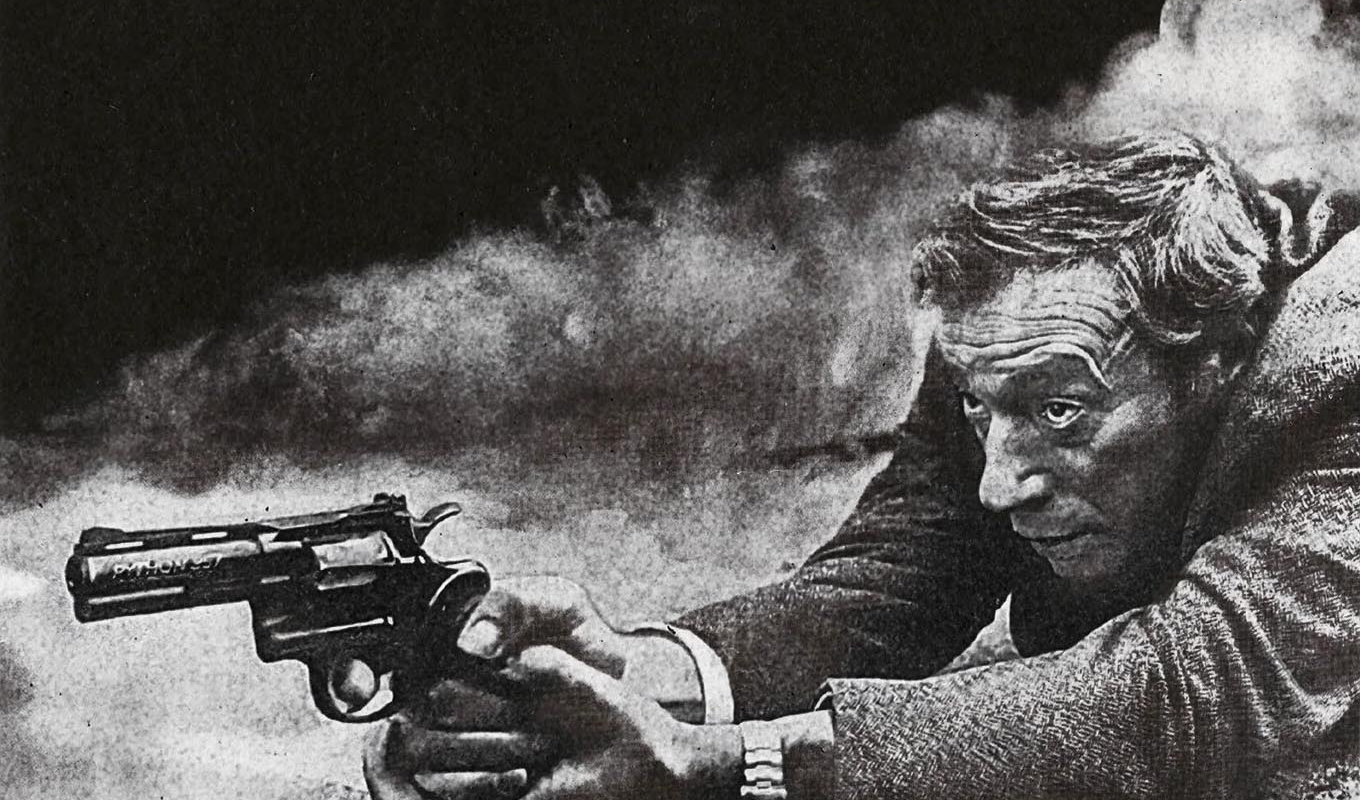
This wasn’t at all what I was expecting. I think that because of the title I was expecting Dirty Harry and not Play Misty for Me with amoral cops. Play Misty for Me isn’t the right comp for this film. This is more proto-Presumed Innocent than anything else. Sylvia (Stefania Sandrelli) has been in a relationship with Police Commissioner Ganay (François Périer) when she begins another romance with one of his Inspector Marc Ferrot (Yves Montand). The impulsive and oftentimes reckless Sylvia begins to fall in love with Ferrot. Her plans to leave Ganay end in tragedy as he kills her. Her murder begins a cat-and-mouse game between the Commissioner – who is covering up the murder and methodically placing the blame on Ferrot – and the Inspector who has been put on the case without telling anyone he had a relationship with her.
Director Alain Corneau’s film is less about the procedural and more about the tension wrung out from the ever-increasing amoral situation between the two police officers. Ferrot is more worried about ensuring that he’s not wrongly arrested for the murder of his lover than actually figuring out who did it. Watching this play out isn’t as thrilling as it is a fascinating look into the cesspool of these two men’s souls. A man who would rather pour acid on his face than own up to whatever part they had in this woman’s murder. In the end, the most sobering aspect of the film is that it ends with her murder going unsolved, but the damage done by both police officers is done. Corneau’s viewpoint is as cynical as anything that Billy Wilder did in his Noir Classics, maybe even more so as Corneau is unencumbered by the Hayes Code as Wilder was.
Police Python 357 may not be a conventional police thriller, but it is an electric one. One that has no problem with deep diving into the darkest of human nature and foley. A film that will echo in your head long after the credits roll.
Série Noire
The messiest of noirs and crime thrillers are my favorite and Série Noire is one of the messiest I’ve seen along the lines of Blood Simple and A Simple Plan. It’s not a surprise that Director Alain Corneau adapted the film from a Jim Thompson novel (the infamous A Hell of a Lady) in which he transposes the setting to Paris and the characters to a schlub of a suit salesman and a teenage prostitute who conspire to kill the teen’s aunt. Like it all great noir’s things go terribly awry.
The film running a little under two hours could be considered a little long in the tooth during its protracted first half. Trust in Corneau and the script co-written by Georges Perec. It lays the foundation for a truly sinister and messy bit of crime fiction in the second half that oozes tension as much as it does tragedy. Patrick Dewaere as the ultimate schlub dreamer and mark Franck. The entire film life beats down on Franck and continues to do so as he swings back only to cause more damage to himself. There’s a cosmic and darkly comedic tragedy to how it all plays out with Franck all the while smiling at the existential doom of it all. One wonders if the Coen’s have seen this film and how much it was an influence on A Simple Man.
This may be the type of film that even enthusiasts of the genre may appreciate more than they love but that should stop no one from seeing it. Though by its daring and pitch-black ending, Série Noire is every bit a masterful crime thriller as has come out of the 1970s. Also, one that is as challenging as anything out of the decade.
Choice of Arms
The setup for this film seems to be your typical classic French Crime Thriller. A Prison Break occurs, one of the team is injured, and they force themselves upon a now-retired Criminal living a rich luxurious life. Though this is where things would stop being atypical Jean-Pierre Melville and Choice of Arms becomes altogether something different.
Writer/Director Alain Corneau as with the first and second of this loose trilogy of crime thrillers bucks the conventions of the story being told. Yes, one thinks that the young impulsive ex-boxer prison escapee Mickey’s (Gérard Depardieu) brashness and prediction towards violent outbursts will jolt career criminal Noel (Yves Montand) into a sweaty machismo manhunt for vengeance. Over the course of the 135-minute run time, it appears to be just that. However, when tragedy strikes, and it does so soberingly well, Corneau reset the story.
To discuss anymore would ruin just how unexpectedly Corneau veers into uncharted territory of allegiance, class, second chances, and much more. Though the more shocking counterpoint is just how terse and thrilling the film remains after the unexpected narrative twist. Twist feels a bit too crass for how Corneau has crafted this beautiful story. One that points the finger but never feels melodramatic. One that discusses consequence but never overwroughtly so.
Choice of Arms is a high watermark in not just French Crime Thrillers but Crime Thrillers writ large. By the final frames, if one is not an unabashed fan of Corneau’s genius storytelling, one can at least respect the director’s ability to bend the genre to his own means.
The Transfers
Hardboiled: Three Pulp Thrillers by Alain Corneau is another homerun for Radiance Films. There are no scratches or true blemishes on the sharp filmic images. The beautiful look of the three 35mm shot films are accentuated on Blu-ray in their grit, grime, squalor, and some cases decadence of these French-based crime thrillers. There is a wonderful patina of active grain for this reviewer added to the theatrical experience of viewing these films at home. Radiance continues to deliver marvelous transfers for their excellently curated films.
The Extras
They include the following;
Audio commentary by Mike White on Police Python 357
Maxim Jakubowski on Police Python 357’s source novel and adaptation
Archival interview with Alain Corneau and François Périer about Police Python 357 from Belgian Television
Série noire set interviews with Alain Corneau, Patrick Dewaere and Miriam Boyer from Belgian Television
Série noire: The Darkness of the Soul – An archival documentary featuring cast and crew on the making of the film
Archival interview with Alain Corneau and Marie Trintignant about Série noire
A visual essay about Jim Thompson adaptations for the screen by Paul Martinovic
Introduction by documentary filmmaker Jérôme Wybon
Shooting Choice of Arms – interviews with the cast and crew including behind-the-scenes footage
Interviews with Deneuve, Montand and Depardieu from the set
Interview with Manuela Lazic on Yves Montand in the 1970s
Trailers
Police Python 367
The all-new Audio commentary by Mike White begins with the film being an adaptation of The Big Clock and director Corneau’s career before this film. Some of the other details include director Corneau’s early career – his love of music and going to university for music, his work as an assistant director for Costa Gravas, and his first film before this film; a discussion of the pulp novel series Série noire – how it informed not just French cinema but cinema worldwide, how the publisher adapted the American novels to French tastes; the affair that portrayed in this film and how similar it is to the real life affair that happened between an American Star and Yves Montand – who was married to Simone Signoret, at the time, who also stars in this film; the importance of Clocks in the film; the work and career of actor Stefania Sandrelli; the themes that play throughout not only here but Série noire and Choice of Arms; the work, career, and personal life of Yves Montand; a larger discussion throughout about the similarities between the filmed adaptations of the source material this film and The Big Clock, and the Kevin Costner starrer No Way Out; and much more.
Maxim Jakubowski (15:11) – in this all-new interview with Jakubowski he discusses Police Python 357 and the novel in which it’s based upon Kenneth Fearing’s novel, The Big Clock, and how it was transposed from the Publishing Novel to the world of the Police Procedural. Corneau’s working with Jim Thompson on an adaptation Pop 1280 that never materialized. How the director eventually adapting Thompson’s A Hell of a Woman which turned into Série Noire. How Choice of Arms and how it was not adapted from a novel. The casting of all three films with French legend of acting. The commonality between this loose trilogy is how it took inspiration from the French Publishing House Gallimard and their Série noire imprint. Jakubowski gives wonderful context and enlightens on how Corneau’s excellent trilogy came together and what inspired them.
TV Interviews (5:31) – this set of archival interviews with Alain Corneau and François Périer discuss Police Python 357. Filmed for Belgian Television in 1976. The director and actor discuss various subjects from the title of the film, Périer’s character, the plot, the casting of “great actors”, and more. French with English subtitles.
Série Noire
Série noire: The Darkness of the Soul (52:33) – this archival making of documentary covers everything from the beginning life as an English Language adaptation of Pop 1280 with an all-star English Language cast to transforming to a low-budget adaptation of A Hell of a Woman set in Modern-Day France. All aspects of the production are covered in detail by various cast, crew members, and film historians. Development/Adaptation, casting, production, postproduction, and release are all covered in detail – giving not just anecdotes but the importance of the vision of Corneau once he realized the film he was making. The documentary does a wonderful job of giving the film its place and importance in French cinema. Featuring interviews with Critic Francios Guerif, Producer Maurice Bernant, cinematographer Pierre William-Glenn, and actors Miriam Boyer and Nadine Trintignant. In French with English Subtitles.
Alain Corneau & Marie Trintignant (28:52) – is an archival interview with the director and actor about Série Noire. Corneau’s side of the interview he discusses with enthusiasm and detail how he began his film career wanting to adapt novels and how he found the Jim Thompson novel the film is based on; his love and affection for Thompson (both the man and his work) and working with him – and the writer’s work in Hollywood; the influence of Série Noire – both film and literary; his collaboration with co-writer Georges Perec; and much more. Tintignant’s side of the interview begins with her discussing how she was cast and then begins to be intercut with Corneau’s interview. They both discuss the amazing work of Patrick Dewaere and just how it was to be on set and working with him; Corneau’s working with Trintignant; Trintignant’s feelings about working with Corneau; and much more. There is more to Corneau’s side of the interview but both provide fascinating insights to this very special film. In French with English Subtitles.
On Set Interviews (10:56) – this is a series of onset interviews with Director Corneau, and stars Patrick Dewaere, Miriam Boyer, and Marie Trintignant. It should be noted that this appears to be filmed at Cannes or another film festival and not onset as the disc states, also Trintignant does appear in the mix as well in the interviews albeit briefly. Some of the details from these interviews include Dewaere and Corneau’s approach to the iconic bathtub scene and what each loved about it; Trintignant’s discussion of her character and the work she’s done with a very wordless role – if there is reluctance at home with her acting at such a young age; Corneau’s discussion of the human approach to the characters and their sometimes violent actions; Boyer’s views on some of the more difficult scenes – including the bathtub fight between her and Dewaere; and more. In French with English Subtitles.
A Hollyhock in a Cornfield: Jim Thompson on Screen (29:41) – is an all-new visual essay about Jim Thompson adaptations for the screen by Paul Martinovic. The essay begins with how many consider Série Noire one of the best adaptations of Thompson’s work – though it may be lesser known by US and UK audiences. The essay goes on to discuss the various other works that were adapted by filmmakers from Thompson’s writing; the challenges in adapting Thompson’s work; his early life and love of cinema that inspired his work; his place in the hardboiled writing – being the second generation of writers that included Donald Westlake; a history of the prolific novelist during the 1950s – how they eschews the cliches of crime fiction of the era, his central characters, the difficulty in adapting the these dark studies; how actor Dewaere was perfect to portray the central character of Série Noire and Corneau’s thoughts on why he was perfect; the development of Série Noire by Corneau and co-writer Georges Perec; a discussion of the acting mythology that Dewaere employed and its toll it took on him; discussions of adaptations of After Dark My Sweet, The Grifters, The Killer Inside Me, and Pop 1280; the endings that gave many adaptations problems; some of the nearly made adaptations of Thompson’s work; the influence on modern Television and Film that Thompson’s work has had; and much more. The essay is astutely written by Martinovic and wonderfully edited by Jonathan Zaurin.
Trailer (2:21)
Choice of Arms
Introduction by Jérôme Wybon (3:14) – in this all-new intro by documentary filmmaker Wybon, goes into the reasons why this film is so special in Corneau’s filmography and for French Cinema giving us the background on why the director made it, how it connects to the other two of this loose trilogy and much more. In French with English Subtitles.
Shooting Choice of Arms (21:48) – in this archival documentary made for French TV director Anges Vincent was allowed access by director Alain Corneau to film behind-the-scenes as they made Choice of Arms. The access Vincent was allowed is incredible with wonderful b-roll footage (shot on video) of the cast and crew making the film with some truly off-the-cuff moments, and introspective and transparent interviews that any cineaste will want to watch. Featuring interviews with director Corenau, editor Thierry Derocles, actors Yves Montand, Gérard Depardieu, and Gérard Lanvin. In French with English Subtitles.
On-Set Interviews (18:12) – the archival interviews feature actor Catherine Deneuve, Yves Montand and Gérard Depardieu from the set during the bank robbery scene. Montand and Deneuve are interviewed together, later Depardieu joins the two interviewers with Montand and Deneuve. They discuss the film’s themes, plots, and their characters. In French with English Subtitles.
Manuela Lazic (23:57) – is an all-new interview with writer and critic Manuela Lazic. The interview opens with Yves Montand’s image both inside and outside of France. Lazic details Montand’s early life – including his family’s political leanings, his early career in singing, WW2 began and stopped his music career but then started again towards the end of the War; Montand transitioned from singing and acting – how his musical act was a blending of acting and singing; his relationship with Edith Piaf – both professional and personal and how he grew from her criticisms; Montand meeting and marrying Simone Signoret – their artistic, personal and political beliefs; his casting in The Wages of Fear – and working with Henri-Georges Clouzot; his collaboration with Costa Gravas – and how important those films are to the actor; the collaborations of Corneau and their work together; the last part of his career where he let go of airs and became more of a naturalistic actor; and much more.
Trailer (2:42)
The Final Thought
Radiance Films continues to curate a truly excellent selection of world cinema. This French Crime Thriller Box Set continues that streak. Highest possible recommendations!!!

Hardboiled: Three Pulp Thrillers by Alain Corneau gives us three gritty 70s crime thrillers by French director Alain Corneau. Radiance Films again impresses with a wonderful Blu-ray box set stuffed with special features.
The Films
Police Python 357
This wasn’t at all what I was expecting. I think that because of the title I was expecting Dirty Harry and not Play Misty for Me with amoral cops. Play Misty for Me isn’t the right comp for this film. This is more proto-Presumed Innocent than anything else. Sylvia (Stefania Sandrelli) has been in a relationship with Police Commissioner Ganay (François Périer) when she begins another romance with one of his Inspector Marc Ferrot (Yves Montand). The impulsive and oftentimes reckless Sylvia begins to fall in love with Ferrot. Her plans to leave Ganay end in tragedy as he kills her. Her murder begins a cat-and-mouse game between the Commissioner – who is covering up the murder and methodically placing the blame on Ferrot – and the Inspector who has been put on the case without telling anyone he had a relationship with her.
Director Alain Corneau’s film is less about the procedural and more about the tension wrung out from the ever-increasing amoral situation between the two police officers. Ferrot is more worried about ensuring that he’s not wrongly arrested for the murder of his lover than actually figuring out who did it. Watching this play out isn’t as thrilling as it is a fascinating look into the cesspool of these two men’s souls. A man who would rather pour acid on his face than own up to whatever part they had in this woman’s murder. In the end, the most sobering aspect of the film is that it ends with her murder going unsolved, but the damage done by both police officers is done. Corneau’s viewpoint is as cynical as anything that Billy Wilder did in his Noir Classics, maybe even more so as Corneau is unencumbered by the Hayes Code as Wilder was.
Police Python 357 may not be a conventional police thriller, but it is an electric one. One that has no problem with deep diving into the darkest of human nature and foley. A film that will echo in your head long after the credits roll.
Série Noire
The messiest of noirs and crime thrillers are my favorite and Série Noire is one of the messiest I’ve seen along the lines of Blood Simple and A Simple Plan. It’s not a surprise that Director Alain Corneau adapted the film from a Jim Thompson novel (the infamous A Hell of a Lady) in which he transposes the setting to Paris and the characters to a schlub of a suit salesman and a teenage prostitute who conspire to kill the teen’s aunt. Like it all great noir’s things go terribly awry.
The film running a little under two hours could be considered a little long in the tooth during its protracted first half. Trust in Corneau and the script co-written by Georges Perec. It lays the foundation for a truly sinister and messy bit of crime fiction in the second half that oozes tension as much as it does tragedy. Patrick Dewaere as the ultimate schlub dreamer and mark Franck. The entire film life beats down on Franck and continues to do so as he swings back only to cause more damage to himself. There’s a cosmic and darkly comedic tragedy to how it all plays out with Franck all the while smiling at the existential doom of it all. One wonders if the Coen’s have seen this film and how much it was an influence on A Simple Man.
This may be the type of film that even enthusiasts of the genre may appreciate more than they love but that should stop no one from seeing it. Though by its daring and pitch-black ending, Série Noire is every bit a masterful crime thriller as has come out of the 1970s. Also, one that is as challenging as anything out of the decade.
Choice of Arms
The setup for this film seems to be your typical classic French Crime Thriller. A Prison Break occurs, one of the team is injured, and they force themselves upon a now-retired Criminal living a rich luxurious life. Though this is where things would stop being atypical Jean-Pierre Melville and Choice of Arms becomes altogether something different.
Writer/Director Alain Corneau as with the first and second of this loose trilogy of crime thrillers bucks the conventions of the story being told. Yes, one thinks that the young impulsive ex-boxer prison escapee Mickey’s (Gérard Depardieu) brashness and prediction towards violent outbursts will jolt career criminal Noel (Yves Montand) into a sweaty machismo manhunt for vengeance. Over the course of the 135-minute run time, it appears to be just that. However, when tragedy strikes, and it does so soberingly well, Corneau reset the story.
To discuss anymore would ruin just how unexpectedly Corneau veers into uncharted territory of allegiance, class, second chances, and much more. Though the more shocking counterpoint is just how terse and thrilling the film remains after the unexpected narrative twist. Twist feels a bit too crass for how Corneau has crafted this beautiful story. One that points the finger but never feels melodramatic. One that discusses consequence but never overwroughtly so.
Choice of Arms is a high watermark in not just French Crime Thrillers but Crime Thrillers writ large. By the final frames, if one is not an unabashed fan of Corneau’s genius storytelling, one can at least respect the director’s ability to bend the genre to his own means.
The Transfers
Hardboiled: Three Pulp Thrillers by Alain Corneau is another homerun for Radiance Films. There are no scratches or true blemishes on the sharp filmic images. The beautiful look of the three 35mm shot films are accentuated on Blu-ray in their grit, grime, squalor, and some cases decadence of these French-based crime thrillers. There is a wonderful patina of active grain for this reviewer added to the theatrical experience of viewing these films at home. Radiance continues to deliver marvelous transfers for their excellently curated films.
The Extras
They include the following;
Police Python 367
The all-new Audio commentary by Mike White begins with the film being an adaptation of The Big Clock and director Corneau’s career before this film. Some of the other details include director Corneau’s early career – his love of music and going to university for music, his work as an assistant director for Costa Gravas, and his first film before this film; a discussion of the pulp novel series Série noire – how it informed not just French cinema but cinema worldwide, how the publisher adapted the American novels to French tastes; the affair that portrayed in this film and how similar it is to the real life affair that happened between an American Star and Yves Montand – who was married to Simone Signoret, at the time, who also stars in this film; the importance of Clocks in the film; the work and career of actor Stefania Sandrelli; the themes that play throughout not only here but Série noire and Choice of Arms; the work, career, and personal life of Yves Montand; a larger discussion throughout about the similarities between the filmed adaptations of the source material this film and The Big Clock, and the Kevin Costner starrer No Way Out; and much more.
Maxim Jakubowski (15:11) – in this all-new interview with Jakubowski he discusses Police Python 357 and the novel in which it’s based upon Kenneth Fearing’s novel, The Big Clock, and how it was transposed from the Publishing Novel to the world of the Police Procedural. Corneau’s working with Jim Thompson on an adaptation Pop 1280 that never materialized. How the director eventually adapting Thompson’s A Hell of a Woman which turned into Série Noire. How Choice of Arms and how it was not adapted from a novel. The casting of all three films with French legend of acting. The commonality between this loose trilogy is how it took inspiration from the French Publishing House Gallimard and their Série noire imprint. Jakubowski gives wonderful context and enlightens on how Corneau’s excellent trilogy came together and what inspired them.
TV Interviews (5:31) – this set of archival interviews with Alain Corneau and François Périer discuss Police Python 357. Filmed for Belgian Television in 1976. The director and actor discuss various subjects from the title of the film, Périer’s character, the plot, the casting of “great actors”, and more. French with English subtitles.
Série Noire
Série noire: The Darkness of the Soul (52:33) – this archival making of documentary covers everything from the beginning life as an English Language adaptation of Pop 1280 with an all-star English Language cast to transforming to a low-budget adaptation of A Hell of a Woman set in Modern-Day France. All aspects of the production are covered in detail by various cast, crew members, and film historians. Development/Adaptation, casting, production, postproduction, and release are all covered in detail – giving not just anecdotes but the importance of the vision of Corneau once he realized the film he was making. The documentary does a wonderful job of giving the film its place and importance in French cinema. Featuring interviews with Critic Francios Guerif, Producer Maurice Bernant, cinematographer Pierre William-Glenn, and actors Miriam Boyer and Nadine Trintignant. In French with English Subtitles.
Alain Corneau & Marie Trintignant (28:52) – is an archival interview with the director and actor about Série Noire. Corneau’s side of the interview he discusses with enthusiasm and detail how he began his film career wanting to adapt novels and how he found the Jim Thompson novel the film is based on; his love and affection for Thompson (both the man and his work) and working with him – and the writer’s work in Hollywood; the influence of Série Noire – both film and literary; his collaboration with co-writer Georges Perec; and much more. Tintignant’s side of the interview begins with her discussing how she was cast and then begins to be intercut with Corneau’s interview. They both discuss the amazing work of Patrick Dewaere and just how it was to be on set and working with him; Corneau’s working with Trintignant; Trintignant’s feelings about working with Corneau; and much more. There is more to Corneau’s side of the interview but both provide fascinating insights to this very special film. In French with English Subtitles.
On Set Interviews (10:56) – this is a series of onset interviews with Director Corneau, and stars Patrick Dewaere, Miriam Boyer, and Marie Trintignant. It should be noted that this appears to be filmed at Cannes or another film festival and not onset as the disc states, also Trintignant does appear in the mix as well in the interviews albeit briefly. Some of the details from these interviews include Dewaere and Corneau’s approach to the iconic bathtub scene and what each loved about it; Trintignant’s discussion of her character and the work she’s done with a very wordless role – if there is reluctance at home with her acting at such a young age; Corneau’s discussion of the human approach to the characters and their sometimes violent actions; Boyer’s views on some of the more difficult scenes – including the bathtub fight between her and Dewaere; and more. In French with English Subtitles.
A Hollyhock in a Cornfield: Jim Thompson on Screen (29:41) – is an all-new visual essay about Jim Thompson adaptations for the screen by Paul Martinovic. The essay begins with how many consider Série Noire one of the best adaptations of Thompson’s work – though it may be lesser known by US and UK audiences. The essay goes on to discuss the various other works that were adapted by filmmakers from Thompson’s writing; the challenges in adapting Thompson’s work; his early life and love of cinema that inspired his work; his place in the hardboiled writing – being the second generation of writers that included Donald Westlake; a history of the prolific novelist during the 1950s – how they eschews the cliches of crime fiction of the era, his central characters, the difficulty in adapting the these dark studies; how actor Dewaere was perfect to portray the central character of Série Noire and Corneau’s thoughts on why he was perfect; the development of Série Noire by Corneau and co-writer Georges Perec; a discussion of the acting mythology that Dewaere employed and its toll it took on him; discussions of adaptations of After Dark My Sweet, The Grifters, The Killer Inside Me, and Pop 1280; the endings that gave many adaptations problems; some of the nearly made adaptations of Thompson’s work; the influence on modern Television and Film that Thompson’s work has had; and much more. The essay is astutely written by Martinovic and wonderfully edited by Jonathan Zaurin.
Trailer (2:21)
Choice of Arms
Introduction by Jérôme Wybon (3:14) – in this all-new intro by documentary filmmaker Wybon, goes into the reasons why this film is so special in Corneau’s filmography and for French Cinema giving us the background on why the director made it, how it connects to the other two of this loose trilogy and much more. In French with English Subtitles.
Shooting Choice of Arms (21:48) – in this archival documentary made for French TV director Anges Vincent was allowed access by director Alain Corneau to film behind-the-scenes as they made Choice of Arms. The access Vincent was allowed is incredible with wonderful b-roll footage (shot on video) of the cast and crew making the film with some truly off-the-cuff moments, and introspective and transparent interviews that any cineaste will want to watch. Featuring interviews with director Corenau, editor Thierry Derocles, actors Yves Montand, Gérard Depardieu, and Gérard Lanvin. In French with English Subtitles.
On-Set Interviews (18:12) – the archival interviews feature actor Catherine Deneuve, Yves Montand and Gérard Depardieu from the set during the bank robbery scene. Montand and Deneuve are interviewed together, later Depardieu joins the two interviewers with Montand and Deneuve. They discuss the film’s themes, plots, and their characters. In French with English Subtitles.
Manuela Lazic (23:57) – is an all-new interview with writer and critic Manuela Lazic. The interview opens with Yves Montand’s image both inside and outside of France. Lazic details Montand’s early life – including his family’s political leanings, his early career in singing, WW2 began and stopped his music career but then started again towards the end of the War; Montand transitioned from singing and acting – how his musical act was a blending of acting and singing; his relationship with Edith Piaf – both professional and personal and how he grew from her criticisms; Montand meeting and marrying Simone Signoret – their artistic, personal and political beliefs; his casting in The Wages of Fear – and working with Henri-Georges Clouzot; his collaboration with Costa Gravas – and how important those films are to the actor; the collaborations of Corneau and their work together; the last part of his career where he let go of airs and became more of a naturalistic actor; and much more.
Trailer (2:42)
The Final Thought
Radiance Films continues to curate a truly excellent selection of world cinema. This French Crime Thriller Box Set continues that streak. Highest possible recommendations!!!
Radiance Films’ Blu-Ray edition of Hardboiled: Three Pulp Thrillers by Alain Corneau is out April 8th
Share this:
Like this:
Discover more from The Movie Isle
Subscribe to get the latest posts sent to your email.