There’s something wonderful about how The Long Arm of the Law mixes both humor and pathos in a crime saga that’s more than just about criminality. Director Johnny Mak unleashes the fury of violence and death upon the unsuspecting Mainland Chinese ex-military men that smash-and-grab quickly turns into a truly FUBAR situation. Produced three years before John Woo’s A Better Tomorrow – Mak’s film is one of blood-soaked brotherhood and comradery in the face of insurmountable odds.
However Mak is not a sentimentalist like his contemporaries. The Long Arm of the Law only shares the brotherhood of criminals in an amoral game of survival of the fittest. Mak’s film shows just how dog-eat-dog life is out there. Adding a contextual layer of outsiders, the uncertainty of the upcoming changeover (it was a little more than a decade until Hong Kong returned to China), and money lust (aka capitalism) ruled all, gives The Long Arm of the Law a hypercritical and existential flair that is rarely seen in an action film let alone one from Hong Kong.
Mak’s film is a complicated political totem where no one is on the right side because there is no right side. Everyone is attempting to survive by any means. Like rats on a sinking ship, they will do anything and everything to make it out. That point illustrated perfectly in the claustrophobic hail of bullets electrifying finale. Sam Peckinpah would have been proud.
The Long Arm of the Law Saga II (dir. Michael Mak)
Sequels in Hong Kong during the 1980s and 1990s were a blast. Director Michael Mak’s follow-up to the brutal perfection of The Long Arm of the Law is a case in point. Instead of trying to figure out how to continue the story, they create an entirely new one, keeping some of the same actors (not in the same roles but different ones), but keeping the “spirit” of the original. The result is something that is a spiritual cousin that exists in the same world but is entirely different.
Rather than use the Big Circle Gang (Mainlanders who go to Hong Kong to commit a crime and then go back to the mainland before anyone knows what happens) they tell the story from the police side of the conflict. With the police force confounded by what to do, a single Captain concocts the perfect scheme. Pull a trio of Mainlanders serving time for crimes, release them, and have them work as Undercover agents to bring down the various criminal organizations from the inside out. This play on The Dirty Dozen, The Dirty Trio, if you will, is as good as any modern crime film dealing with a similar topic. Yes, we’ve seen this before in some shape or manner (see both The Departed and the superior original Infernal Affairs as the top-tier examples) but never in this sort of bleak tone.
Yes, there are moments of humor or fellowship, but the film quickly turns violent and existential at a moment’s notice. People are brutally beaten, tortured, shot, and murdered at a moment’s notice. Even the men we follow are not sacred but literally, cows for the slaughter as the police officers in charge of the operation cut them loose without pity or reservation.
The Long Arm of the Law Saga II is not a direct sequel to the original. The Long Arm of the Law Saga II is a true successor to the original, taking everything that made the original excellent and recontextualizing it for a brand-new story. In this regard, this is one of the truly great sequels not just in Hong Kong genre filmmaking but genre filmmaking in general.
The Transfers
Both films have an all-new 2K Remaster from the Original Camera Negatives. The transfers for both films are spectacular. The work done here is simply jaw-dropping. However, it should be noted that there are a few shots because of how they were filmed (the commentary and interviews go into how the crew stole shots in Mainland China with a small 16mm film) and the quality isn’t a reflection of the transfers themselves. The films look sharp without the expense of the grain structure, allowing it to retain the look of a 35mm print. The color reproduction is as close as one can get to the high dynamic range of a 4K without being 4K. 88 Films has gone all out to bring us these gorgeous transfers for both films.
The Extras
They include the following;
DISC 1 – THE LONG ARM OF THE LAW
Hong Kong Version featuring Cantonese Mono Audio with Newly translated English Subtitles (106 mins approx) English Version featuring English Mono dub (105 mins approx)
Audio Commentary by Hong Kong Film Expert Frank Djeng (HK Version)
Family Business – An Interview with Michael Mak
From Hong Kong Police to Big Circle Gangs – An Interview with Scriptwriter Philip Chan
A Conversation with Action Director Billy Chan and Scriptwriter Philip Chan
An Interview with Director Johnny Mak
Hong Kong Trailer
Reversible cover with new art by Sean Longmore
DISC 2 – THE LONG ARM OF THE LAW – SAGA II
Hong Kong Version featuring Cantonese Mono Audio with Newly translated English Subtitles (90 mins approx)
English Version featuring English Mono dub (87 mins approx)
Audio Commentary by Hong Kong Film Expert Frank Djeng (HK Version)
Bringing the Action – An Interview with Director Michael Mak
Man of Action – An Interview with Co-Star Ben Lam
An Offer You Can’t Refuse – An Interview with Scriptwriter Philip Chan
The Iron Fist of Crime – An Interview with Stuntman Stephen Chan
Hong Kong Trailer
English Trailer
DISC 1
The Audio Commentary by Hong Kong Film Expert Frank Djeng on the HK Version begins with his credentials and a few tidbits The Long Arm of the Law. Some of the details include this being the only Johnny Mak directed; the various production companies involved; the releases and the massive box office success of the film; the story based off of the true life events; the awards that it was nominated and won in HK; how this discusses the changeover of HK to China and HK’s fears even more than a decade before this happens; how Johnny Mak casted and shot the film with a documentary style; the secretly shot on location in mainland China 16mm footage; the various concerns with capitalism by mainland China that became an issue that they’re dealing with now; a larger discussion about the mainlanders, specifically ex-military, that would commit crimes in HK and go back to mainland quickly; terminology they used to discuss these people because it was such a large issue; the racism that HK citizens towards Mainlanders at the time; a discussion of the first robbery/action scene and how much of it was “stolen” and how that shaped the work of the set piece – including the crowds in the street being unaware they were shooting a film; the career and personal history of director Johnny Mak – a larger discussion of why he only directed one film and his larger career in Producing and Writing including his last film in 2000s and turn over to Real-estate and Farming in Mainland China; the career and personal history of screenwriter Phillip Chan – including a great discussion of Chan’s career as an actor; the car burning scene – and how dangerous was and how they did actually light the fire without the actor’s knowledge; a detailed discussion of the actual real-life crime that inspired this film; discussions throughout about the various cultural touchstones that maybe loss on non-HK or Chinese audiences; larger discussions throughout of the various locations and areas used during the production; discussion throughout the commentary track about the various actors and their work here and throughout their career – keep your notes app open you’ll want to write some of the films down; and much more. Djeng delivers another well-researched and informative commentary track.
Family Business – An Interview with Michael Mak (16:32) – in this all-new interview with the brother of Johnny Mak and fellow director begins with the reasons why the entire team began to develop this film in the wake of more comedic films being released. Some of the details include what he felt defined his brother’s style; his role during the production – including directing some of the scenes; a practical discussion about how they shot in Mainland China at the time; the audience reaction to the film; and much more. In Chinese with English Subtitles.
From Hong Kong Police to Big Circle Gangs – in this all-new interview with Scriptwriter Philip Chan (28:51) – in this all-new interview with the screenwriter, the focus is the Actor’s life from going from Police Force to Actor to Screenwriter and much more. Some of the details include how he entered the Police Department; how he transitioned from police office to actor; how he became the screenwriter of The Long Arm of the Law; the time it took to write the script; the production shoot itself; the shooting in Mainland China – the why and how it was accomplished; the real dangers of making the film – which leads to a larger discussion of how Johnny Mak creates real panic on set; and much more.
A Conversation with Action Director Billy Chan and Scriptwriter Philip Chan (37:02) – in this all-new very relaxed conversation at a restaurant the action director and screenwriter discuss not just the development and making of The Long Arm of the Law but Johnny Mak and his work on TV and his understanding of Police, Criminals, and his adherence to reality. Some of the discussion points include Phillip Chan working as a police officer for 11 years; working with Mak and sticking to the script and how Mak wanted to ensure everything was shown; shooting in the Walled City – and how accurate it was the darker side of city; the reality of the film including the sets, costuming, production design, et. al.; how they approached the film not as an “action” film but a serious drama; and much more. In Chinese with English Subtitles, plus asides in English occasionally.
An Interview with Director Johnny Mak (9:47) – the archival interview with the director begins with the origins of the project when it was a TV Producer and wanted something “challenging and difficult”. Mak discusses that the genre aspects of the film covered the very critical and political themes he was really interested in; how the script was developed with screenwriter Phillip Chan; the Big Circle gang and how based in truth they are – including where the term Big Circle came from; how hiring the Big Circle gang in prominent roles in the production helped them film in locations they would have never been able to; post-production and edited for style; and much more. In Cantonese with English Subtitles.
Hong Kong Trailer (4:56)
DISC 2
This Audio Commentary by Hong Kong Film Expert Frank Djeng on the HK Version of The Long Arm of the Law Saga II begins where he left off in the original. Some of the details include the sequel being directed by Michael Mak – Johnny’s brother; the various titles it was released under – including the literal translations from Cantonese/Mandarin; the various production companies involved; the releases and the box office success of the film; Johnny Mak producing and never directing again – and the reason why; the loose connections to the original as the movie share only a few actors (but in different roles); the action direction done and how its similar the original and how it differs; the work here and personal life of screenwriter Phillip Chan; discussions throughout about the various cultural touchstones that maybe loss on non-HK or Chinese audiences; larger discussions throughout of the various locations and areas used during the production; discussion throughout the commentary track about the various actors and their work here and throughout their career – keep your notes app open you’ll want to write some of the films down; and much more. This is a great companion commentary track to the one Djeng did for the first.
Bringing the Action – An Interview with Director Michael Mak (25:14) – in this all-new interview, and continuation of his interview on the first disc/film, Mak discusses taking over the directing duties for his brother. Some of the details include how they lost Lam Wai as their lead in the first few weeks of pre-production; how they pivoted after they lost Wai; their finding Elvis Tsui by chance; a discussion about the new additions to the cast and the various returning cast members; the budget and shooting schedule – and the challenges of both; the decision to cast Ben Lam and Yuen Yat-choh as leads of the film; the choice to use the same actors (some whose characters die) in the sequels in the series; and much more. In Chinese with English Subtitles.
Man of Action – An Interview with Co-Star Ben Lam (16:09) – in this all-new interview with star Ben Lam begins with how he started in the HK film industry as a stunt person. Some of the other details include how he became involved in the first film in a minor role; how the first film led to the larger role in the second film; the differences between working with Johnny and Michael; working with the various actors; what he thought of the film and his performance; and much more. In Chinese with English Subtitles.
An Offer You Can’t Refuse – An Interview with Scriptwriter Philip Chan (8:07) – in this all-new interview, and continuation of his interview on the first disc/film, screenwriter Philip Chan discusses the work on the sequel, to which he did not want to do. Some of the details include how Mak got him to write the sequel; the story and development; his honest feelings about the sequel; and much more.
The Iron Fist of Crime – An Interview with Stuntman Stephen Chan (24:25) – the all-new interview with the actor/stuntman begins with how he became a Wing Chung master. Some of the other details include his martial arts in university led to his working in film in Hong Kong; after university opening a gym in Hong Kong led to his opportunity to be in The Long Arm of The Law Saga II; the lack of acting or traditional training before he began the film; the difference between in film and TV at the time; the involvement of Johnny Mak as a producer – his lack of being on set; working with Michael Mak and his directorial style; working with the various actors on the production; working with firearms on set and in this film; and much more.
Hong Kong Trailer (3:33)
English Trailer (1:40)
The Final Thought
88 Films continues to create truly wonderful editions of Hong Kong Genre films. This box set for The Long Arm of the Law Parts I & II is proof of this. Highest Possible Recommendations!!!

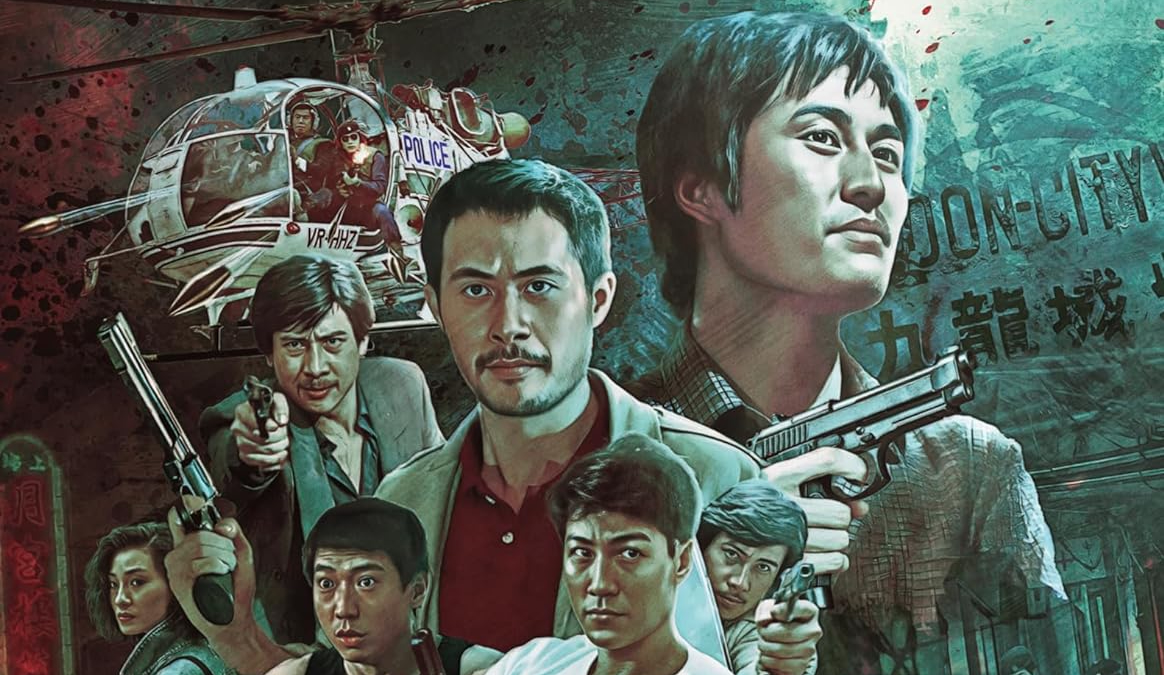
The mad geniuses at 88 Films continue to provide collectors with only the best films and premium extra features and transfers. Case in point the box set for The Long Arm of the Law Parts I & II.
The Films
The Long Arm of the Law (dir. Johnny Mak)
There’s something wonderful about how The Long Arm of the Law mixes both humor and pathos in a crime saga that’s more than just about criminality. Director Johnny Mak unleashes the fury of violence and death upon the unsuspecting Mainland Chinese ex-military men that smash-and-grab quickly turns into a truly FUBAR situation. Produced three years before John Woo’s A Better Tomorrow – Mak’s film is one of blood-soaked brotherhood and comradery in the face of insurmountable odds.
However Mak is not a sentimentalist like his contemporaries. The Long Arm of the Law only shares the brotherhood of criminals in an amoral game of survival of the fittest. Mak’s film shows just how dog-eat-dog life is out there. Adding a contextual layer of outsiders, the uncertainty of the upcoming changeover (it was a little more than a decade until Hong Kong returned to China), and money lust (aka capitalism) ruled all, gives The Long Arm of the Law a hypercritical and existential flair that is rarely seen in an action film let alone one from Hong Kong.
Mak’s film is a complicated political totem where no one is on the right side because there is no right side. Everyone is attempting to survive by any means. Like rats on a sinking ship, they will do anything and everything to make it out. That point illustrated perfectly in the claustrophobic hail of bullets electrifying finale. Sam Peckinpah would have been proud.
The Long Arm of the Law Saga II (dir. Michael Mak)
Sequels in Hong Kong during the 1980s and 1990s were a blast. Director Michael Mak’s follow-up to the brutal perfection of The Long Arm of the Law is a case in point. Instead of trying to figure out how to continue the story, they create an entirely new one, keeping some of the same actors (not in the same roles but different ones), but keeping the “spirit” of the original. The result is something that is a spiritual cousin that exists in the same world but is entirely different.
Rather than use the Big Circle Gang (Mainlanders who go to Hong Kong to commit a crime and then go back to the mainland before anyone knows what happens) they tell the story from the police side of the conflict. With the police force confounded by what to do, a single Captain concocts the perfect scheme. Pull a trio of Mainlanders serving time for crimes, release them, and have them work as Undercover agents to bring down the various criminal organizations from the inside out. This play on The Dirty Dozen, The Dirty Trio, if you will, is as good as any modern crime film dealing with a similar topic. Yes, we’ve seen this before in some shape or manner (see both The Departed and the superior original Infernal Affairs as the top-tier examples) but never in this sort of bleak tone.
Yes, there are moments of humor or fellowship, but the film quickly turns violent and existential at a moment’s notice. People are brutally beaten, tortured, shot, and murdered at a moment’s notice. Even the men we follow are not sacred but literally, cows for the slaughter as the police officers in charge of the operation cut them loose without pity or reservation.
The Long Arm of the Law Saga II is not a direct sequel to the original. The Long Arm of the Law Saga II is a true successor to the original, taking everything that made the original excellent and recontextualizing it for a brand-new story. In this regard, this is one of the truly great sequels not just in Hong Kong genre filmmaking but genre filmmaking in general.
The Transfers
Both films have an all-new 2K Remaster from the Original Camera Negatives. The transfers for both films are spectacular. The work done here is simply jaw-dropping. However, it should be noted that there are a few shots because of how they were filmed (the commentary and interviews go into how the crew stole shots in Mainland China with a small 16mm film) and the quality isn’t a reflection of the transfers themselves. The films look sharp without the expense of the grain structure, allowing it to retain the look of a 35mm print. The color reproduction is as close as one can get to the high dynamic range of a 4K without being 4K. 88 Films has gone all out to bring us these gorgeous transfers for both films.
The Extras
They include the following;
DISC 1 – THE LONG ARM OF THE LAW
English Version featuring English Mono dub (105 mins approx)
DISC 2 – THE LONG ARM OF THE LAW – SAGA II
DISC 1
The Audio Commentary by Hong Kong Film Expert Frank Djeng on the HK Version begins with his credentials and a few tidbits The Long Arm of the Law. Some of the details include this being the only Johnny Mak directed; the various production companies involved; the releases and the massive box office success of the film; the story based off of the true life events; the awards that it was nominated and won in HK; how this discusses the changeover of HK to China and HK’s fears even more than a decade before this happens; how Johnny Mak casted and shot the film with a documentary style; the secretly shot on location in mainland China 16mm footage; the various concerns with capitalism by mainland China that became an issue that they’re dealing with now; a larger discussion about the mainlanders, specifically ex-military, that would commit crimes in HK and go back to mainland quickly; terminology they used to discuss these people because it was such a large issue; the racism that HK citizens towards Mainlanders at the time; a discussion of the first robbery/action scene and how much of it was “stolen” and how that shaped the work of the set piece – including the crowds in the street being unaware they were shooting a film; the career and personal history of director Johnny Mak – a larger discussion of why he only directed one film and his larger career in Producing and Writing including his last film in 2000s and turn over to Real-estate and Farming in Mainland China; the career and personal history of screenwriter Phillip Chan – including a great discussion of Chan’s career as an actor; the car burning scene – and how dangerous was and how they did actually light the fire without the actor’s knowledge; a detailed discussion of the actual real-life crime that inspired this film; discussions throughout about the various cultural touchstones that maybe loss on non-HK or Chinese audiences; larger discussions throughout of the various locations and areas used during the production; discussion throughout the commentary track about the various actors and their work here and throughout their career – keep your notes app open you’ll want to write some of the films down; and much more. Djeng delivers another well-researched and informative commentary track.
Family Business – An Interview with Michael Mak (16:32) – in this all-new interview with the brother of Johnny Mak and fellow director begins with the reasons why the entire team began to develop this film in the wake of more comedic films being released. Some of the details include what he felt defined his brother’s style; his role during the production – including directing some of the scenes; a practical discussion about how they shot in Mainland China at the time; the audience reaction to the film; and much more. In Chinese with English Subtitles.
From Hong Kong Police to Big Circle Gangs – in this all-new interview with Scriptwriter Philip Chan (28:51) – in this all-new interview with the screenwriter, the focus is the Actor’s life from going from Police Force to Actor to Screenwriter and much more. Some of the details include how he entered the Police Department; how he transitioned from police office to actor; how he became the screenwriter of The Long Arm of the Law; the time it took to write the script; the production shoot itself; the shooting in Mainland China – the why and how it was accomplished; the real dangers of making the film – which leads to a larger discussion of how Johnny Mak creates real panic on set; and much more.
A Conversation with Action Director Billy Chan and Scriptwriter Philip Chan (37:02) – in this all-new very relaxed conversation at a restaurant the action director and screenwriter discuss not just the development and making of The Long Arm of the Law but Johnny Mak and his work on TV and his understanding of Police, Criminals, and his adherence to reality. Some of the discussion points include Phillip Chan working as a police officer for 11 years; working with Mak and sticking to the script and how Mak wanted to ensure everything was shown; shooting in the Walled City – and how accurate it was the darker side of city; the reality of the film including the sets, costuming, production design, et. al.; how they approached the film not as an “action” film but a serious drama; and much more. In Chinese with English Subtitles, plus asides in English occasionally.
An Interview with Director Johnny Mak (9:47) – the archival interview with the director begins with the origins of the project when it was a TV Producer and wanted something “challenging and difficult”. Mak discusses that the genre aspects of the film covered the very critical and political themes he was really interested in; how the script was developed with screenwriter Phillip Chan; the Big Circle gang and how based in truth they are – including where the term Big Circle came from; how hiring the Big Circle gang in prominent roles in the production helped them film in locations they would have never been able to; post-production and edited for style; and much more. In Cantonese with English Subtitles.
Hong Kong Trailer (4:56)
DISC 2
This Audio Commentary by Hong Kong Film Expert Frank Djeng on the HK Version of The Long Arm of the Law Saga II begins where he left off in the original. Some of the details include the sequel being directed by Michael Mak – Johnny’s brother; the various titles it was released under – including the literal translations from Cantonese/Mandarin; the various production companies involved; the releases and the box office success of the film; Johnny Mak producing and never directing again – and the reason why; the loose connections to the original as the movie share only a few actors (but in different roles); the action direction done and how its similar the original and how it differs; the work here and personal life of screenwriter Phillip Chan; discussions throughout about the various cultural touchstones that maybe loss on non-HK or Chinese audiences; larger discussions throughout of the various locations and areas used during the production; discussion throughout the commentary track about the various actors and their work here and throughout their career – keep your notes app open you’ll want to write some of the films down; and much more. This is a great companion commentary track to the one Djeng did for the first.
Bringing the Action – An Interview with Director Michael Mak (25:14) – in this all-new interview, and continuation of his interview on the first disc/film, Mak discusses taking over the directing duties for his brother. Some of the details include how they lost Lam Wai as their lead in the first few weeks of pre-production; how they pivoted after they lost Wai; their finding Elvis Tsui by chance; a discussion about the new additions to the cast and the various returning cast members; the budget and shooting schedule – and the challenges of both; the decision to cast Ben Lam and Yuen Yat-choh as leads of the film; the choice to use the same actors (some whose characters die) in the sequels in the series; and much more. In Chinese with English Subtitles.
Man of Action – An Interview with Co-Star Ben Lam (16:09) – in this all-new interview with star Ben Lam begins with how he started in the HK film industry as a stunt person. Some of the other details include how he became involved in the first film in a minor role; how the first film led to the larger role in the second film; the differences between working with Johnny and Michael; working with the various actors; what he thought of the film and his performance; and much more. In Chinese with English Subtitles.
An Offer You Can’t Refuse – An Interview with Scriptwriter Philip Chan (8:07) – in this all-new interview, and continuation of his interview on the first disc/film, screenwriter Philip Chan discusses the work on the sequel, to which he did not want to do. Some of the details include how Mak got him to write the sequel; the story and development; his honest feelings about the sequel; and much more.
The Iron Fist of Crime – An Interview with Stuntman Stephen Chan (24:25) – the all-new interview with the actor/stuntman begins with how he became a Wing Chung master. Some of the other details include his martial arts in university led to his working in film in Hong Kong; after university opening a gym in Hong Kong led to his opportunity to be in The Long Arm of The Law Saga II; the lack of acting or traditional training before he began the film; the difference between in film and TV at the time; the involvement of Johnny Mak as a producer – his lack of being on set; working with Michael Mak and his directorial style; working with the various actors on the production; working with firearms on set and in this film; and much more.
Hong Kong Trailer (3:33)
English Trailer (1:40)
The Final Thought
88 Films continues to create truly wonderful editions of Hong Kong Genre films. This box set for The Long Arm of the Law Parts I & II is proof of this. Highest Possible Recommendations!!!
88 Film’s Blu-Ray edition of The Long Arm of the Law Parts I & II is out now
Share this:
Like this:
Discover more from The Movie Isle
Subscribe to get the latest posts sent to your email.