Films are delicate entities. One action or wrong occurrence in pop culture or social norms can ruin a film for future audiences. In the case of The Day of the Locust, it’s multiple events, specifically, one huge popular culture atomic bomb…
The Simpsons.
Specifically, Homer Simpson.
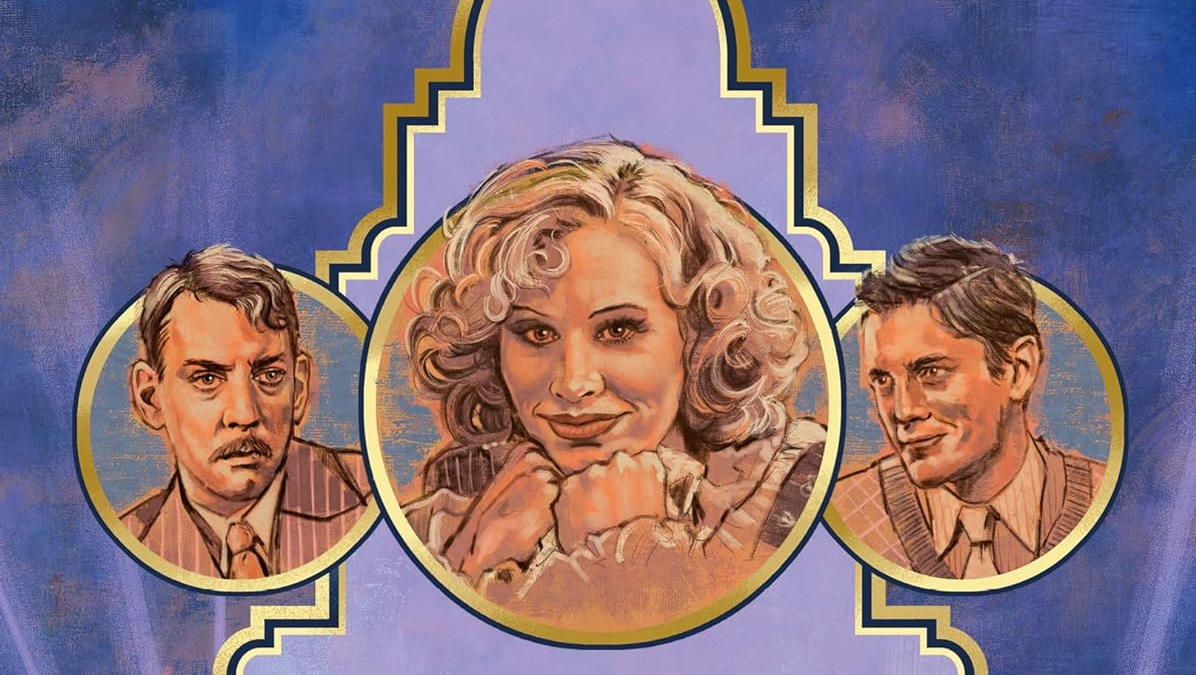
Before he was The Simpsons patriarch, he was a character in The Day of the Locust. The most tragic of characters in the film is played with heartbreaking delicacy by Donald Sutherland. The Day of the Locust could have restored its reputation in the mid-to-late 90s – when most of the 70s most notorious films were being reassessed and rediscovered by sponge-like cinephiles. That unfortunate comedic icon Homer Simpson kept that at bay for this film. How would anyone take the film seriously when that cultural icon has taken the wind out of your sails?
The acting is as good as anything to come out in the 1970s. William Atherton as Todd Hackett the artist turned art director and lead of the film. Atherton is so perfect in the role of essentially a suit amongst suits is the template/archetype he would play for the rest of his career with one exception. In The Day of the Locust, there is a complexity that the cardboard cutouts (e.g., Ghostbusters, Die Hard, Biodome, et. al.) could never hold a candle to. The actor is fascinating as he is despicable doing morally questionable actions out of jealousy and ego. Something it feels like Atherton never got the chance to do again.
Equally fascinating is the casting of Karen Black. Her Faye Greener is a marvelous complex portrait of trauma and emotional scar tissue. The casting of Black and not some other “ingenue” is the kind of “too good for its own good” choice the film constantly makes. Black is another mirror, one that shows the eventuality of most actors in Hollywood. The abuse in all its forms is on Black’s visage and performance is almost too much to take. There is a raw nerve quality to her performance that is rare if ever seen.
The aforementioned Sutherland is as good as both Atherton and Black but in a completely different way. Sutherland’s Homer is a delicate brittle soul in a world of brutality. It’s a special performance that most actors would never dare.
Now, fifty years later are we able to get over that hump? For those willing to take a deep breath maybe we can. If we can get over this, The Day of the Locust is worthy of reexamination. This dark human drama gazes into the cost taken by Hollywood. John Shlesinger’s film is not a pretty one or a nice one. It is however beautifully shot ugly nightmare hall of mirrors about the way men and women use each other to gain what they want.
The Day of the Locust is anti-film. Not that it is anti-story or filmmaking. The genres it takes on it revels in the antithesis of everything you expect from a behind-the-scenes Hollywood drama. Anti-Romance, Anti-Celebrity, Anti-Hollywood, and ultimately Anti-humanity. Screenwriter Waldo Salt adapts the novella by Nathaniel West with all the acid and bitterness of an arsenic pill. A pill that no one wanted to swallow. The true vision of what often, almost always, happens when people go to Hollywood seeking fame. This all leads to a horrifying stampede of violence that shows not just individual animal nature but also gives a mirror to the public’s savage vicious nature – wanting the pound of flesh they feel they’ve earned. That may be the reason why the film did not succeed… it was too much for a paying audience to take. The kind of kick to the teeth audiences hate.
The Transfer
The all-new 2K remaster by Arrow Films from the original negative is a love letter to the amazing work of Cinematographer Conrad Hall. The Day of the Locust must have been a nightmare to work with considering that the film is shot with a diffuse afterglow that would make Geoffrey Unsworth jealous. Arrow and their artist technicians have worked their magic and created a transfer that respects the hazy dreamlike quality of Hall’s work but never suffers in sharpness. Have seen samples of the other iterations of The Day of the Locust on home video this Blu-ray is an upgraded masterwork of how transformative a restoration can be. What a way to end an already amazing year for the boutique label.
The Extras
They include the following;
Brand new oral history audio commentary conducted by writer and film historian Lee Gambin, featuring assistant directors Leslie Asplund and Charles Ziarko, production associate Michael Childers, actors Grainger Hines and Pepe Serna, title designer Dan Perri, costume designer Ann Roth, assistant editor Alan L. Shefland and assistant camera operator Ron Vidor
Welcome to West Hollywood
Days of the Golden Age
Jeepers Creepers, Where’d You Get Those Peepers?
Radio Spots
Image galleries
The all-new oral history audio commentary conducted by writer and film historian Lee Gambin, featuring assistant directors Leslie Asplund and Charles Ziarko, production associate Michael Childers, actors Grainger Hines and Pepe Serna, title designer Dan Perri, costume designer Ann Roth, assistant editor Alan L. Shefland and assistant camera operator Ron Vidor is a deep dive winner. Some of the details from the track include how each got were hired or casted in the film; how the title sequence was created and what inspired it; the extravagant production design, set, costume – and how it was related to the budget; discussion of the failure at the box office; the diffuse visual look and how it was accomplished; the poster art and how it was made and also how valuable the poster is now because of its limited available; the methodical slow nature of giant productions; how the film received a greenlight and the politics behind the decision with Shlesinger’s Oscar win for Midnight Cowboy; filming a very expensive deleted scene on Santa Monica beach – the a crazy anecdote about this; some of the great real-life locations they used in the film – a larger discussion of the research done to accomplish this; the set visits by the golden age Hollywood luminaires that happened during the production – like Mae West, Billy Wilder, and others; the Hollywood Blvd / Chinese Theater set – how it was built, the requirements when filming and shot; stories from the fact that Chinatown and The Day of the Locust were both in production on the Paramount lot at the time; detailed accounts and anecdotes from working with John Shlesinger, Conrad Hall, William Atherton, Karen Black; and much more. Even if one doesn’t care for the movie, this track is a vital piece of documented history by those who spent months and years producing the film.
Welcome to West Hollywood (24:38) – in this all-new appreciation of the film by critic Glenn Kenny is as much an interview as it is a visual essay as Kenny dissects what he calls a depiction of “Hollywood Self-Loathing”. Some of the details include the origins of the source material; the background on how Waldo Salt and John Schlesinger became attached; the short story that the film was based on and a discussion about Nathaniel West the novelist of the story; quotes from the novella the film is based on; quotes from other sources about West, and the film; and much more. Kenny’s great dissection of the film and source material gives context to this forgotten film.
Days of the Golden Age (17:55) – in this all-new visual essay costume historian and film historian Elissa Rose discusses the film’s costumes including comments by Roth herself. Some of the details include a detailed account of Roth’s filmography, her origins, her work on the production itself – comparable to other films of the 1970s and her adherence to historical accuracy (going as far as period-appropriate undergarments); Roth’s “special” collaboration with Conrad Hall; and more. This essay is a truly vital piece of understanding the importance of the work done by below-the-line talent like Roth on this massive production.
Jeepers Creepers, Where’d You Get Those Peepers? (23:55) – in this all-new visual essay on the film by writer and film historian Lee Gambin is a perfect companion piece to his “oral history” commentary track. Rather than discussing production details, which were covered in the track, Gambin deep dives into the themes of this dark human drama. Gambin discusses changes and adjustments made, the historically accurate incidents, the characters, and their verisimilitude that inform the tragedy of The Day of the Locust’s Hollywood shattered dreams turned nightmare.
Radio Spots (2:00) – played over a black screen the two radio spots can be played together or separately.
Image galleries – divided into three sections that include behind-the-scenes photographs from the archives of production associate Michael Childers and assistant camera operator Ron Vidor.
Promotional Stills – the gallery consists of 41 different pieces of poster art, lobby cards, and production stills that can be navigated by using the chapter stop buttons on your remote.
Photos by Michael Childers – the gallery consists of 20 stills taken by Childers that range from candids and shots during production that can be navigated by using the chapter stop buttons on your remote.
Photos by Ron Vidor – the gallery consists of 9 stills taken by Vidor during the production that can be navigated by using the chapter stop buttons on your remote.
The Final Thought
The Day of the Locust is a forgotten piece of cinema that demands to be rediscovered. Arrow Video has furnished us with a stacked Blu-ray edition. Recommended!!!

The Day of the Locust the dark insider look at Hollywood gets a new Blu-Ray edition from Arrow Video filled with special features and a new 2K remaster from the original negative.
The Film
Films are delicate entities. One action or wrong occurrence in pop culture or social norms can ruin a film for future audiences. In the case of The Day of the Locust, it’s multiple events, specifically, one huge popular culture atomic bomb…
The Simpsons.
Specifically, Homer Simpson.
Before he was The Simpsons patriarch, he was a character in The Day of the Locust. The most tragic of characters in the film is played with heartbreaking delicacy by Donald Sutherland. The Day of the Locust could have restored its reputation in the mid-to-late 90s – when most of the 70s most notorious films were being reassessed and rediscovered by sponge-like cinephiles. That unfortunate comedic icon Homer Simpson kept that at bay for this film. How would anyone take the film seriously when that cultural icon has taken the wind out of your sails?
The acting is as good as anything to come out in the 1970s. William Atherton as Todd Hackett the artist turned art director and lead of the film. Atherton is so perfect in the role of essentially a suit amongst suits is the template/archetype he would play for the rest of his career with one exception. In The Day of the Locust, there is a complexity that the cardboard cutouts (e.g., Ghostbusters, Die Hard, Biodome, et. al.) could never hold a candle to. The actor is fascinating as he is despicable doing morally questionable actions out of jealousy and ego. Something it feels like Atherton never got the chance to do again.
Equally fascinating is the casting of Karen Black. Her Faye Greener is a marvelous complex portrait of trauma and emotional scar tissue. The casting of Black and not some other “ingenue” is the kind of “too good for its own good” choice the film constantly makes. Black is another mirror, one that shows the eventuality of most actors in Hollywood. The abuse in all its forms is on Black’s visage and performance is almost too much to take. There is a raw nerve quality to her performance that is rare if ever seen.
The aforementioned Sutherland is as good as both Atherton and Black but in a completely different way. Sutherland’s Homer is a delicate brittle soul in a world of brutality. It’s a special performance that most actors would never dare.
Now, fifty years later are we able to get over that hump? For those willing to take a deep breath maybe we can. If we can get over this, The Day of the Locust is worthy of reexamination. This dark human drama gazes into the cost taken by Hollywood. John Shlesinger’s film is not a pretty one or a nice one. It is however beautifully shot ugly nightmare hall of mirrors about the way men and women use each other to gain what they want.
The Day of the Locust is anti-film. Not that it is anti-story or filmmaking. The genres it takes on it revels in the antithesis of everything you expect from a behind-the-scenes Hollywood drama. Anti-Romance, Anti-Celebrity, Anti-Hollywood, and ultimately Anti-humanity. Screenwriter Waldo Salt adapts the novella by Nathaniel West with all the acid and bitterness of an arsenic pill. A pill that no one wanted to swallow. The true vision of what often, almost always, happens when people go to Hollywood seeking fame. This all leads to a horrifying stampede of violence that shows not just individual animal nature but also gives a mirror to the public’s savage vicious nature – wanting the pound of flesh they feel they’ve earned. That may be the reason why the film did not succeed… it was too much for a paying audience to take. The kind of kick to the teeth audiences hate.
The Transfer
The all-new 2K remaster by Arrow Films from the original negative is a love letter to the amazing work of Cinematographer Conrad Hall. The Day of the Locust must have been a nightmare to work with considering that the film is shot with a diffuse afterglow that would make Geoffrey Unsworth jealous. Arrow and their artist technicians have worked their magic and created a transfer that respects the hazy dreamlike quality of Hall’s work but never suffers in sharpness. Have seen samples of the other iterations of The Day of the Locust on home video this Blu-ray is an upgraded masterwork of how transformative a restoration can be. What a way to end an already amazing year for the boutique label.
The Extras
They include the following;
The all-new oral history audio commentary conducted by writer and film historian Lee Gambin, featuring assistant directors Leslie Asplund and Charles Ziarko, production associate Michael Childers, actors Grainger Hines and Pepe Serna, title designer Dan Perri, costume designer Ann Roth, assistant editor Alan L. Shefland and assistant camera operator Ron Vidor is a deep dive winner. Some of the details from the track include how each got were hired or casted in the film; how the title sequence was created and what inspired it; the extravagant production design, set, costume – and how it was related to the budget; discussion of the failure at the box office; the diffuse visual look and how it was accomplished; the poster art and how it was made and also how valuable the poster is now because of its limited available; the methodical slow nature of giant productions; how the film received a greenlight and the politics behind the decision with Shlesinger’s Oscar win for Midnight Cowboy; filming a very expensive deleted scene on Santa Monica beach – the a crazy anecdote about this; some of the great real-life locations they used in the film – a larger discussion of the research done to accomplish this; the set visits by the golden age Hollywood luminaires that happened during the production – like Mae West, Billy Wilder, and others; the Hollywood Blvd / Chinese Theater set – how it was built, the requirements when filming and shot; stories from the fact that Chinatown and The Day of the Locust were both in production on the Paramount lot at the time; detailed accounts and anecdotes from working with John Shlesinger, Conrad Hall, William Atherton, Karen Black; and much more. Even if one doesn’t care for the movie, this track is a vital piece of documented history by those who spent months and years producing the film.
Welcome to West Hollywood (24:38) – in this all-new appreciation of the film by critic Glenn Kenny is as much an interview as it is a visual essay as Kenny dissects what he calls a depiction of “Hollywood Self-Loathing”. Some of the details include the origins of the source material; the background on how Waldo Salt and John Schlesinger became attached; the short story that the film was based on and a discussion about Nathaniel West the novelist of the story; quotes from the novella the film is based on; quotes from other sources about West, and the film; and much more. Kenny’s great dissection of the film and source material gives context to this forgotten film.
Days of the Golden Age (17:55) – in this all-new visual essay costume historian and film historian Elissa Rose discusses the film’s costumes including comments by Roth herself. Some of the details include a detailed account of Roth’s filmography, her origins, her work on the production itself – comparable to other films of the 1970s and her adherence to historical accuracy (going as far as period-appropriate undergarments); Roth’s “special” collaboration with Conrad Hall; and more. This essay is a truly vital piece of understanding the importance of the work done by below-the-line talent like Roth on this massive production.
Jeepers Creepers, Where’d You Get Those Peepers? (23:55) – in this all-new visual essay on the film by writer and film historian Lee Gambin is a perfect companion piece to his “oral history” commentary track. Rather than discussing production details, which were covered in the track, Gambin deep dives into the themes of this dark human drama. Gambin discusses changes and adjustments made, the historically accurate incidents, the characters, and their verisimilitude that inform the tragedy of The Day of the Locust’s Hollywood shattered dreams turned nightmare.
Radio Spots (2:00) – played over a black screen the two radio spots can be played together or separately.
Image galleries – divided into three sections that include behind-the-scenes photographs from the archives of production associate Michael Childers and assistant camera operator Ron Vidor.
The Final Thought
The Day of the Locust is a forgotten piece of cinema that demands to be rediscovered. Arrow Video has furnished us with a stacked Blu-ray edition. Recommended!!!
Arrow Video’s Blu-Ray edition of The Day of the Locust is out December 12th
Share this:
Like this:
Discover more from The Movie Isle
Subscribe to get the latest posts sent to your email.