As I grow older, my views on Sabrina change. As a child, it was a rom-com romp. As a teenager, I couldn’t be bothered by its fairy tale swoons by Audrey Hepburn. In my twenties and thirties, it was too saccharine for my tastes. Now, in my forties, I see a film that’s an indictment of men and the idea of romance.
Billy Wilder’s adaptation of the wildly popular stage play Sabrina isn’t a romantic comedy rather a drama masquerading as one. The comedic moments are too acidic to be a part of a romance. The romance isn’t romance at all, but impulses and manipulations of men, either drawn by their whimsies or greed towards a beautiful woman they see as an object or obstacle. Where The Apartment is cynical business satire hiding its warm, beautiful heart, Sabrina is a cold piece of business where the happy ending belies the reality around the corner after that ending.
Sabrina (Audrey Hepburn) is the brightest of lights. One that even the glimmer of cynicism veers the young naïve woman into almost killing herself. This on the eve of a new life in Paris to learn the culinary arts, she is too preoccupied by the whims and whimsies of beautiful, charming dolt David Larabee (William Holden). Sabrina has lived her life above the Larabees’ garage – her father, Fairchild (John Williams), the Larabees’ chauffeur. Even in Paris, with the world at her fingertips as a burgeoning ingénue of the world, all Sabrina can think of is David. David could not be bothered as the rest of the Larabees couldn’t with Sabrina because she offers nothing of value, they can strip mine.
It is only after years abroad maturing from the young woman’s promise to a full-on mature lady of the world does she comes into the predatory gaze of David. Yes, it’s all played for charming laughs and witty asides, but underneath belies something of a capitalistic theme. Like the Larabee Holding Company that exploits underdeveloped countries for their assets, calling it progress, David is only interested in Sabrina because she has matured into an “asset” for him to claim and exploit. Wilder and co-writer Ernest Lehman hide this all so well in the champagne cocktail fairy tale of it all. Glitz, Glamour, those Givenchy dresses, Le Vie En Rose, Amour! Though it is just a surface that underneath is a critique of the rich taking everything and anything they want.
Even Linus Larabee (Humphrey Bogart), who is David’s older brother and romantic foil, is no different than David. His intentions and ultimately his turn may be one that benefits Sabrina in some way, but his initial intentions are still terrible, no better than David’s. Linus just wants Sabrina out of David’s sight lest she ruin the arranged marriage that will allow Larabee Holdings to develop the new tech that will earn them millions (billions adjusted for inflation). Linus becomes the fixer in his own deal, trying to wine and dine Sabrina. It really is of no consequence that he happens to “fall in love” with Sabrina. That is the show for those not looking hard enough. Linus is as terrible a human as he was at the beginning. Sure, he has some human emotions – everyone does – but he, like Don Draper after him, is a shark in a suit. The true ending of Sabrina is two weeks after Linus and Sabrina’s trip to Paris has ended, with the realization that neither wants one another and, in actuality, despise what each stands for. This is Wilder’s most damning critique of that fairy tale romance. No matter the Prince, he’s still a Prince who terrorizes the peasants that are his subjects, even if they are the prettiest of the pretty. Eventually, he will strip her of her valuables, whatever they may be.
The Transfer
The all-new HDR/Dolby Vision Master by Paramount Pictures – From a 4K Scan of the 35mm Original Camera Negative is a marvel of clarity and dimensionality. The image is flawless, nary a scratch or issue with the source material. Flawless in the way that the very best Black and White 4K UHD discs are, with a clarity even with a nice sheen of grain that feels almost three-dimensional. This is an exemplary job of what is possible within the 4K format and the very best of image quality.
The Extras
They include the following;
DISC 1 (4KUHD):
NEW Audio Commentary by Film Historian Joseph McBride, Author of Billy Wilder: Dancing on the Edge
NEW Audio Commentary by Film Historian/Writer Julie Kirgo and Writer/Filmmaker Peter Hankoff
DISC 2 (BLU-RAY):
NEW Audio Commentary by Film Historian Joseph McBride, Author of Billy Wilder: Dancing on the Edge
NEW Audio Commentary by Film Historian/Writer Julie Kirgo and Writer/Filmmaker Peter Hankoff
Audrey Hepburn – Fashion Icon: Featurette
Sabrina’s World: Featurette
Supporting Sabrina: Featurette
William Holden – The Paramount Years: Featurette
Behind the Gates – Camera: Featurette
Paramount in the ‘50s: Retrospective Featurette
Sabrina Documentary
Theatrical Trailer
The first of two all-new Audio Commentaries is one by Film Historian Joseph McBride, Author of Billy Wilder: Dancing on the Edge, opens with McBride discussing how Sabrina is one of his most “romantic” films, though the director is known to be cynical. Some of the other details include Wilder and Hepburn’s other collaboration Love in the Afternoon; the issues of age and age difference between Bogart and Hepburn – which is similar to the one in Love in the Afternoon; the real life romance between Holden and Hepburn that began during this production; a discussion of the stage play that the film is based on by Samuel Taylor; the production locations and schedule of the film; the development of the screenplay – how much writing was done during production; a discussion of the Sydney Pollack remake – including what Wilder thought of the film; a side discussion of Paris and Wilder’s love of the city; a discussion of Wilder’s time in Paris after fleeing Germany in the 1930s – which leads to a discussion of films that he wrote and or directed by Wilder that were set in Paris; the loss that Wilder suffered during the Holocaust; the critical response to Wilder’s work; the use of the song Le Vie En Rose throughout the film; the costume designs by Hubert de Givenchy and Edith Head; some personal anecdotes meeting Hepburn; a discussion through out of the various comedic digs that Wilder’s film takes; a larger discussion of the various actors that appear in the film; and much more.
The second of two all-new Audio Commentaries is one Film Historian/Writer Julie Kirgo and Writer/Filmmaker Peter Hankoff begin with a discussion of how this is one of his romantic, less cynical films. Some of the details include that the house that is the Larabee’s is actually a Beverly Hills Mansion that has since been torn down; a discussion of the great directors of the 1950s that included Wilder – and how the differed from the director’s before, and many of which were European who fled Germany’s invasion during WW2; a discussion of the early life of Audrey Hepburn – including some details about her family; the work and collaboration of cinematographer Charles Lang Jr. and Wilder on this film and others; the low down on Hubert de Givenchy designs and costumes for Audrey Hepburn – and the back story behind the dresses she chose; the slight that Edith Head did with her Oscar Win; a discussion of the behind-the-scenes romance between Holden and Hepburn; a discussion of the life and career of William Holden; a discussion of the screenwriters and development of the film – including excised subplots; a discussion of the abrasive and abusive nature of Billy Wilder with his friends, family and collaborators; a discussion of the history and career of director Billy Wilder; a discussion of the life and career of Humprey Bogart; a discussion of the various actors and crew that worked on the film; and much more.
Audrey Hepburn – Fashion Icon: Featurette (17:36) – an archival look back at Audrey Hepburn’s style and fashion sense that changed both film and pop culture forever. The featurette covers her most iconic film fashion-forward film roles, and looks at her personal sense of fashion and how this all changed women’s fashion. Using interviews, photos, and clips from films shows this change. Featuring interviews with Isaac Mizrahi, Cynthia Rowley, Eddie Bledsoe, Eduardo Lucero, Rose Brantley, and more.
Sabrina’s World: Featurette (11:29) – an archival look at the real-life locations in Long Island that Billy Wilder and Company filmed or took inspiration from for Sabrina. The featurette dives into the history of the North Shore of Long Island, where the various wealthiest families in the world made their home in what would later be known as Glen Cove.
Supporting Sabrina: Featurette (16:36) – an archival featurette looking at the various supporting actors (aka contract players) that made up Sabrina. They look into the actors’ history and how they ended up at Paramount. Actors such as John Williams, Ellen Corby, Nancy Culp, Marcel Dalio, Walter Hamton, and others’ careers are discussed.
William Holden – The Paramount Years: Featurette (29:53) – an archival featurette looking at the movie Legend William Holden, specifically the actor’s rise from contract player to superstar. The documentary discusses his personal history (e.g., growing up, moving to Pasadena CA at an early age, where he was discovered), his work at Paramount at the beginning, his time in “The Golden Circle”, his first starring role in Golden Boy, the split contract he had where he shared time between Columbia and Paramount, his time during WW2 and the restarting of his career post-War, how Holden got the role in Sunset Blvd., the academy award winning role in Stalag 17, the final role for Billy Wilder in Sabrina, and much more. Featuring some great clips from the various films and behind-the-scenes photos, the doc does a great job of showing the ascent and sometimes stumbles the actor took during his years at the studio under contract. Interviews with actors Stephen Powers, Bob Thomas, Pat Crowley, Gil Straton, producer AC Lyles, film professor Jonathan Kuntz, and others.
Behind the Gates – Camera: Featurette (5:12) – the archival featurette looks at the Camera Department and the importance of this specialized department (that really doesn’t exist) and a look at the various Cameras used for some of the most famous films made by Paramount.
Paramount in the ‘50s: Retrospective Featurette (9:38) – the archival featurette looking at the various movies that were produced by Paramount during the 1950s. Sunset Blvd.,A Place in the Sun, Come Back Little Shiba, The Greatest Show on Earth, the ten Martin and Lewis films, Shane, War of the Worlds, Stalag 17, Roman Holiday, Sabrina, White Christmas, The Country Girl, To Catch a Thief, The Ten Commandments, and others are covered.
Sabrina Documentary (11:46) – an archival featurette that looks at the making of the Billy Wilder classic. The film quickly covers the origins, casting, production, and release.
Rounding out the special features are trailers for Sabrina [1954] (2:11); Sabrina [1995] (2:50); The Apartment (2:20); One, Two, Three (2:11); The Fortune Cookie (2:37)
The Final Thought
Kino Lorber has given Sabrina a wonderful edition with a restored picture and a wealth of special features. Highest Recommendations!!!

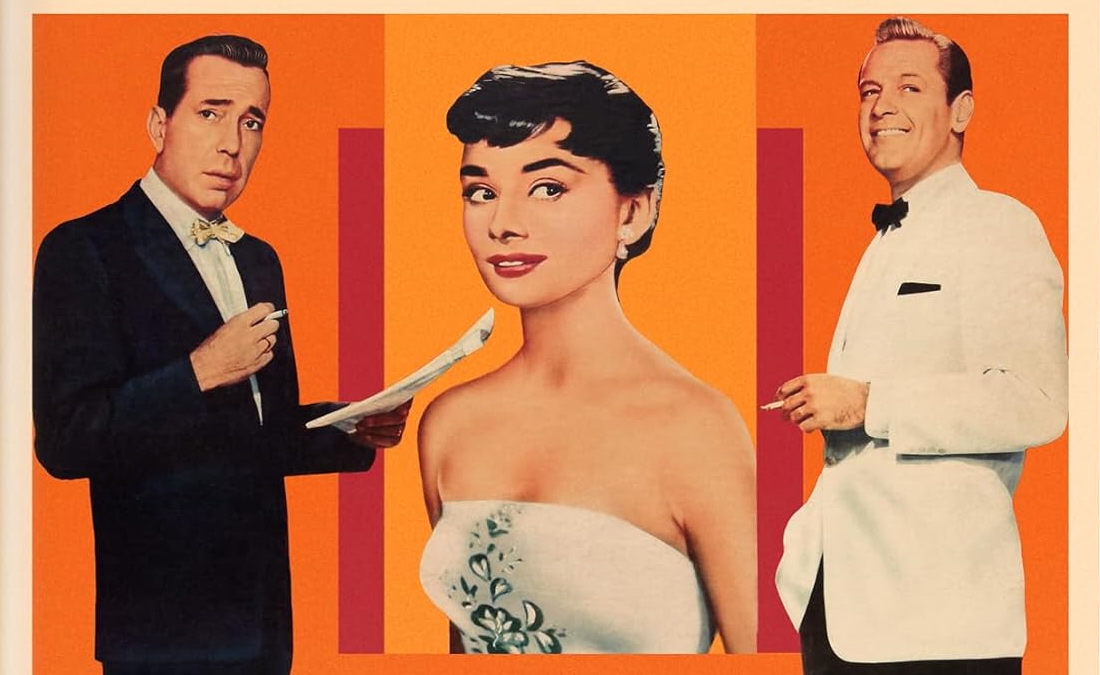
The Billy Wilder classic Sabrina comes to 4K UHD with a beautiful transfer thanks to Kino Lorber.
The Film
As I grow older, my views on Sabrina change. As a child, it was a rom-com romp. As a teenager, I couldn’t be bothered by its fairy tale swoons by Audrey Hepburn. In my twenties and thirties, it was too saccharine for my tastes. Now, in my forties, I see a film that’s an indictment of men and the idea of romance.
Billy Wilder’s adaptation of the wildly popular stage play Sabrina isn’t a romantic comedy rather a drama masquerading as one. The comedic moments are too acidic to be a part of a romance. The romance isn’t romance at all, but impulses and manipulations of men, either drawn by their whimsies or greed towards a beautiful woman they see as an object or obstacle. Where The Apartment is cynical business satire hiding its warm, beautiful heart, Sabrina is a cold piece of business where the happy ending belies the reality around the corner after that ending.
Sabrina (Audrey Hepburn) is the brightest of lights. One that even the glimmer of cynicism veers the young naïve woman into almost killing herself. This on the eve of a new life in Paris to learn the culinary arts, she is too preoccupied by the whims and whimsies of beautiful, charming dolt David Larabee (William Holden). Sabrina has lived her life above the Larabees’ garage – her father, Fairchild (John Williams), the Larabees’ chauffeur. Even in Paris, with the world at her fingertips as a burgeoning ingénue of the world, all Sabrina can think of is David. David could not be bothered as the rest of the Larabees couldn’t with Sabrina because she offers nothing of value, they can strip mine.
It is only after years abroad maturing from the young woman’s promise to a full-on mature lady of the world does she comes into the predatory gaze of David. Yes, it’s all played for charming laughs and witty asides, but underneath belies something of a capitalistic theme. Like the Larabee Holding Company that exploits underdeveloped countries for their assets, calling it progress, David is only interested in Sabrina because she has matured into an “asset” for him to claim and exploit. Wilder and co-writer Ernest Lehman hide this all so well in the champagne cocktail fairy tale of it all. Glitz, Glamour, those Givenchy dresses, Le Vie En Rose, Amour! Though it is just a surface that underneath is a critique of the rich taking everything and anything they want.
Even Linus Larabee (Humphrey Bogart), who is David’s older brother and romantic foil, is no different than David. His intentions and ultimately his turn may be one that benefits Sabrina in some way, but his initial intentions are still terrible, no better than David’s. Linus just wants Sabrina out of David’s sight lest she ruin the arranged marriage that will allow Larabee Holdings to develop the new tech that will earn them millions (billions adjusted for inflation). Linus becomes the fixer in his own deal, trying to wine and dine Sabrina. It really is of no consequence that he happens to “fall in love” with Sabrina. That is the show for those not looking hard enough. Linus is as terrible a human as he was at the beginning. Sure, he has some human emotions – everyone does – but he, like Don Draper after him, is a shark in a suit. The true ending of Sabrina is two weeks after Linus and Sabrina’s trip to Paris has ended, with the realization that neither wants one another and, in actuality, despise what each stands for. This is Wilder’s most damning critique of that fairy tale romance. No matter the Prince, he’s still a Prince who terrorizes the peasants that are his subjects, even if they are the prettiest of the pretty. Eventually, he will strip her of her valuables, whatever they may be.
The Transfer
The all-new HDR/Dolby Vision Master by Paramount Pictures – From a 4K Scan of the 35mm Original Camera Negative is a marvel of clarity and dimensionality. The image is flawless, nary a scratch or issue with the source material. Flawless in the way that the very best Black and White 4K UHD discs are, with a clarity even with a nice sheen of grain that feels almost three-dimensional. This is an exemplary job of what is possible within the 4K format and the very best of image quality.
The Extras
They include the following;
DISC 1 (4KUHD):
DISC 2 (BLU-RAY):
The first of two all-new Audio Commentaries is one by Film Historian Joseph McBride, Author of Billy Wilder: Dancing on the Edge, opens with McBride discussing how Sabrina is one of his most “romantic” films, though the director is known to be cynical. Some of the other details include Wilder and Hepburn’s other collaboration Love in the Afternoon; the issues of age and age difference between Bogart and Hepburn – which is similar to the one in Love in the Afternoon; the real life romance between Holden and Hepburn that began during this production; a discussion of the stage play that the film is based on by Samuel Taylor; the production locations and schedule of the film; the development of the screenplay – how much writing was done during production; a discussion of the Sydney Pollack remake – including what Wilder thought of the film; a side discussion of Paris and Wilder’s love of the city; a discussion of Wilder’s time in Paris after fleeing Germany in the 1930s – which leads to a discussion of films that he wrote and or directed by Wilder that were set in Paris; the loss that Wilder suffered during the Holocaust; the critical response to Wilder’s work; the use of the song Le Vie En Rose throughout the film; the costume designs by Hubert de Givenchy and Edith Head; some personal anecdotes meeting Hepburn; a discussion through out of the various comedic digs that Wilder’s film takes; a larger discussion of the various actors that appear in the film; and much more.
The second of two all-new Audio Commentaries is one Film Historian/Writer Julie Kirgo and Writer/Filmmaker Peter Hankoff begin with a discussion of how this is one of his romantic, less cynical films. Some of the details include that the house that is the Larabee’s is actually a Beverly Hills Mansion that has since been torn down; a discussion of the great directors of the 1950s that included Wilder – and how the differed from the director’s before, and many of which were European who fled Germany’s invasion during WW2; a discussion of the early life of Audrey Hepburn – including some details about her family; the work and collaboration of cinematographer Charles Lang Jr. and Wilder on this film and others; the low down on Hubert de Givenchy designs and costumes for Audrey Hepburn – and the back story behind the dresses she chose; the slight that Edith Head did with her Oscar Win; a discussion of the behind-the-scenes romance between Holden and Hepburn; a discussion of the life and career of William Holden; a discussion of the screenwriters and development of the film – including excised subplots; a discussion of the abrasive and abusive nature of Billy Wilder with his friends, family and collaborators; a discussion of the history and career of director Billy Wilder; a discussion of the life and career of Humprey Bogart; a discussion of the various actors and crew that worked on the film; and much more.
Audrey Hepburn – Fashion Icon: Featurette (17:36) – an archival look back at Audrey Hepburn’s style and fashion sense that changed both film and pop culture forever. The featurette covers her most iconic film fashion-forward film roles, and looks at her personal sense of fashion and how this all changed women’s fashion. Using interviews, photos, and clips from films shows this change. Featuring interviews with Isaac Mizrahi, Cynthia Rowley, Eddie Bledsoe, Eduardo Lucero, Rose Brantley, and more.
Sabrina’s World: Featurette (11:29) – an archival look at the real-life locations in Long Island that Billy Wilder and Company filmed or took inspiration from for Sabrina. The featurette dives into the history of the North Shore of Long Island, where the various wealthiest families in the world made their home in what would later be known as Glen Cove.
Supporting Sabrina: Featurette (16:36) – an archival featurette looking at the various supporting actors (aka contract players) that made up Sabrina. They look into the actors’ history and how they ended up at Paramount. Actors such as John Williams, Ellen Corby, Nancy Culp, Marcel Dalio, Walter Hamton, and others’ careers are discussed.
William Holden – The Paramount Years: Featurette (29:53) – an archival featurette looking at the movie Legend William Holden, specifically the actor’s rise from contract player to superstar. The documentary discusses his personal history (e.g., growing up, moving to Pasadena CA at an early age, where he was discovered), his work at Paramount at the beginning, his time in “The Golden Circle”, his first starring role in Golden Boy, the split contract he had where he shared time between Columbia and Paramount, his time during WW2 and the restarting of his career post-War, how Holden got the role in Sunset Blvd., the academy award winning role in Stalag 17, the final role for Billy Wilder in Sabrina, and much more. Featuring some great clips from the various films and behind-the-scenes photos, the doc does a great job of showing the ascent and sometimes stumbles the actor took during his years at the studio under contract. Interviews with actors Stephen Powers, Bob Thomas, Pat Crowley, Gil Straton, producer AC Lyles, film professor Jonathan Kuntz, and others.
Behind the Gates – Camera: Featurette (5:12) – the archival featurette looks at the Camera Department and the importance of this specialized department (that really doesn’t exist) and a look at the various Cameras used for some of the most famous films made by Paramount.
Paramount in the ‘50s: Retrospective Featurette (9:38) – the archival featurette looking at the various movies that were produced by Paramount during the 1950s. Sunset Blvd., A Place in the Sun, Come Back Little Shiba, The Greatest Show on Earth, the ten Martin and Lewis films, Shane, War of the Worlds, Stalag 17, Roman Holiday, Sabrina, White Christmas, The Country Girl, To Catch a Thief, The Ten Commandments, and others are covered.
Sabrina Documentary (11:46) – an archival featurette that looks at the making of the Billy Wilder classic. The film quickly covers the origins, casting, production, and release.
Rounding out the special features are trailers for Sabrina [1954] (2:11); Sabrina [1995] (2:50); The Apartment (2:20); One, Two, Three (2:11); The Fortune Cookie (2:37)
The Final Thought
Kino Lorber has given Sabrina a wonderful edition with a restored picture and a wealth of special features. Highest Recommendations!!!
Kino Lorber’s 4K UHD Edition of Sabrina is out now.
Share this:
Like this:
Discover more from The Movie Isle
Subscribe to get the latest posts sent to your email.