The further this reviewer goes into the cinema of the Czech Republic, beyond the pillars of high art, the more “loosey-goosey” things get so to speak. Adela Has Not Had Supper Yet is a prime example of this “anything goes” mentality that imbues the best of cult cinema and Czech Cinema. Made during the height of the communist era, the film is a marvel of what can get through during even the most rigid of censorship. A freewheeling comedy satiric look at not just Americans and their lifestyle but also Czech culture.
Detective Nick Carter (Michal Dočolomanský) has been called to Prague by Countess Thun (Květa Fialová) to solve the case of her missing dog. Carter makes his way to Prague and while on his trip learns Czech (it’s the end of the nineteenth century, it’s going to take him weeks) and some of the culture. Once Carter arrives he is partnered up with Commissar Josef Ledvina (Rudolf Hrušínský) who begins to not just help him solve the case but introduce him to the joys of Prague life which appears to be ingesting copious amounts of food and beer whilst enjoying the lovely architecture of the mystical city. It isn’t too long before Ledvina and Carter face off against part-time evil mastermind and full-time botanist Baron von Kratzma (Miloš Kopecký) and his murderous plant Adela.
To say the above does not do the film justice is an understatement. Adela Has Not Had Supper Yet is a film that’s drunk off the possibilities of filmmaking. The film jumps wildly from tone to tone like a skilled pianist hits the ivories on a Steinway. There’s a musical harmony to the way the film connects and jumps from genre to genre. Whether it’s Carter and Ledvina drinking themselves into a sloppy mess or Adela revealing herself to be a man-eating plant director Oldřich Lipský enthusiastically engages us with witty visuals. Lipský’s films remind one of the very best of Wes Anderson (Anderson must be a huge fan) in its artful composition and combination of dry wit and homemade animation.
Adela Has Not Had Supper Yet is the rare film that feels it was as fun to make as it is to watch. The heady concoction that always feels like anything is possible at any second on the screen. The genre mashup to end all genre mashups. Only inhibited by the imagination of the creatives behind it. A notion that one view of this truly deranged and wonderful film will absolve themselves of. If Adela Has Not Had Supper Yet proves anything, it is that in the right hands (Lipský, and screenwriter/animation director Jiří Brdečka) there isn’t much that isn’t possible and that what is possible is highly entertaining.
The Transfer
The all-new restoration from the original camera negative and sound elements by the Národní filmový archive, Prague.
The film begins with the following text;
The goal of digital restoration was to make the film available in a form similar to how it could have been seen and heard by an audience at the time when it was first released in 1978. As a result, various features that originate from the shooting of the film or its laboratory processing have been preserved and are evidence of the technologies and creative approaches of the time. We also respected the aspect ratio of the picture, i.e. the one that the film had at the time it was presented.
It never gets old singing the praises of Deaf Crocodile’s transfers and restorations. Their work in collaboration with Národní filmový archive, Prague is the kind of deft work that most modern transfers get. The mere fact they mention what should be the primary goal of any restoration tells you how far other labels have gotten off the mark in some cases. The transfer is flat-out stunning. From the opening moments, there is a filmic quality to the transfer that feels like a recently found perfectly preserved film print from the era. There isn’t a scratch or issue from beginning to end. There is no denying that Deaf Crocodile continues to be the high watermark of film preservation amongst home video labels. One can only wait with bated breath for their entries into the 4K UHD market.
The Extras
They include the following;
New audio commentary by Czech film expert Irena Kovarova of Comeback Company and Czech film critic and screenwriter Tereza Brdečková
Four rare Jiří Brdečka animated shorts
Badly Drawn Hen (Špatně namalovaná slepice / Gallina Vogelbirdae)
Forester’s Song / To the Forest (Do lesíčka na čekanou)
What Did I Not Tell The Prince (Co jsem princi neřekla)
The Miner’s Rose (Horníkova růže)
60-page booklet including:
New essay by film historian and expert on Central & Eastern European cinema Jonathan Owen.
New essay by film critic Walter Chaw (Film Freak Central).
Excerpts from the book JIŘÍ BRDEČKA: Life-Animation-Magic (2015, Limonádový Joe Publishing)
The all-new audio commentary by Czech film expert Irena Kovarova of Comeback Company and Czech film critic and screenwriter Tereza Brdečková begins with introductions and bonafides – including that the film was written by Brdečková’s father – before diving into the film. Some of the details include this is a part of a trilogy of films that director Oldřich Lipský and screenwriter Jiří Brdečka made; a discussion of how Adela Has Not Had Supper Yet differs from the other films in the trilogy; a larger discussion of the trilogy is not as simple as copy/sequel/rehash; what drew Jiří Brdečka to the material specifically the fictional American Detective Nick Carter; the way Lipský and Brdečka during one of the more harrowing times in Czech during the communist-era they weren’t able to make films because they made films that were about America – even satires such as this one; a larger discussion of the trilogy – Lemonade Joe, Adela Has Not Had Supper Yet, and The Mysterious Castle in the Carpathians; the working relationship and collaboration between Lipský and Brdečka – which went beyond just the scripting/story but the visuals, costuming, design, et. al.; a discussion about the era called “Normalization” in Czech – the films that rose out of it; an interesting conversation about the relationship between Czech and Soviet Union during the communist era; a larger discussion about the comedy of the piece and what they were specifically lampooning in American culture and Czech culture; a larger discussion of screenwriter Jiří Brdečka career and personal history – including some great personal insights by the younger Brdečková about her father; a larger discussion of director Oldřich Lipský career and personal history – including some great personal insights by the younger Brdečková about the director; and much more. Kovarova and Brdečková provide a vital commentary track, that gives not just background but context (social, political, artistic) in which this film was made.
Four rare Jiří Brdečka animated shorts
Badly Drawn Hen (Špatně namalovaná slepice / Gallina Vogelbirdae) [13:40]– A class and their strict teacher begin their day. However, the dreams of one particularly imaginative student seem to get in the way as they begin to all draw hens. We see the various students in the class and how they approach art as well. What happens after school is over with. A nice bit about the ridiculousness of schooling strict adherence to conformity. From 1963. In Czech with English Subtitles.
Forester’s Song / To the Forest (Do lesíčka na čekanou) [9:35] – Rather than using traditional hand-drawn animation Forester’s Song uses “cut out” style animation to tell its tale which is based on a Czech song about two lovers and their tragic fate during one dark night in the forest. The “cutouts” and relief scenes are exquisitely painted. Note: this short may trigger some as it does have a depiction of suicide. From 1966. In Czech with English Subtitles.
The Miner’s Rose (Horníkova růže) [8:05] – Similar in form and style to Forester’s Song, The Miner’s Rose is another tragic love story of a Miner and the love of his life who gives him a single rose before leaving for his jobs in the mines. The message is very clear and concise but that’s the point. The animation style employed is of the “cut out” variety but the drawing is more in the style of Klimt in color and form than Forester’s Song style. From 1974. In Czech with English Subtitles.
What Did I Not Tell The Prince (Co jsem princi neřekla) [9:33] – the story is told by our narrator a bird and a Prince who is cursed to see the suffering of Prague and the tasks he asks of the bird. This is very similar to The Giving Tree by Shel Silverstein. The style is a melding of both Badly Drawn Hen and the Forester’s Song and The Miner’s Rose between hand-drawn and “cut out” style. From 1975. In Czech with English Subtitles.
The Final Thought
Adela Has Not Had Supper Yet is the kind of delightfully surprising genre fare that Deaf Crocodile specializes in highlighting with the best picture, sound, and contextual extras. Highest Possible Recommendations.

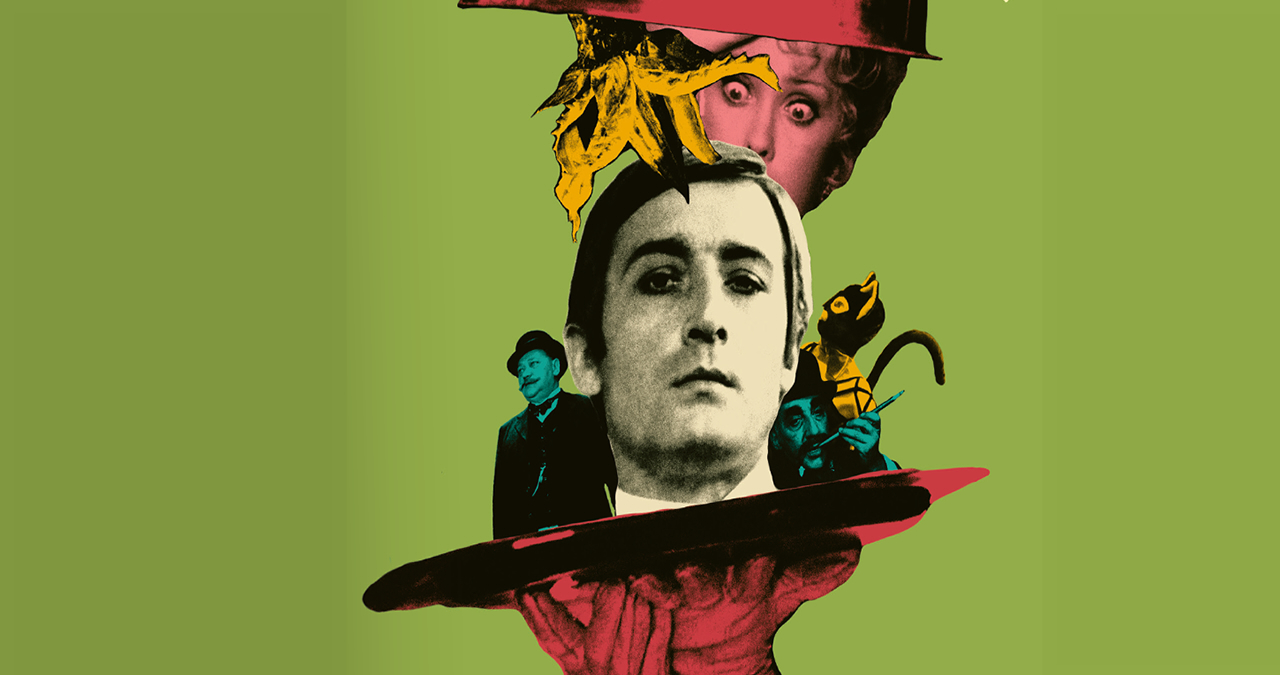
Adela Has Not Had Supper Yet is equal parts Pink Panther, Little Shop of Horrors, Detective Mystery, and James Bondian adventure with A LOT of Beer set in Victorian Prague. Only Deaf Crocodile could release such a perfectly indescribably fun film on Blu-ray.
The Film
The further this reviewer goes into the cinema of the Czech Republic, beyond the pillars of high art, the more “loosey-goosey” things get so to speak. Adela Has Not Had Supper Yet is a prime example of this “anything goes” mentality that imbues the best of cult cinema and Czech Cinema. Made during the height of the communist era, the film is a marvel of what can get through during even the most rigid of censorship. A freewheeling comedy satiric look at not just Americans and their lifestyle but also Czech culture.
Detective Nick Carter (Michal Dočolomanský) has been called to Prague by Countess Thun (Květa Fialová) to solve the case of her missing dog. Carter makes his way to Prague and while on his trip learns Czech (it’s the end of the nineteenth century, it’s going to take him weeks) and some of the culture. Once Carter arrives he is partnered up with Commissar Josef Ledvina (Rudolf Hrušínský) who begins to not just help him solve the case but introduce him to the joys of Prague life which appears to be ingesting copious amounts of food and beer whilst enjoying the lovely architecture of the mystical city. It isn’t too long before Ledvina and Carter face off against part-time evil mastermind and full-time botanist Baron von Kratzma (Miloš Kopecký) and his murderous plant Adela.
To say the above does not do the film justice is an understatement. Adela Has Not Had Supper Yet is a film that’s drunk off the possibilities of filmmaking. The film jumps wildly from tone to tone like a skilled pianist hits the ivories on a Steinway. There’s a musical harmony to the way the film connects and jumps from genre to genre. Whether it’s Carter and Ledvina drinking themselves into a sloppy mess or Adela revealing herself to be a man-eating plant director Oldřich Lipský enthusiastically engages us with witty visuals. Lipský’s films remind one of the very best of Wes Anderson (Anderson must be a huge fan) in its artful composition and combination of dry wit and homemade animation.
Adela Has Not Had Supper Yet is the rare film that feels it was as fun to make as it is to watch. The heady concoction that always feels like anything is possible at any second on the screen. The genre mashup to end all genre mashups. Only inhibited by the imagination of the creatives behind it. A notion that one view of this truly deranged and wonderful film will absolve themselves of. If Adela Has Not Had Supper Yet proves anything, it is that in the right hands (Lipský, and screenwriter/animation director Jiří Brdečka) there isn’t much that isn’t possible and that what is possible is highly entertaining.
The Transfer
The all-new restoration from the original camera negative and sound elements by the Národní filmový archive, Prague.
The film begins with the following text;
The goal of digital restoration was to make the film available in a form similar to how it could have been seen and heard by an audience at the time when it was first released in 1978. As a result, various features that originate from the shooting of the film or its laboratory processing have been preserved and are evidence of the technologies and creative approaches of the time. We also respected the aspect ratio of the picture, i.e. the one that the film had at the time it was presented.
It never gets old singing the praises of Deaf Crocodile’s transfers and restorations. Their work in collaboration with Národní filmový archive, Prague is the kind of deft work that most modern transfers get. The mere fact they mention what should be the primary goal of any restoration tells you how far other labels have gotten off the mark in some cases. The transfer is flat-out stunning. From the opening moments, there is a filmic quality to the transfer that feels like a recently found perfectly preserved film print from the era. There isn’t a scratch or issue from beginning to end. There is no denying that Deaf Crocodile continues to be the high watermark of film preservation amongst home video labels. One can only wait with bated breath for their entries into the 4K UHD market.
The Extras
They include the following;
The all-new audio commentary by Czech film expert Irena Kovarova of Comeback Company and Czech film critic and screenwriter Tereza Brdečková begins with introductions and bonafides – including that the film was written by Brdečková’s father – before diving into the film. Some of the details include this is a part of a trilogy of films that director Oldřich Lipský and screenwriter Jiří Brdečka made; a discussion of how Adela Has Not Had Supper Yet differs from the other films in the trilogy; a larger discussion of the trilogy is not as simple as copy/sequel/rehash; what drew Jiří Brdečka to the material specifically the fictional American Detective Nick Carter; the way Lipský and Brdečka during one of the more harrowing times in Czech during the communist-era they weren’t able to make films because they made films that were about America – even satires such as this one; a larger discussion of the trilogy – Lemonade Joe, Adela Has Not Had Supper Yet, and The Mysterious Castle in the Carpathians; the working relationship and collaboration between Lipský and Brdečka – which went beyond just the scripting/story but the visuals, costuming, design, et. al.; a discussion about the era called “Normalization” in Czech – the films that rose out of it; an interesting conversation about the relationship between Czech and Soviet Union during the communist era; a larger discussion about the comedy of the piece and what they were specifically lampooning in American culture and Czech culture; a larger discussion of screenwriter Jiří Brdečka career and personal history – including some great personal insights by the younger Brdečková about her father; a larger discussion of director Oldřich Lipský career and personal history – including some great personal insights by the younger Brdečková about the director; and much more. Kovarova and Brdečková provide a vital commentary track, that gives not just background but context (social, political, artistic) in which this film was made.
Four rare Jiří Brdečka animated shorts
The Final Thought
Adela Has Not Had Supper Yet is the kind of delightfully surprising genre fare that Deaf Crocodile specializes in highlighting with the best picture, sound, and contextual extras. Highest Possible Recommendations.
Deaf Crocodile’s Blu-Ray edition of Aldea Has Not Had Supper Yet is out now, you can order the Limited Edition Here or the Standard Version Here.
Share this:
Like this:
Discover more from The Movie Isle
Subscribe to get the latest posts sent to your email.